
TL;DR:
- Backup heating is essential in Canadian cold climates due to heat pumps’ efficiency drops in extreme cold.
- Various backup options include electric strips, gas furnaces, and hydronic systems, with costs, efficiency, and maintenance varying.
- Proper sizing, integration, and professional installation of backup heat improve reliability and prevent comfort issues during winter.
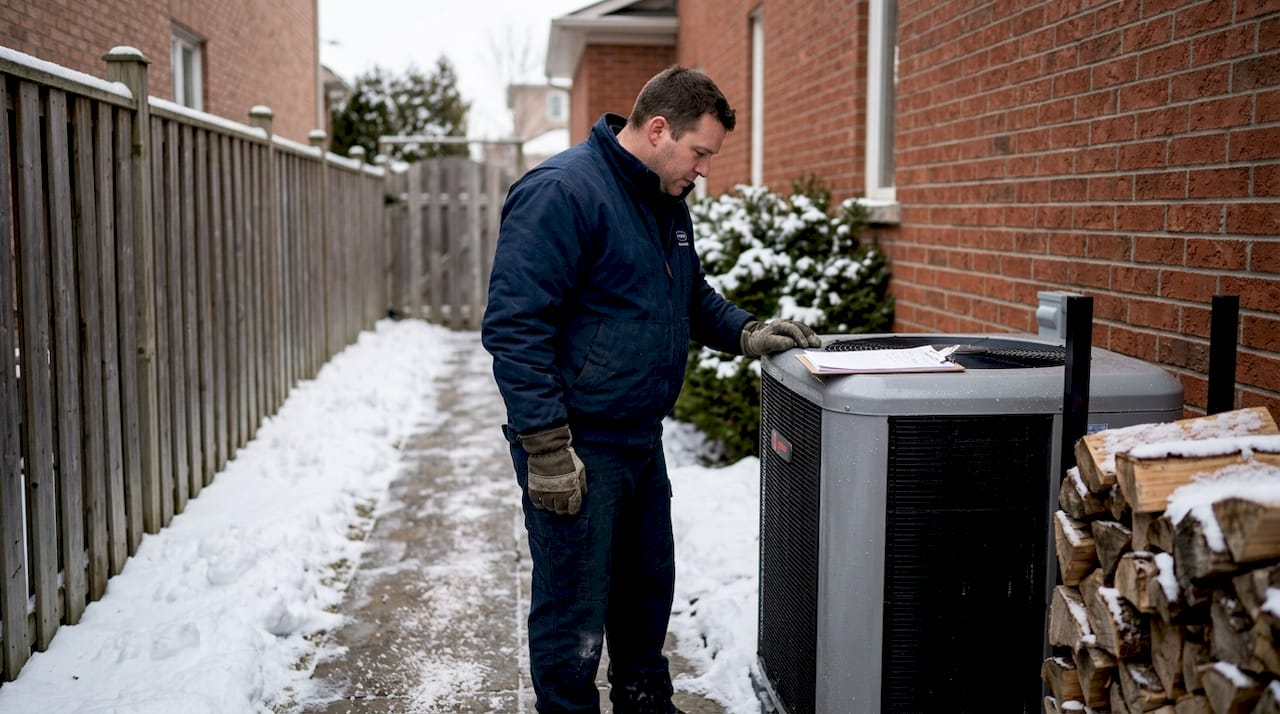
Even the most advanced cold-climate heat pump on the market today will struggle when a Canadian February decides to show its teeth. Many homeowners invest in a heat pump expecting it to handle everything, and that assumption can leave a family shivering at 2 a.m. when outdoor temperatures plunge past what the system can manage alone. Even modern cold-climate heat pumps require backup heat in extreme cold. This guide walks you through why backup heating is non-negotiable in Canada, how it works alongside your heat pump, and how to choose and size the right option for your home.
Table of Contents
- Why backup heating is critical with heat pumps
- How backup heating works alongside heat pumps
- Choosing the best backup: Options and comparisons
- When and how to size and install backup heat
- The uncomfortable truth: Why backup heat is here to stay
- Expert help with heat pumps and backup solutions
- Frequently asked questions
Key Takeaways
| Point | Details |
|---|---|
| Backup heat is essential | Even top heat pumps need backup to ensure comfort and safety in Canadian winters. |
| Options vary widely | You can choose from electric strips, gas furnaces, or baseboard, each with pros and cons. |
| Smart controls save energy | Modern thermostats and proper setup can cut down on when backup heat runs. |
| Sizing and installation matter | Professional assessment of your backup system is key for reliability and cost control. |
Why backup heating is critical with heat pumps
Heat pumps are genuinely impressive machines. They move heat rather than generate it, which makes them far more efficient than a traditional furnace under normal conditions. But here is the part the brochures tend to gloss over: efficiency drops sharply as temperatures fall.
At around 5°F (roughly minus 15°C), a heat pump compressor may deliver only about 70% of its rated heating capacity. Below that threshold, auxiliary heat usage jumps considerably, and the system simply cannot keep up with demand on its own. Canadian winters regularly push past that point in provinces like Alberta, Manitoba, and Ontario.
The heat pump COP drops at lower temperatures, increasing the need for auxiliary or backup heat. COP, or coefficient of performance, is the ratio of heat output to energy input. A COP of 3 means you get three units of heat for every one unit of electricity used. In extreme cold, that number can fall below 1.5, making backup heat not just convenient but essential.
Here are the situations where backup heating becomes non-negotiable:
- Extreme cold snaps when outdoor temperatures fall below your heat pump’s rated operating range
- Power fluctuations or outages that disrupt the compressor cycle
- Heat pump maintenance downtime when the unit is being serviced or repaired
- Undersized systems in larger or poorly insulated homes that cannot meet peak load
“Backup heating is not a luxury in cold climates. It is the safety net that keeps families comfortable and safe when primary systems reach their limits.”
Understanding the heat pump vs furnace tradeoff helps clarify why most Canadian installations pair the two rather than relying on one alone. Knowing the reasons heat pumps fail also prepares you to plan for downtime rather than be caught off guard.
How backup heating works alongside heat pumps
Understanding the necessity is only half the story. Here is how backup heating actually operates with your heat pump.
First, it helps to separate two terms that often get mixed up. Auxiliary heat refers to electric resistance strips built directly into the air handler. They kick in automatically when the heat pump cannot meet the thermostat setpoint on its own. Backup heat is a broader term that includes auxiliary strips but also covers separate systems like a gas furnace or electric baseboard heaters that operate independently.
Here are the three main integration modes you will encounter:
- Parallel mode — The heat pump and backup system run simultaneously during extreme cold, with the backup filling the gap in heating capacity.
- Dual-fuel mode — A heat pump handles mild weather while a gas furnace takes over when outdoor temps drop below a set balance point, typically around minus 10°C to minus 15°C.
- Emergency heat mode — The heat pump is bypassed entirely, and the backup system carries the full load. This is typically a manual setting used during repairs or failure.
| Backup type | How it activates | Operating cost impact |
|---|---|---|
| Electric strip (aux) | Automatic via thermostat | High during cold snaps |
| Gas furnace (dual-fuel) | Below balance point setting | Lower in most Canadian markets |
| Electric baseboard | Manual or zone-based | Moderate to high |
| Hydronic (hot water) | Boiler-controlled, zone valves | Variable, often efficient |
Smart controls and proper balancing reduce auxiliary heat use significantly. A well-programmed smart thermostat can delay backup activation, optimise the balance point, and log how often aux heat fires so you can spot inefficiencies.
Pro Tip: Set your heat pump’s auxiliary lockout temperature carefully. If it is set too high, backup heat fires unnecessarily on mild days. Too low, and your home gets cold before backup kicks in. A qualified technician can dial this in based on your specific system and local climate.
Exploring heat pump technology in detail and comparing heat pumps vs traditional HVAC options will help you understand where your system sits on the spectrum and what integration approach suits your home best. The balance point is the outdoor temperature at which your heat pump’s output equals your home’s heat loss, and it is the key number that drives backup activation.
Choosing the best backup: Options and comparisons
So what are your actual options for backup heating, and how do they compare?
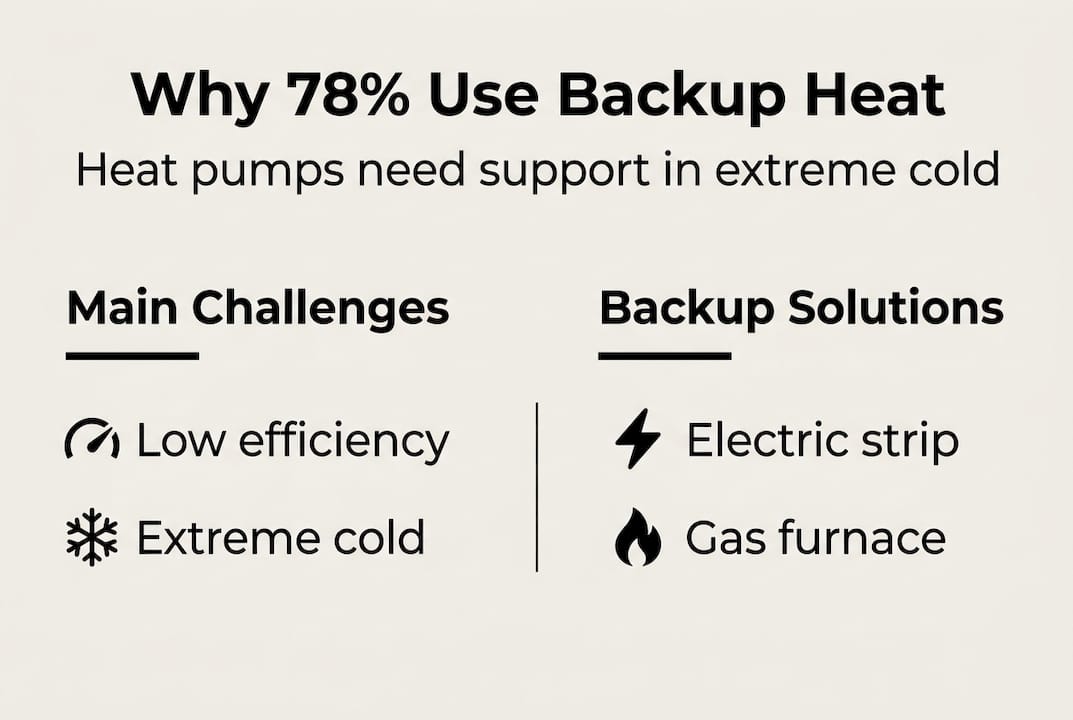
Auxiliary strip heat is used in 78% of cases when installed, but that does not mean it is always the best choice. It is simply the default because it comes bundled with most air handlers. Other options often perform better depending on your home and utility rates.
Here is a quick overview of the most common backup types:
- Electric strip heat: Simple, low upfront cost, no combustion, but expensive to run during prolonged cold
- Gas furnace (dual-fuel): Higher installation cost, requires gas line, but lower operating cost in most Canadian markets
- Electric baseboard: Flexible, zone-friendly, no ductwork needed, but inefficient as a primary backup
- Hydronic (hot water baseboard or radiant): Very comfortable and efficient, but complex and costly to install
| Backup option | Upfront cost | Efficiency | Maintenance needs |
|---|---|---|---|
| Electric strip | Low | Low (COP ~1) | Minimal |
| Gas furnace | Medium to high | High (AFUE 95%+) | Annual service |
| Electric baseboard | Low to medium | Low (COP ~1) | Very low |
| Hydronic system | High | High | Moderate |
Variable capacity heat pump evidence shows that pairing a well-matched backup system with a properly sized heat pump reduces total energy consumption compared to oversized backup reliance.
Pro Tip: If your home already has a gas line and a furnace, a dual-fuel setup is almost always the most cost-effective path. You keep the furnace as backup and let the heat pump handle the bulk of the heating season. The controls are slightly more complex, but the savings on your energy bill are real.
When upgrading heating systems, factor in your local electricity and gas rates before committing to a backup type. In provinces with low electricity costs, electric strip heat may be acceptable. In areas with high electricity rates, gas or heat pump water heating integration can shift the economics significantly.
When and how to size and install backup heat
With options on the table, it is critical to understand when backup heat is non-negotiable and how to do it right.
Here are the key situations where backup heat is essential:
- Extreme cold climates where outdoor temperatures regularly fall below minus 15°C for extended periods
- Outage readiness in rural or semi-rural areas where power reliability is lower
- Large or poorly insulated homes where the heat pump alone cannot meet peak heating load
- Older homes with significant air leakage that increase heat loss beyond what the heat pump can offset
Sizing backup heat correctly is where many installations go wrong. Here are the key considerations:
- Calculate your home’s heat loss at the design temperature for your region
- Identify the balance point of your specific heat pump model
- Size the backup to cover the gap between heat pump output and home heat loss at the coldest expected temperature
- Always consult a certified HVAC professional for a Manual J load calculation
“Properly sized and optimised backup heat meant auxiliary strip use dropped significantly in year two, once the balance point was correctly set and the home’s insulation was addressed.”
Modern cold-climate heat pumps reduce but do not eliminate the need for backup. Insulation upgrades and air sealing work hand in hand with proper sizing to reduce how often backup fires. Before installing, review a heat pump startup checklist to confirm your system is ready for Canadian conditions. If something goes wrong post-install, a clear heat pump repair workflow helps you respond quickly rather than waiting days in the cold. Auxiliary heat metering data consistently shows that undersized or improperly configured backup systems are the leading cause of comfort complaints in the first heating season.
The uncomfortable truth: Why backup heat is here to stay
The industry narrative around heat pumps has shifted toward “all-electric, no backup needed” in recent years. It is an appealing message. Simpler systems, lower upfront costs, fewer components to maintain. But field data from Canadian winters tells a different story.
Many homeowners treat backup heat as a last resort, but reliability and safety genuinely depend on it in cold climates. We have seen installations where the backup was undersized or misconfigured, and the homeowner did not notice until January. By then, the heat pump was working overtime, the backup was firing constantly, and the energy bill was a shock.

There is also the insurance angle that almost nobody talks about. Some home insurance policies have clauses around minimum indoor temperatures during winter. If your heat pump fails and you have no backup, a burst pipe claim could be complicated by inadequate heating provisions.
The practical advice most installers skip: ask for actual field performance data and recent local case studies, not just manufacturer spec sheets. Understanding heat pump terminology like rated capacity, HSPF, and balance point gives you the language to ask the right questions and hold installers accountable. Sizing mistakes show up in February, not at installation day.
Expert help with heat pumps and backup solutions
Getting backup heat right is not something to leave to guesswork. The difference between a well-designed system and a poorly matched one shows up every single winter, in your comfort and your energy bill.

At CoolFix, we specialise in helping Canadian homeowners navigate heat pump installation and backup heating decisions with confidence. Whether you are starting fresh or troubleshooting an existing setup, our heat pump replacement tutorial and installation best practices give you a clear path forward. For those ready to take action, our guide on installing heat pumps covers the wiring and setup details that matter most.
Frequently asked questions
How does backup heating improve reliability in Canadian winters?
Backup heat ensures comfort and safety during extreme cold when heat pumps alone cannot meet the heating demand. COP drops and auxiliary heat usage increases significantly during cold snaps, making a reliable backup essential rather than optional.
Are gas furnaces or electric strips better as backup for heat pumps?
Gas furnaces typically offer higher efficiency and lower operating costs in most Canadian markets, while electric strips are simpler to install but can result in noticeably higher energy bills during prolonged cold. The best backup option depends on your local utility rates and existing infrastructure.
Can smart thermostats reduce backup heat usage?
Yes, smart controls and proper programming decrease reliance on auxiliary heat by optimising activation points and delaying backup until it is truly needed. Smart controls cut auxiliary heat usage measurably when the balance point is set correctly.
Is backup heating always required when installing a heat pump?
In most Canadian homes, backup heat is strongly recommended to ensure comfort during severe cold or power outages. Modern systems reduce but do not eliminate the need for backup, particularly in colder regions of the country.
Recommended
- Why perform routine heat pump maintenance: save 25% energy – CoolFix Appliance & HVAC Service
- Heat pump efficiency explained: save up to 25% on energy | CoolFix Appliance & HVAC Service
- Heat Pump Safety Features 2026: Prevent 90% Risks – CoolFix Appliance & HVAC Service
- Heat Pump Load Calculation: Master 12% Energy Savings – CoolFix Appliance & HVAC Service
- Why Consider Heat Pumps: A Clear Understanding – Skan Plumbing & Heating
0 Comments