

TL;DR:
- Proper operation, maintenance, and installation are crucial for maximizing heat pump savings.
- Maintaining a steady indoor temperature and using zoning optimize efficiency and reduce bills.
- Cold-climate heat pumps can perform effectively below freezing with correct setup and upkeep.
Heat pumps are marketed as the future of home comfort, and for good reason. But here’s what the brochures don’t tell you: a poorly operated or badly installed heat pump can cost you just as much as the old gas furnace it replaced. Rising utility bills are pushing Canadian homeowners to look harder at every kilowatt they consume, and the gap between a heat pump that delivers real savings and one that underperforms often comes down to a handful of overlooked habits, settings, and maintenance steps. This guide covers the most effective, evidence-backed strategies to help you get the maximum return from your heat pump investment.
Table of Contents
- Why heat pumps are an energy-saving game changer
- Essential energy saving habits for heat pump owners
- Boosting savings with maintenance, insulation and weatherization
- Installation mistakes to avoid for maximum heat pump savings
- Cold weather strategies: getting the most from your heat pump year-round
- What most heat pump owners get wrong (and how to stand out)
- Level up your home’s heat pump efficiency with expert help
- Frequently asked questions
Key Takeaways
| Point | Details |
|---|---|
| Steady temperatures save money | Maintaining stable indoor settings prevents wasteful energy spikes and maximises heat pump efficiency. |
| Regular maintenance boosts savings | Cleaning air filters and annual checkups can cut energy use by up to 25%. |
| Home insulation is essential | Weatherizing and insulating your home work with your heat pump to reduce losses and the heating bill. |
| Proper installation prevents waste | Oversized or badly installed systems often short cycle, undermining long-term energy savings. |
| Cold climate? Still efficient | Modern cold-climate heat pumps deliver strong performance even during harsh Canadian winters. |
Why heat pumps are an energy-saving game changer
Unlike a gas furnace that burns fuel to create heat, a heat pump moves warmth from one place to another. In winter, it pulls heat from outdoor air and transfers it inside. In summer, it reverses the process. This fundamental difference is why heat pumps are up to 3x more efficient than gas boilers and use 50% less energy than electric resistance furnaces, with Chelan PUD customers averaging 20% savings on annual energy costs.
That efficiency advantage is significant. To put it plainly: for every unit of electricity a heat pump consumes, it delivers two to three units of heating or cooling energy. No combustion-based system can match that ratio. Understanding heat pump efficiency explained in practical terms helps you appreciate why the technology matters so much for your bills.
| System type | Typical efficiency | Estimated annual savings |
|---|---|---|
| Heat pump | 200–300% (COP 2–3) | Up to 20% vs. gas |
| Gas furnace | 80–98% AFUE | Baseline |
| Electric furnace | 100% | 0% (highest cost) |
Despite these numbers, real-world performance varies widely. The heat pump vs furnace comparison shows that installation quality and user behaviour are the deciding factors. The top three reasons heat pumps underperform are:
- Poor sizing: A unit that is too large short-cycles, running in brief bursts that waste energy and wear out components faster.
- Incorrect installation: Refrigerant leaks, poor ductwork, and bad placement all reduce efficiency silently.
- Inefficient operation: Large temperature swings, ignoring zoning, and skipping maintenance erode savings over time.
With the savings potential established, it is critical to understand exactly how to get the most from your own heat pump.
Essential energy saving habits for heat pump owners
The single biggest lever most homeowners have is how they operate their system day to day. Small behavioural changes add up fast. Correct operation saves 10–25% on energy use, and zoning alone lowers consumption by 10%, while short cycling wastes significant energy.
The most important habit is maintaining a steady indoor temperature, ideally between 19 and 21°C. Heat pumps are designed to run longer at lower intensity, not to sprint and stop. When you crank the thermostat up by 5°C because you feel cold, the system switches to expensive auxiliary electric heat to catch up. That one habit alone can cancel out months of savings.
Here is a practical daily routine to follow:
- Set your thermostat to a consistent 19–21°C and leave it there.
- Use heat pump zoning to heat or cool only occupied rooms.
- Programme setbacks of no more than 2–4°C overnight or when you are away.
- Install a smart thermostat to automate time-of-use optimisation.
- Check your air filters every month and clean or replace as needed.
“Correct operation of a heat pump, including avoiding large temperature setbacks and using zoning, can save between 10 and 25% on energy bills.” — Energy Saving Trust
Pro Tip: Dirty filters force your heat pump to work harder, reducing efficiency by up to 15%. Set a monthly phone reminder to check them. It takes two minutes and costs almost nothing.
Smart thermostats are worth highlighting separately. They learn your schedule, adjust for outdoor temperatures, and can shift energy use to off-peak hours when electricity rates are lower. Paired with zoning, they are one of the highest-return upgrades you can make. For more heat pump efficiency tips tailored to Canadian homeowners, the savings from combining these habits are well documented in real-world results.
Adopting smart routines is step one. Next, it is time to optimise your home’s physical environment for further gains.
Boosting savings with maintenance, insulation and weatherization
Your heat pump can only do so much if the home around it leaks heat like a sieve. Two things work together here: keeping the system itself in top condition, and tightening up your home’s envelope so the heat your pump produces actually stays inside.
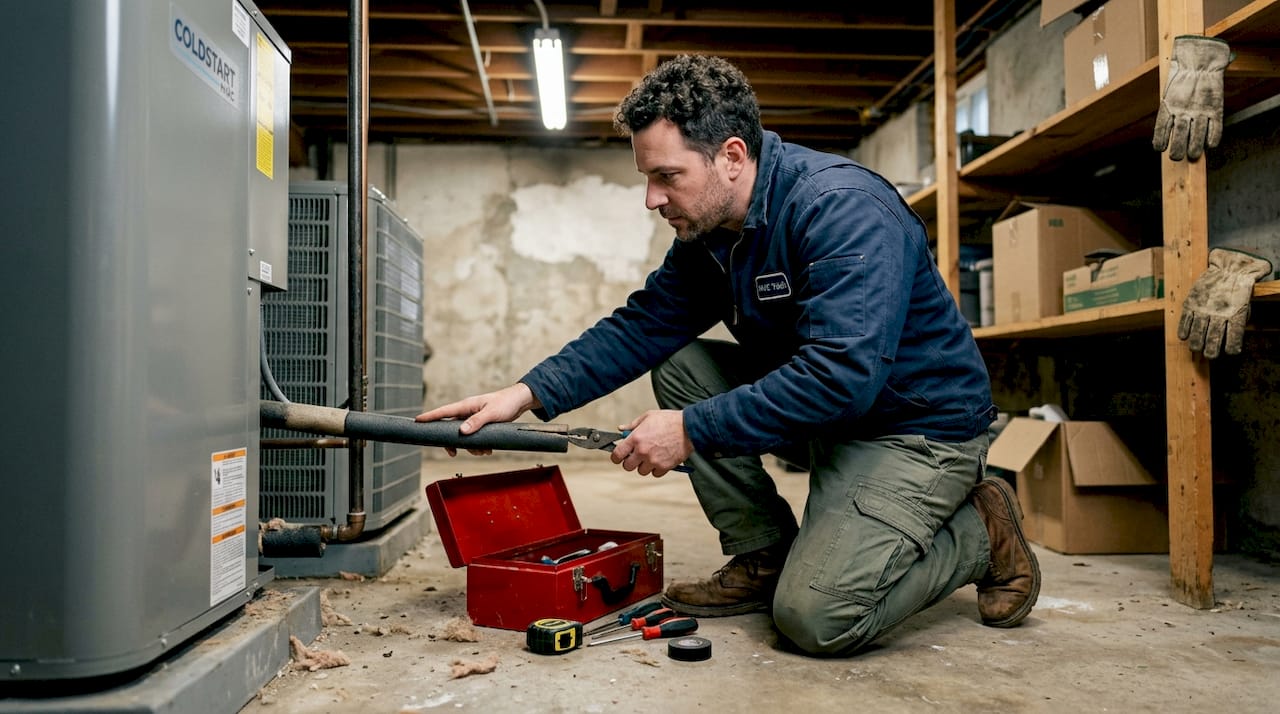
On the maintenance side, clean filters, coils, and outdoor units consistently deliver up to 25% better efficiency. A Swiss study on heat pump optimisation found that on-site optimisation saves an average of 15.2% (1,805 kWh per year) for half of households studied. That is not a marginal gain. That is real money back in your pocket every year.
On the insulation side, the Department of Energy notes that heat loss accounts for 30% of heating energy use in typical homes. Sealing that loss is often cheaper than upgrading your heat pump. Key actions include:
- Insulate attic and exterior walls to current Canadian building code standards.
- Seal gaps around windows, doors, and electrical outlets.
- Add weatherstripping to doors and door sweeps to stop cold air infiltration.
- Insulate hot water pipes and any exposed ductwork in unheated spaces.
For a full breakdown, the heat pump insulation tips guide covers each upgrade with estimated payback periods. Annual professional checkups are equally important. A technician can catch refrigerant leaks, verify refrigerant charge, and confirm the system is not short-cycling, issues that are nearly impossible to spot without instruments. The heat pump maintenance guide and a detailed maintenance checklist make it easy to stay on schedule. Experts on heat pump maintenance consistently emphasise that prevention is far cheaper than repair.
Pro Tip: Before Canadian winter sets in, clear at least 60 centimetres of space around your outdoor unit and check that it is level. Snow and ice buildup forces the defrost cycle to run more often, burning extra electricity.
Now that your system and your home are primed for savings, ensure your installation and system setup are not holding you back.
Installation mistakes to avoid for maximum heat pump savings
A well-maintained, well-operated heat pump in a poorly installed system is still a money pit. Installation quality is the foundation everything else rests on. 17% of air-source heat pumps fail to meet efficiency standards in real-world operation, compared to 2% of ground-source units. And 90% of HVAC issues trace back to poor installation rather than equipment failure.
Sizing is the most common culprit. Roughly 10% of systems are oversized, leading to short cycling, while undersized units are rare at around 1%. Both problems are preventable with a proper Manual J load calculation before any equipment is purchased.
| Issue | Frequency | Primary consequence |
|---|---|---|
| Oversized system | ~10% of installs | Short cycling, premature wear |
| Undersized system | ~1% of installs | Continuous running, high bills |
| Poor installation | ~90% of HVAC issues | Leaks, inefficiency, failure |
Before signing any contract, ask your installer these questions:
- Will you perform a Manual J load calculation for my specific home?
- How will you verify refrigerant charge after installation?
- What is your process for commissioning and testing the system?
- Do you offer a post-installation performance check after the first heating season?
For a complete overview, the installation best practices guide walks you through every step. Also review heat pump temperature efficiency data to confirm your chosen model suits your local climate. A post-installation inspection after your first full winter is one of the smartest investments you can make.
Once your system is properly installed and set up for your space, you will want to fine-tune for peak performance across the full range of Canadian weather.
Cold weather strategies: getting the most from your heat pump year-round
One of the most persistent myths about heat pumps in Canada is that they stop working when temperatures drop below freezing. This is simply not true. COP declines with temperature, moving from a high of 3 to 5 above 1.7°C, down to 1.5 to 2 below minus 9°C for cold-climate models, but the system keeps delivering heat throughout.
Modern cold-climate heat pumps are effective to minus 15°C and below with a COP above 1.75, which still beats electric resistance heating. The key is knowing how to operate them correctly in cold snaps.
“Cold-climate heat pumps continue to deliver meaningful heat well below minus 15°C, outperforming electric baseboard heaters even in the harshest Canadian winters.”
Here is how to optimise performance during cold weather:
- Use weather compensation controls to automatically lower flow temperatures as outdoor temps rise, saving energy on milder days.
- Avoid large temperature setbacks overnight. A 2°C drop is fine; a 7°C drop forces auxiliary heat to kick in.
- Use zoning controls to concentrate heat where people actually are.
- Keep the outdoor unit clear of snow and ice, and never block the airflow with tarps or enclosures.
- Confirm your system uses a Manual J sizing calculation suited to your local design temperature.
With these strategies in place, your heat pump will handle a Canadian winter reliably and efficiently.
What most heat pump owners get wrong (and how to stand out)
After working with Canadian homeowners on heat pump installations and repairs, one pattern stands out clearly: most people assume the savings will arrive automatically once the new system is running. They do not. The data tells a different story.
Conventional advice focuses on equipment specs and ignores the real-world variables that actually determine your bills: your home’s actual air sealing, your thermostat habits, and whether anyone ever verified the system is performing as commissioned. Many Canadians trust that a new system alone will solve high energy costs, but post-installation optimisation and whole-home weatherization are what unlock the biggest savings. A new heat pump in a leaky, poorly insulated home is just an expensive way to heat the outdoors.
The hard-won lesson from real installations is this: always follow up with your installer after the first full season. Test different thermostat settings. Get a blower door test done if you have not already. The advanced efficiency tips available for Canadian homeowners show that most homes can save an additional 10 to 25% through minor tweaks and annual checkups alone. The equipment is only half the equation.
Level up your home’s heat pump efficiency with expert help
Even the most informed homeowner benefits from a professional eye on their system. Reading about efficiency is valuable, but having a qualified technician verify your installation, check refrigerant levels, and confirm your settings are dialled in for your specific home is what turns good intentions into real savings.

At CoolFix, we specialise in heat pump installation and maintenance for Canadian homeowners who want results, not just promises. Whether you are starting fresh with a heat pump replacement tutorial, reviewing installation best practices before hiring a contractor, or booking a seasonal tune-up, the CoolFix home services team is ready to help you get every dollar of savings your system is capable of delivering.
Frequently asked questions
How much can I really save on energy bills with a heat pump?
Most Canadian homeowners see annual energy bill reductions of 10 to 25%, depending on climate, home insulation, and how correctly the heat pump is operated day to day.
What regular maintenance helps my heat pump save more energy?
Clean or replace air filters monthly, keep outdoor units clear of snow and debris, and schedule annual professional checkups. On-site optimisation alone saves an average of 1,805 kWh per year for many households.
Can a heat pump handle Canadian winter temperatures?
Yes. Cold-climate models remain efficient down to minus 15°C and below, with a COP above 1.75, and are designed specifically for harsh Canadian winters.
What settings save the most energy with my heat pump?
Maintain a steady 19 to 21°C, limit overnight setbacks to 2 to 4°C, and use zoning or a smart thermostat to avoid conditioning rooms that are not in use.
How can I tell if my heat pump is sized correctly?
A correctly sized system should include a Manual J calculation and should run in longer, steady cycles rather than switching on and off frequently or running non-stop.
Recommended
- Heat pump efficiency explained: save up to 25% on energy | CoolFix Appliance & HVAC Service
- 7 Heat Pump Efficiency Tips for Canadian Homeowners – CoolFix Appliance & HVAC Service
- Why perform routine heat pump maintenance: save 25% energy – CoolFix Appliance & HVAC Service
- Heat Pump Placement Explained: Energy Savings at Home – CoolFix Appliance & HVAC Service
0 Comments