

Choosing between a heat pump and a furnace for your home heating can feel overwhelming, especially when contradictory advice floods online forums and sales pitches. Many Canadian homeowners assume furnaces are always the superior choice for our cold winters, but modern heat pumps have evolved dramatically in recent years. Understanding how each system works, their true efficiency in different climates, and what they cost to operate will help you make a confident, informed decision. This guide breaks down the key differences, real-world performance data, and practical factors to consider so you can select the heating solution that best fits your home, budget, and comfort needs.
Table of Contents
- Key takeaways
- How heat pumps and furnaces work: fundamental differences
- Energy efficiency and operating costs: comparing real-world performance
- Choosing the right system for your home: climate, installation, and comfort factors
- Maintenance and lifespan: maximising reliability and performance
- Expert heat pump and furnace services from CoolFix
- Frequently asked questions
Key Takeaways
| Point | Details |
|---|---|
| System differences | Heat pumps transfer heat via refrigerant and can heat and cool, while furnaces generate heat through combustion or electric resistance. |
| Efficiency comparison | Heat pumps typically achieve 200 to 300 percent efficiency by moving heat rather than generating it, whereas high efficiency gas furnaces reach about 95 percent. |
| Maintenance impact | Routine heat pump maintenance can save about 25 percent on energy costs by keeping refrigerant levels optimal and components clean. |
| Climate and costs | Operating costs depend on local energy prices, with heat pumps often cheaper when electricity costs are lower than natural gas. |
How heat pumps and furnaces work: fundamental differences
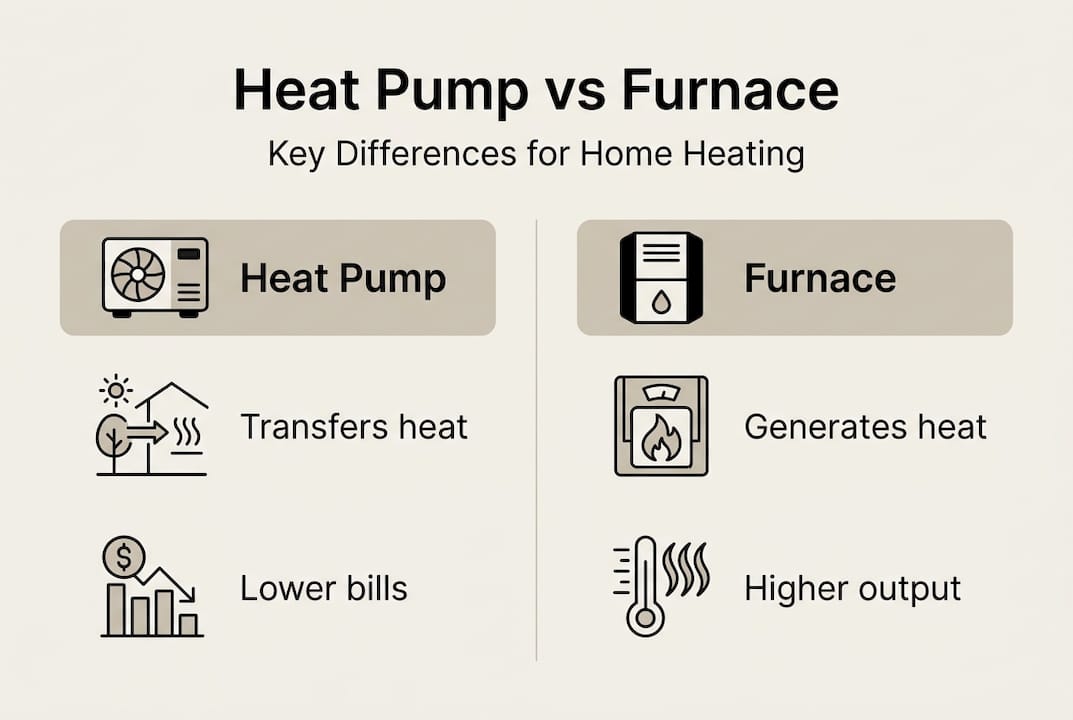
Heat pumps and furnaces use completely different methods to warm your home. A heat pump transfers heat by cycling refrigerant and can both heat and cool homes, making it a versatile year-round system. During winter, the outdoor unit extracts heat from the outside air, even when temperatures drop below freezing, and moves it indoors. In summer, the process reverses to provide air conditioning. This dual functionality eliminates the need for separate heating and cooling systems.
Furnaces, by contrast, generate heat through combustion or electric resistance. Natural gas furnaces burn fuel in a combustion chamber, producing hot gases that warm air circulated through your ductwork. Electric furnaces use heating elements similar to those in a toaster, converting electricity directly into heat. Both types deliver intense, fast warmth that quickly raises indoor temperatures.
The heating experience differs noticeably between systems. Heat pumps provide steady, gradual warmth that maintains consistent comfort without dramatic temperature swings. Furnaces deliver powerful bursts of hot air that heat rooms rapidly but cycle on and off more frequently. This difference affects not only comfort but also how each system responds to sudden cold snaps.
Energy sources also distinguish these technologies. Heat pumps run entirely on electricity, while furnaces may use natural gas, propane, or electricity. This impacts both operating costs and environmental footprint. Regular heat pump maintenance benefits include sustained efficiency and lower energy consumption, whereas furnace upkeep focuses on combustion safety and air quality.
Key operational differences include:
- Heat pumps move existing heat rather than creating it, using less energy per unit of warmth delivered
- Furnaces create heat from scratch, requiring more fuel or electricity to achieve the same temperature
- Heat pumps operate quietly with minimal noise, while furnaces produce audible combustion sounds
- Heat pumps need outdoor space for the compressor unit, whereas furnaces fit entirely inside your home
- Furnaces reach full heating capacity instantly, while heat pumps take longer to warm very cold spaces
Energy efficiency and operating costs: comparing real-world performance
Energy efficiency separates heat pumps and furnaces most dramatically when comparing monthly bills. Heat pumps typically achieve 200 to 300 percent efficiency because they move heat rather than generate it, meaning they deliver two to three times more heating energy than the electricity they consume. High-efficiency gas furnaces reach about 95 percent efficiency, converting nearly all fuel into heat but still requiring more energy input for the same warmth.

Routine heat pump maintenance can save 25% on energy costs by keeping refrigerant levels optimal and components clean. Neglecting seasonal tune-ups reduces efficiency quickly, forcing the system to work harder and consume more electricity. Furnaces also benefit from maintenance, particularly filter changes that prevent airflow restrictions and efficiency losses.
Operating cost comparisons depend heavily on local energy prices. In regions where electricity costs less than natural gas, heat pumps deliver substantial savings. Where gas remains cheap, furnaces may cost less monthly despite lower efficiency. The table below shows typical annual operating costs for a 2,000-square-foot home in different Canadian climate zones:
| Climate zone | Heat pump annual cost | Gas furnace annual cost | Electric furnace annual cost |
|---|---|---|---|
| Mild (Vancouver) | $800-$1,100 | $1,200-$1,500 | $2,000-$2,400 |
| Moderate (Toronto) | $1,100-$1,400 | $1,300-$1,600 | $2,200-$2,600 |
| Cold (Edmonton) | $1,400-$1,800 | $1,400-$1,700 | $2,400-$2,800 |
Upfront costs tell a different story. Heat pumps generally cost $5,000 to $10,000 installed, while gas furnaces run $3,000 to $6,000 and electric furnaces $2,000 to $4,500. This initial investment gap narrows over time as heat pumps save money monthly, but payback periods vary by climate and usage patterns.
Cold weather performance significantly affects heat pump efficiency. When outdoor temperatures drop below -15°C, heat pump efficiency decreases and backup electric resistance heating may activate, increasing costs. Modern cold-climate heat pumps maintain better performance in extreme temperatures, but they still work harder and consume more electricity than in moderate weather. Furnaces deliver consistent heating regardless of outdoor conditions.
Pro Tip: Track your monthly heating bills for a full year before choosing a system. Multiply your highest winter bill by 0.6 to estimate potential heat pump savings in moderate months, helping you calculate realistic payback timelines.
Factors affecting real-world efficiency include:
- Home insulation quality determines how much heat escapes, directly impacting system runtime
- Thermostat settings and temperature preferences influence total energy consumption
- Ductwork condition affects both systems, with leaks reducing efficiency by 20 to 30 percent
- System sizing matters, as oversized units cycle inefficiently and undersized units run constantly
Exploring heat pump efficiency tips reveals simple adjustments that maximise savings without sacrificing comfort.
Choosing the right system for your home: climate, installation, and comfort factors
Your local climate zone determines which heating system performs best and costs least to operate. Heat pumps excel in coastal British Columbia, southern Ontario, and other moderate regions where winter temperatures rarely drop below -15°C for extended periods. In these areas, heat pumps run efficiently throughout the heating season and provide valuable cooling during summer. Colder regions like the Prairies and northern territories favour furnaces or hybrid systems that combine both technologies.
Installation complexity varies significantly between systems. Furnace installation typically takes one to two days in homes with existing ductwork and gas lines, making it the simpler retrofit option. Heat pump installations involve outdoor unit placement, refrigerant line installation, electrical upgrades, and sometimes ductwork modifications. Heat pump installation timelines vary regionally in urban Canada, with permits and inspections adding days or weeks to the process.
Home construction and layout influence system suitability. Older homes with radiators or baseboard heaters require ductwork installation for either system, a major renovation costing $5,000 to $15,000. Ductless mini-split heat pumps offer an alternative, mounting indoor units directly on walls without ductwork. Newer homes with modern insulation and air sealing maximise heat pump efficiency, while drafty older homes may need upgrades before heat pumps deliver optimal savings.
The following table compares key installation and suitability factors:
| Factor | Heat pump | Furnace |
|---|---|---|
| Installation time | 3-7 days including permits | 1-2 days in gas-ready homes |
| Electrical requirements | 200-amp service often needed | Minimal for gas, 100-amp for electric |
| Outdoor space needed | Yes, for compressor unit | No |
| Ductwork compatibility | Requires ducts or mini-splits | Requires ducts |
| Permits required | Electrical and refrigeration | Gas and combustion safety |
Comfort preferences matter beyond raw efficiency numbers. Heat pumps deliver gentle, consistent warmth that some homeowners love and others find underwhelming compared to the blast of hot air from furnaces. Noise levels differ too, with heat pumps operating quietly while furnaces produce audible combustion and blower sounds. If you value rapid temperature recovery after setbacks or prefer aggressive heating, furnaces may suit your expectations better.
Pro Tip: Schedule installations during shoulder seasons in spring or autumn when contractors have more availability and you can test the system before peak heating or cooling season arrives.
Consider these decision factors:
- Future energy costs may favour electricity over fossil fuels as carbon pricing increases
- Resale value considerations, as buyers increasingly seek energy-efficient homes
- Environmental impact, with heat pumps producing fewer direct emissions
- Backup heating needs in cold climates, potentially requiring dual systems
Reviewing a heat pump replacement tutorial helps you understand the full scope of installation before committing. Understanding heat pump installation timelines prevents surprises and helps you plan around seasonal weather.
Maintenance and lifespan: maximising reliability and performance
Regular maintenance directly impacts system longevity, efficiency, and reliability. Heat pumps typically last 15 to 20 years with proper care, while furnaces endure 15 to 25 years depending on fuel type and usage intensity. Neglecting maintenance shortens these lifespans dramatically and increases breakdown risks during the coldest or hottest days when you need heating or cooling most.
Heat pump maintenance focuses on refrigerant system integrity and outdoor unit condition. Proper maintenance extends heat pump life and reduces breakdowns by catching small issues before they cascade into expensive failures. Refrigerant leaks reduce efficiency immediately and can damage compressors if left unchecked. Outdoor coils collect dirt, leaves, and debris that restrict airflow and force the system to work harder.
Furnace maintenance emphasises combustion safety and air quality. Gas furnaces require annual inspections of burners, heat exchangers, and venting systems to prevent carbon monoxide leaks and ensure complete combustion. Cracked heat exchangers pose serious safety hazards and necessitate immediate replacement. Electric furnaces need less safety monitoring but still require regular filter changes and electrical connection checks.
Follow this numbered maintenance checklist for heat pumps:
- Replace or clean air filters monthly during heavy use seasons to maintain airflow and efficiency
- Clear debris from outdoor unit and maintain 60 cm clearance on all sides for proper airflow
- Schedule professional refrigerant level checks annually to catch leaks early
- Inspect and clean indoor coils every two years to prevent efficiency losses
- Test defrost cycle operation before winter to ensure ice buildup does not damage components
- Check electrical connections and tighten loose terminals to prevent arcing and failures
- Verify thermostat accuracy and calibrate if temperature readings drift
Furnace maintenance priorities include:
- Replace filters every one to three months depending on household dust and pet hair levels
- Inspect heat exchanger annually for cracks or corrosion that indicate replacement needs
- Clean burners and flame sensors to maintain efficient combustion and prevent lockouts
- Check and clean venting systems to prevent exhaust backdrafts and carbon monoxide risks
- Lubricate blower motor bearings annually to reduce wear and noise
- Test safety controls including limit switches and pressure switches for proper operation
Pro Tip: Keep a maintenance log with dates, tasks completed, and any issues noted. This documentation helps technicians diagnose problems faster and provides valuable records if warranty claims arise.
DIY maintenance saves money but professional inspections catch problems that untrained eyes miss. Annual professional tune-ups cost $150 to $300 but prevent failures costing thousands in emergency repairs and lost comfort. Following a detailed heat pump maintenance checklist ensures you complete all critical tasks. Learning about heat pump failure prevention tips helps you recognise warning signs before breakdowns occur.
Maintenance costs over a system’s lifetime add up differently. Heat pumps require annual professional service costing $2,500 to $4,500 total over 15 years. Furnaces need similar annual visits totaling $2,250 to $4,000 over 15 years, with gas models requiring more safety inspections. Factor these ongoing costs into your total ownership calculations alongside purchase price and energy bills.
Expert heat pump and furnace services from CoolFix
Making the right heating choice requires understanding your specific home, climate, and priorities, but implementing that choice demands professional expertise. CoolFix specialises in heat pump and furnace installation, replacement, and maintenance across Canada, helping homeowners translate research into reliable comfort. Whether you have decided on a heat pump, furnace, or hybrid system, professional installation prevents the common errors that reduce efficiency and shorten equipment life.

Our detailed heat pump replacement tutorial walks you through the entire process so you know what to expect at each stage. Understanding realistic heat pump installation timelines helps you plan around work schedules and seasonal weather. Expert technicians prevent wiring mistakes, refrigerant issues, and sizing errors that plague DIY attempts and unqualified installers. When you invest thousands in a new heating system, professional installation protects that investment and ensures you achieve the efficiency and savings you expect. Choosing the right HVAC contractor makes all the difference between a system that performs flawlessly for decades and one that disappoints from day one.
Frequently asked questions
What is the main difference between a heat pump and a furnace?
The fundamental difference lies in how they produce warmth. Heat pumps transfer existing heat from outdoors using electricity and can reverse to provide cooling, making them year-round climate control systems. Furnaces generate heat by burning natural gas or using electric resistance, providing heating only. This means heat pumps move energy rather than create it, typically using less electricity per unit of warmth delivered, while furnaces produce intense heat quickly regardless of outdoor temperature.
Which system is more energy efficient for Canadian homes?
Heat pumps generally prove more energy efficient in mild to moderate Canadian climates like coastal British Columbia and southern Ontario, where they can achieve 200 to 300 percent efficiency. In extremely cold regions like the Prairies, furnaces may match or exceed heat pump efficiency when temperatures drop below -15°C for extended periods. Your specific efficiency depends on local electricity and gas prices, home insulation quality, and how well you maintain the system. Regular professional maintenance and proper thermostat management significantly impact real-world efficiency for both systems.
How do installation timelines differ between heat pumps and furnaces?
Heat pump installation timelines vary regionally in urban Canada, typically requiring three to seven days including permits, electrical work, and refrigerant system setup. Furnace installations usually complete in one to two days for homes already equipped with gas lines and ductwork, making them faster retrofit options. Heat pumps involve more complex permitting for electrical and refrigeration work, outdoor unit placement, and sometimes ductwork modifications. Urban areas may experience longer waits for permits and inspections, while rural installations often proceed faster with fewer regulatory requirements.
What maintenance does each system require?
Heat pumps require monthly filter changes, annual refrigerant level checks, outdoor unit cleaning to remove debris, and periodic indoor coil cleaning to maintain efficiency. Professional inspections should verify defrost cycle operation, electrical connections, and thermostat calibration. Furnaces need regular filter replacements every one to three months, annual heat exchanger inspections for cracks, burner cleaning, and venting system checks to prevent carbon monoxide hazards. Both systems benefit from professional tune-ups costing $150 to $300 annually, preventing expensive breakdowns and maintaining peak efficiency throughout their 15 to 25 year lifespans.
Recommended
- Heat Pump Placement Explained: Energy Savings at Home – CoolFix Appliance & HVAC Service
- Understand heat pump energy ratings for max efficiency – CoolFix Appliance & HVAC Service
- Heat Pump Water Heating Explained: Energy Savings for Canadians – CoolFix Appliance & HVAC Service
- 7 Heat Pump Efficiency Tips for Canadian Homeowners – CoolFix Appliance & HVAC Service
0 Comments