
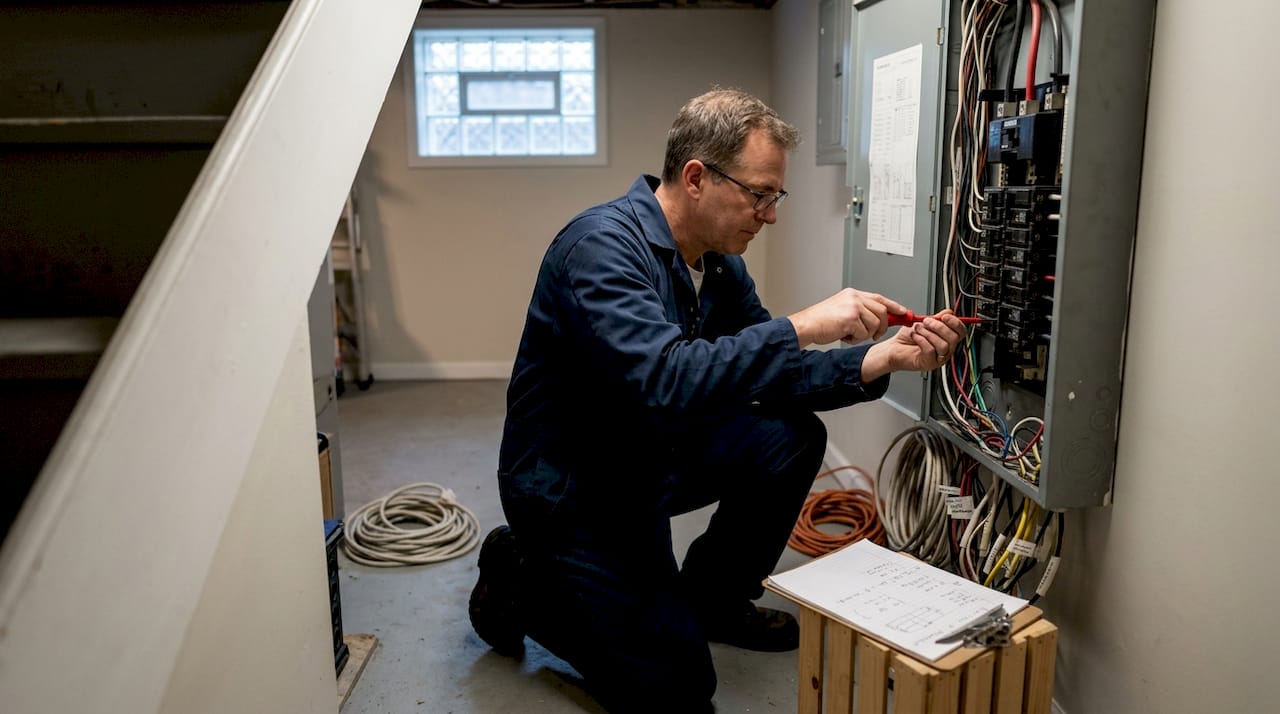
Many homeowners believe that any standard household outlet can power a heat pump, leading to dangerous installation errors and costly system failures. The truth is that heat pumps demand specific voltage configurations that must align with Canadian electrical codes and your home’s capacity. Understanding these voltage requirements isn’t just about getting your system running, it’s about ensuring safe operation, maximising efficiency, and protecting your investment. This guide walks you through everything you need to know about heat pump voltage specifications, code compliance, electrical system assessment, and common wiring pitfalls to avoid.
Table of Contents
- Key takeaways
- Understanding heat pump voltage basics
- Electrical code requirements and safety considerations
- Assessing your home’s electrical system for heat pump compatibility
- Common wiring errors and how to avoid them
- Trust CoolFix for your heat pump electrical needs
- Frequently asked questions
Key Takeaways
| Point | Details |
|---|---|
| Voltage requirements | Most residential heat pumps require 208 to 240 volt circuits rather than standard 120 volt outlets to operate safely and efficiently. |
| Code compliance | Canadian Electrical Code and provincial rules require licensed installers and proper wiring to protect safety and warranty. |
| Dedicated circuit | Heat pumps must connect to a dedicated circuit with breakers sized for the unit to prevent overload. |
| Wiring errors to avoid | Avoid incorrect voltage, undersized wiring, and improper breaker sizing by following manufacturer data plates and code guidelines. |
Understanding heat pump voltage basics
Heat pumps require substantially more power than typical household appliances, and grasping the fundamentals of their electrical needs prevents costly mistakes. Typical residential heat pumps require 208-240V circuits to operate efficiently and safely, far exceeding the 120V standard outlets used for lamps and small electronics. This higher voltage allows the compressor and fan motors to generate the heating and cooling capacity your home demands.
Voltage represents the electrical pressure pushing current through your system’s circuits. Think of it like water pressure in your plumbing, higher voltage delivers more power to run demanding equipment. Your heat pump connects directly to your main electrical panel through a dedicated circuit with appropriately rated breakers. These breakers protect against overload and short circuits, automatically cutting power if current exceeds safe levels.
The relationship between voltage, amperage, and wattage determines whether your electrical system can handle a heat pump. Most residential units draw between 15 and 60 amperes depending on capacity and model specifications. Operating a heat pump on incorrect voltage causes immediate performance problems, from reduced heating capacity to compressor damage. Long term voltage issues shorten equipment lifespan and drive up energy costs as the system struggles to maintain temperature.
Canadian electrical standards exist precisely to prevent these scenarios. The Canadian Electrical Code specifies wire gauge, circuit protection, and installation methods that ensure safe, reliable operation. Ignoring these requirements doesn’t just risk equipment damage, it creates fire hazards and may void your manufacturer’s warranty.
Pro Tip: Always verify your heat pump’s voltage requirements on the manufacturer’s data plate before purchasing or installing. Models vary, and assuming standard specifications can lead to incompatible electrical work that requires expensive corrections.
Essential voltage terminology:
- Volts measure electrical pressure or potential difference in the circuit
- Amperes quantify the flow rate of electrical current through conductors
- Circuit refers to the complete path electricity travels from panel to appliance and back
- Breaker capacity must match or slightly exceed the heat pump’s maximum amperage draw
- Dedicated circuit means no other appliances share the same electrical pathway
For comprehensive guidance on proper electrical connections, consult a detailed heat pump wiring guide for Canadian installations that addresses regional code requirements.
Electrical code requirements and safety considerations
Canadian electrical regulations aren’t suggestions, they’re mandatory standards designed to protect lives and property. Following Canadian electrical installation codes for heat pumps ensures safe operation and code compliance, preventing the electrical fires and equipment failures that result from substandard work. Provincial authorities enforce these rules through inspection processes that verify installations meet minimum safety thresholds.
The Canadian Electrical Code mandates specific requirements for heat pump circuits. You must install a disconnect switch within sight of the outdoor unit, allowing technicians to safely cut power during maintenance or emergencies. This switch must be weatherproof and rated for the system’s voltage and amperage. Wire sizing follows strict calculations based on current draw and circuit length, with larger gauge conductors required for higher amperage or longer distances to prevent voltage drop and overheating.
Grounding provides a critical safety function by creating a low resistance path for fault currents. Proper grounding prevents electrical shock if insulation fails or components malfunction. Your heat pump installation requires both equipment grounding through the green or bare copper conductor and system grounding at the main panel. Skipping or improperly executing grounding procedures creates lethal shock hazards.
Circuit protection through appropriately sized breakers prevents wire overheating and fire. The breaker must match the heat pump’s maximum current rating as specified by the manufacturer, typically 125% of the unit’s rated load current. Installing oversized breakers eliminates this protection, allowing dangerous current levels that can ignite wiring insulation. Undersized breakers cause nuisance tripping that disrupts heating and cooling.
Legal and practical compliance considerations:
- Only licensed electricians may perform heat pump electrical installations in most provinces
- Building permits and electrical inspections are mandatory for new installations
- Insurance policies may deny claims for fires caused by non compliant electrical work
- Manufacturers void warranties when installations violate electrical codes
- Real estate transactions can stall if unpermitted electrical work is discovered
Understanding heat pump installation codes in Canada protects your investment and ensures your system operates safely for decades. Working with qualified professionals who know heat pump installer qualifications in Canada guarantees code compliant installations that pass inspection.
Assessing your home’s electrical system for heat pump compatibility
Before installing a heat pump, you need to determine whether your existing electrical infrastructure can support the additional load. Most modern Canadian homes may require electrical panel upgrades to support heat pump voltage requirements safely, particularly in older properties built before high efficiency heating became standard.
Your electrical panel’s amperage rating appears on a label inside the main breaker cover. Common residential service sizes include 100, 150, and 200 amperes. A 100 amp panel in a home with electric water heating, range, and dryer may lack capacity for a heat pump without upgrades. Calculate your existing load by adding the amperage ratings of all major appliances and circuits. If this total approaches 80% of your panel’s rating, you need a service upgrade before adding a heat pump.
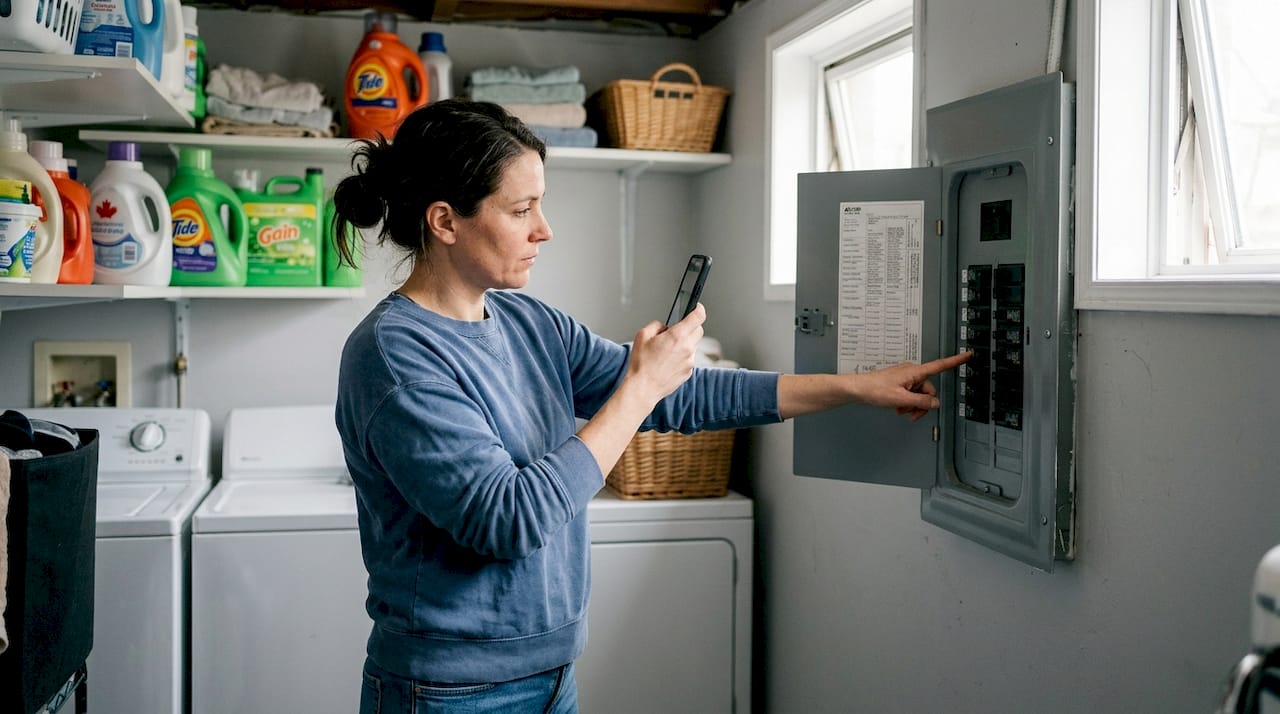
Circuit breaker availability matters as much as total capacity. Heat pumps require dedicated double pole breakers, typically occupying two adjacent slots in your panel. Examine your panel to identify available spaces. If all slots are filled, you’ll need a panel replacement or subpanel addition. Never double up circuits or use tandem breakers for heat pumps, as this violates code and creates safety hazards.
Wiring from your panel to the heat pump location must handle the voltage and current without excessive voltage drop. Long wire runs or undersized conductors cause performance problems and efficiency losses. Professional electricians measure voltage at the proposed heat pump location and calculate wire gauge requirements based on distance and load. This assessment prevents the frustrating scenario where your new heat pump underperforms because inadequate wiring starves it of proper voltage.
Step by step electrical system evaluation:
- Locate your electrical panel and record the main breaker amperage rating
- List all major appliances with their amperage requirements from data plates
- Add up existing electrical loads to determine available capacity
- Count open breaker slots and verify space for a double pole breaker
- Measure the distance from panel to proposed heat pump outdoor unit location
- Contact a licensed electrician for professional load calculation and wire sizing
- Obtain quotes for any necessary panel upgrades or service increases
Pro Tip: Schedule your electrical assessment before purchasing a heat pump. Discovering you need a $2,000 panel upgrade after buying equipment creates budget stress and delays installation. Factor electrical work costs into your total project budget from the start.
For detailed guidance on the complete installation process, review this heat pump replacement tutorial for Canadian homeowners. Understanding heat pump wiring error avoidance tips helps you ask informed questions during contractor consultations. Familiarise yourself with heat pump wiring requirements for Canadian homes to recognise quality workmanship.
Common wiring errors and how to avoid them
Installation mistakes cause significant problems, with incorrect wiring causing 20% of heat pump installation failures and safety incidents in Canada. Understanding these errors helps homeowners verify quality work and technicians avoid dangerous shortcuts that compromise system performance and safety.
Wrong breaker sizing tops the list of voltage related errors. Installing a 30 amp breaker for a heat pump requiring 40 amps causes constant tripping and prevents the system from reaching full capacity. Conversely, oversizing breakers to 60 amps when 40 amps is appropriate eliminates overcurrent protection, allowing dangerous current levels that can melt wire insulation and start fires. Always match breaker amperage to manufacturer specifications, typically found on the unit’s data plate.
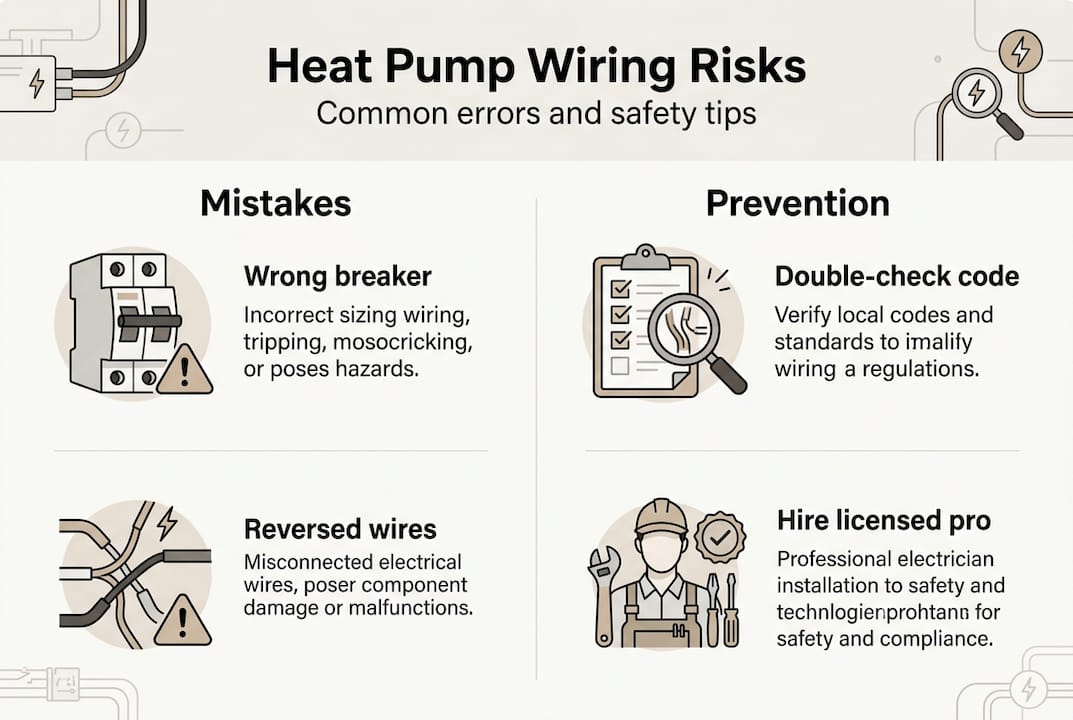
Reversed polarity occurs when installers swap hot and neutral conductors at connection points. While the heat pump may appear to run normally, reversed polarity creates shock hazards and can damage electronic controls over time. This error is particularly common when working with 240V circuits where both conductors are hot, leading to confusion about proper connection sequence. Using a multimeter to verify correct polarity before energising the system catches this mistake.
Inadequate wire gauge for the circuit length and load causes voltage drop that starves the compressor of needed power. The heat pump struggles to start, runs inefficiently, and experiences premature wear. Canadian electrical code specifies minimum wire sizes based on amperage and distance, but installers sometimes use leftover wire from other jobs rather than purchasing correct gauge conductors. This false economy costs far more in reduced efficiency and shortened equipment life.
| Common error | Proper practice | Consequence of error |
|---|---|---|
| Undersized breaker (20A for 30A load) | Match breaker to manufacturer specs | Nuisance tripping, incomplete cooling/heating |
| Oversized breaker (60A for 40A load) | Use exact or next size up per code | Fire risk from overheated wiring |
| Wrong wire gauge (14 AWG for 30A) | Size wire for amperage and distance | Voltage drop, efficiency loss, fire hazard |
| Reversed polarity connections | Verify with multimeter before power on | Shock hazard, control board damage |
| Missing disconnect switch | Install weatherproof disconnect in sight | Code violation, unsafe service conditions |
| Improper grounding | Ground equipment and system per code | Lethal shock risk during faults |
Verification steps to prevent wiring errors:
- Use a digital multimeter to measure voltage at the disconnect before connecting the heat pump
- Verify all connections match the wiring diagram provided with the unit
- Check wire colour coding against Canadian standards (black and red for hot conductors)
- Confirm proper torque on all terminal connections to prevent arcing and loose contacts
- Test ground continuity from the heat pump chassis back to the main panel ground bar
- Document wire gauge, breaker size, and circuit routing for future reference
Pro Tip: Take photos of your completed electrical connections before closing up junction boxes and panels. These images become invaluable references during future maintenance or troubleshooting, helping technicians quickly understand your system’s configuration.
Hiring licensed electricians eliminates most wiring errors because qualified professionals understand code requirements and proper installation techniques. They carry appropriate testing equipment and insurance that protects you if problems occur. The modest additional cost of professional installation pales compared to the expense of correcting dangerous DIY electrical work or replacing equipment damaged by improper wiring.
Learn about common heat pump wiring errors and fixes to recognise quality installations. Reference a detailed heat pump wiring guide when planning your project to understand what correct work looks like.
Trust CoolFix for your heat pump electrical needs
Navigating voltage requirements, electrical codes, and safe installation practices can feel overwhelming when you’re ready to upgrade your home’s heating and cooling system. CoolFix Appliance & HVAC Service brings expertise in code compliant heat pump installations that prioritise safety and long term reliability. Our technicians understand the specific challenges of Canadian electrical systems and stay current with evolving code requirements.

Whether you’re planning a new installation or troubleshooting an existing system, our heat pump replacement tutorial for Canadian homeowners walks you through every decision point. Wondering about project duration? Our heat pump installation timeline for Canada helps you plan around your schedule. We’ve also compiled comprehensive heat pump wiring error avoidance tips that protect your investment and ensure safe operation for years to come.
Frequently asked questions
What voltage do residential heat pumps typically require?
Most Canadian residential heat pumps operate on 208V to 240V circuits, significantly higher than standard household outlets. The exact voltage depends on your specific model and home’s electrical configuration. Always verify requirements on the manufacturer’s data plate before installation. Proper voltage ensures efficient operation and prevents equipment damage. For detailed connection guidance, consult this heat pump wiring guide for Canadian installations.
Can I use my existing electrical panel for a new heat pump?
Your existing panel may accommodate a heat pump if it has sufficient amperage capacity and available breaker slots for a dedicated circuit. Homes with 100 amp service or panels near capacity typically require upgrades. A licensed electrician should evaluate your specific situation through load calculations and panel inspection. Attempting installation without adequate capacity causes breaker trips and potential fire hazards. Review this heat pump replacement tutorial for Canadian homeowners to understand the complete assessment process.
What are the risks of improper heat pump wiring?
Incorrect voltage wiring creates serious hazards including equipment damage, electrical fires, shock risks, and voided manufacturer warranties. Undersized wires overheat, wrong breakers fail to protect circuits, and reversed polarity damages electronic controls. Insurance companies may deny claims for fires caused by non compliant electrical work. Always hire licensed electricians who follow Canadian Electrical Code requirements. Learn about specific mistakes and prevention strategies through these heat pump wiring error avoidance tips.
How do I know if my home needs an electrical upgrade for a heat pump?
Calculate your existing electrical load by adding amperage ratings of all major appliances and circuits. If this total exceeds 80% of your panel’s rated capacity, you need an upgrade. Other indicators include frequent breaker trips, dimming lights when appliances start, or a panel with no available breaker slots. Homes built before 1990 often require service increases to support modern heat pumps. Professional electricians perform detailed load calculations and voltage drop assessments to determine exact requirements.
What size breaker does a heat pump need?
Breaker size depends on your specific heat pump model’s maximum current draw, typically ranging from 15 to 60 amperes for residential units. The Canadian Electrical Code requires breakers sized at 125% of the unit’s rated load current. Never guess at breaker sizing, always reference the manufacturer’s installation instructions and data plate specifications. Incorrect breaker sizing either causes nuisance tripping or eliminates essential overcurrent protection, both creating operational and safety problems.
Recommended
- How to Install Heat Pump: Avoid 20% Wiring Errors in 2026 – CoolFix Appliance & HVAC Service
- Heat Pump Safety Features 2026: Prevent 90% Risks – CoolFix Appliance & HVAC Service
- What is heat pump installation: a homeowner’s 2026 guide – CoolFix Appliance & HVAC Service
- Heat Pump Wiring Guide for Reliable Canadian Installs – CoolFix Appliance & HVAC Service
0 Comments