
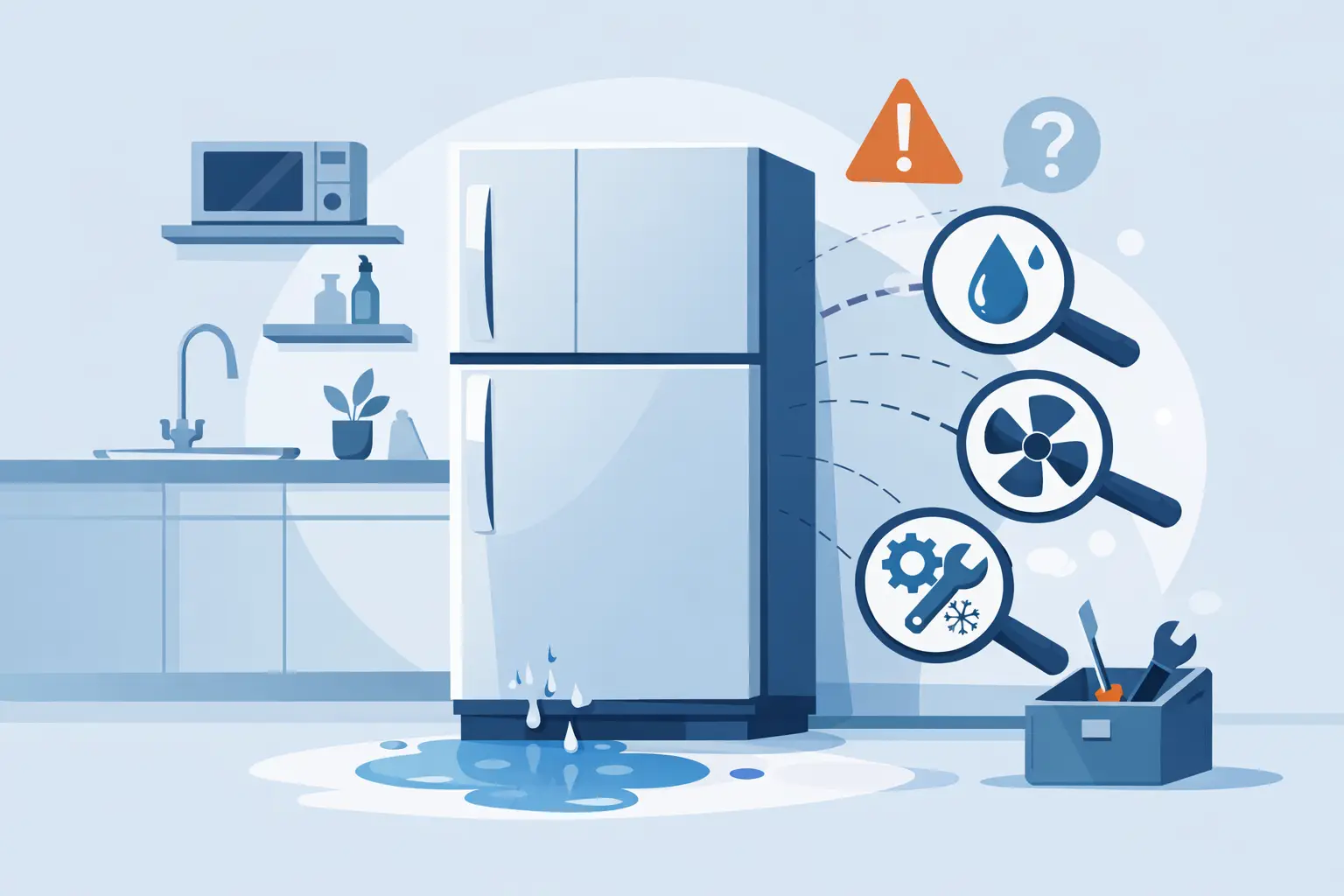
A puddle under the refrigerator is easy to ignore for a day or two, especially when the appliance is still cooling. But if you are asking, “why is fridge leaking,” the water can damage flooring, soak into cabinets, create a slipping hazard, and point to a small problem that is getting worse.
The good news is that many refrigerator leaks come from a blocked drain, a loose water connection, or condensation – not necessarily a failed refrigerator. Start by finding where the water is appearing and whether it is clear, frozen, or coming from the water dispenser. That gives you a much better idea of what needs attention.
First, protect the floor and the appliance
Move food to a cooler if you need to leave the refrigerator door open for more than a few minutes. Place towels around the base, then unplug the refrigerator before pulling it away from the wall or checking any electrical components.
Do not tip a refrigerator on its side to look underneath. It can damage the compressor system and make a simple repair much more expensive. If the leak is close to an outlet, the cord, or an exposed electrical connection, keep the unit unplugged and call for service.
A quick look at the water itself is useful. Clean water near the front may come from the dispenser or door seal. Water under the back often points to the ice maker supply line or drain pan. Water inside the fresh-food section commonly comes from a clogged defrost drain.
Why is fridge leaking from the inside?
A clogged defrost drain is a common culprit
Most frost-free refrigerators melt a small amount of frost during their automatic defrost cycle. The water should run through a drain hole, down a tube, and into a pan beneath the appliance, where it evaporates. When food debris, ice, or residue blocks that path, the water has nowhere to go but into the refrigerator compartment and onto the floor.
You may see water pooled under the crisper drawers, ice on the bottom of the freezer, or a thin stream coming out from the front. This is especially common when the freezer has been left open or the door gasket has not been sealing well.
If you can clearly locate the drain opening, gently remove visible debris and use warm water to help melt light ice. Avoid forcing sharp tools into the drain tube. A punctured liner or drain component turns a maintenance issue into a repair call.
The door gasket may be letting in humid air
A worn, torn, or dirty door gasket can allow warm, humid air into the refrigerator. That air turns into excess frost and condensation, which can overwhelm the normal defrost drainage system.
Check that the door closes evenly and that food packages are not holding it open. Wipe the gasket with warm, soapy water and inspect for cracks, gaps, or areas that pull away from the door. A simple test is to close the door on a sheet of paper. If the paper slides out with almost no resistance in several spots, the seal may be weak.
Temperature settings can create excess moisture
A refrigerator set too cold can freeze food and create ice buildup. One set too warm can struggle with moisture and food safety. For most homes, aim for about 37 to 40 degrees Fahrenheit in the refrigerator and 0 degrees in the freezer.
Do not rely only on the control dial. A basic appliance thermometer gives a more accurate answer. If temperatures keep drifting despite correct settings, the issue may involve a sensor, fan, control, or defrost system rather than a simple adjustment.
Leaks from the back or bottom of the refrigerator
A loose or damaged water supply line
If your refrigerator has an ice maker or water dispenser, it has a water line connected behind the unit. A loose fitting, cracked plastic tube, or pinched line can cause a steady leak that collects beneath the refrigerator.
Pull the unit straight out carefully, watching that you do not strain the line. Look for dampness at the shutoff valve, connection fittings, filter housing, and tubing. If you find an active leak, turn off the refrigerator water supply valve right away. Do not keep tightening fittings if the connection is cracked or cross-threaded.
Plastic supply lines can become brittle with age. Replacing a damaged line or fitting is usually far less costly than repairing a swollen floor or water-damaged baseboard.
The drain pan may be cracked or out of position
The drain pan sits near the compressor area and catches water from the defrost system. Normally, the heat and airflow underneath the refrigerator evaporate that water. A pan that is cracked, overflowing, or sitting incorrectly can spill water onto the floor.
Not every refrigerator has a pan that is easy to remove, so do not force panels or components. If the pan looks full but the refrigerator is otherwise running normally, check whether the room is unusually humid or whether the appliance has recently been defrosting heavily. A full pan can be a symptom of another issue, such as a blocked drain or poor airflow.
Refrigerator leveling matters more than people think
A refrigerator needs to sit level from side to side and often slightly higher in the front than the back, depending on the model. Proper leveling helps doors close on their own and allows defrost water to flow in the direction it was designed to go.
If the fridge was recently moved, installed, or bumped while cleaning, check for rocking. Adjusting the front leveling legs may solve a door-closing problem and reduce moisture buildup. Use the owner’s manual for your model’s recommended position, since designs vary.
When the water dispenser is the problem
Water around the dispenser area may come from a dripping dispenser nozzle, a loose filter, or a cracked internal reservoir. First, remove cups and wipe the area dry. Watch the dispenser for several minutes without using it. A few drops after filling a glass can be normal, but continued dripping is not.
If the leak began after replacing a water filter, remove and reinstall the filter carefully. Make sure it is the correct type and fully seated. A mismatched or improperly installed filter can leak inside the refrigerator cabinet, where the problem may not be obvious until water reaches the floor.
In freezing weather, homes with refrigerator water lines near an exterior wall can also face supply-line issues. If the line has frozen or split, turn off the water and have the connection inspected before using the ice maker again.
What not to do when your refrigerator leaks
A leaking refrigerator is frustrating, but a few shortcuts can cause more trouble. Avoid these common mistakes:
- Do not chip freezer ice with a knife, screwdriver, or other sharp tool.
- Do not use a hair dryer near standing water or plastic refrigerator liners.
- Do not keep running the ice maker after shutting off a leaking water line.
- Do not cover the puddle and assume it is condensation without checking again.
Drying the floor is necessary, but it is not the repair. Mark the edge of the wet area with a towel or piece of tape, then check it later. If the water returns, you know the leak is active and needs diagnosis.
When to call for refrigerator repair
Call for help when the leak keeps returning after you clear visible debris, when you find a cracked line or pan, or when the refrigerator is not holding safe temperatures. A service call also makes sense if you see repeated ice buildup, hear unusual fan noise, notice the compressor running constantly, or find water coming from inside a wall or cabinet area.
For landlords and property managers, a refrigerator leak is worth addressing quickly even if the unit seems to work. Water can travel under vinyl, laminate, and baseboards before anyone notices the full extent of the damage. Getting the cause diagnosed early protects both the appliance and the property.
CoolFix Appliance & HVAC Service helps homeowners and property managers in Winkler and surrounding communities make practical repair decisions. Sometimes the answer is a simple drain cleaning or water-line repair. Other times, a failing part makes repair less sensible than a budget-friendly replacement. Either way, a clear diagnosis should come before a costly decision.
A refrigerator should keep food cold, not leave you checking the floor every morning. Deal with the water promptly, keep the area dry and safe, and let the source of the leak guide the next step.
0 Comments