
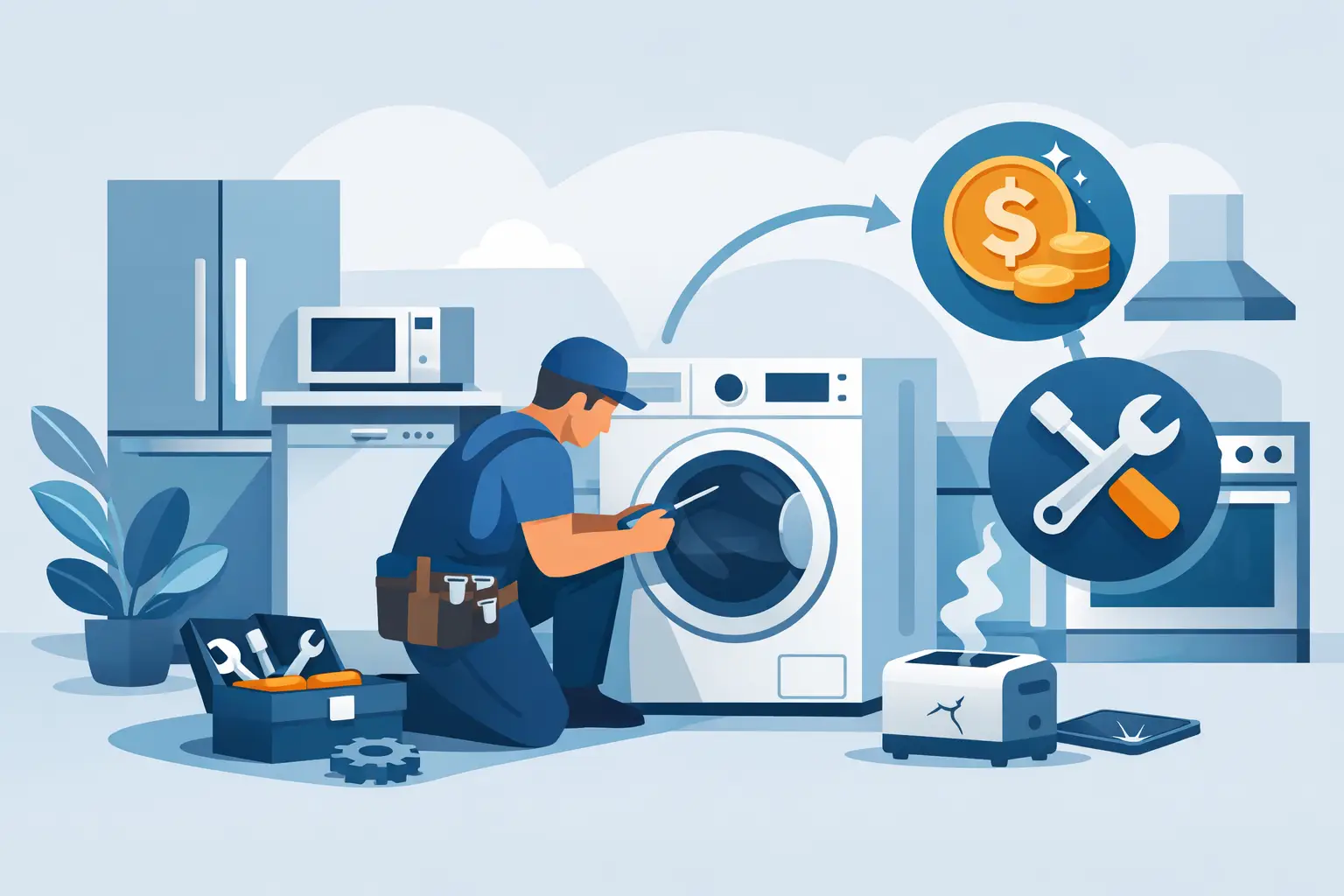
That question usually comes up at the worst time – when the fridge stops cooling, the washer won’t drain, or the dryer takes two cycles to finish one load. If you’re asking, is appliance repair worth it, the real answer is not a simple yes or no. It depends on the age of the machine, the cost of the repair, the condition of the rest of the unit, and how long you can reasonably expect it to keep going after the fix.
For most homeowners, landlords, and property managers, the best choice is the one that gets the appliance back to reliable working order without throwing good money after bad. Sometimes that means repair is the smart move. Sometimes replacement is the cheaper decision over the next few years. The trick is knowing the difference before you spend more than you need to.
Is appliance repair worth it for most homes?
In many cases, yes. Repair is often worth it when the problem is limited to one failed part, the appliance is still within a reasonable age range, and the rest of the machine is in decent shape. A bad igniter in a gas stove, a worn drain pump in a washer, or a failed thermostat in a dryer can often be fixed for far less than the cost of buying new.
That matters even more now because replacement prices are not what they used to be. A new major appliance can be expensive on its own, and the total cost often climbs once you add delivery, installation, haul-away, and the time spent shopping around. If the current unit can be repaired for a sensible amount and has a few solid years left, repair is usually the more practical choice.
There is also the issue of waste. Replacing an appliance every time one part fails sends a lot of usable equipment to the landfill. A repair-first approach makes sense for your budget and for the long-term life of the equipment already in your home.
When repair makes the most sense
The strongest case for repair is when the appliance has had a good service history and the failure is straightforward. If your fridge has been cooling properly for years and suddenly needs a fan motor or control board, that is very different from a unit that has had temperature issues, door seal problems, and compressor noise for the last 18 months.
Repair is usually worth it when the appliance is still in the early or middle part of its expected lifespan. Many washers, dryers, dishwashers, stoves, and refrigerators can last well over 10 years with proper maintenance, though the exact range depends on the brand, model, and how heavily it is used.
It also makes sense when the repair cost is comfortably lower than replacement. A common rule people use is the 50 percent rule: if the repair costs less than half the price of a comparable new appliance, repair deserves serious consideration. That is not perfect in every situation, but it is a useful starting point.
For landlords and property managers, there is another layer. Fast, affordable repair often causes less disruption for tenants than waiting on a new appliance order. If a dependable repair gets a rental unit back in service quickly, that has value beyond the invoice.
When replacement is the better call
Some appliances are telling you they are near the end. If multiple components are failing, performance has been getting worse, and the repair estimate is high, replacement is often the better long-term move.
Age matters here. An older refrigerator with a sealed system issue is a very different decision from a six-year-old refrigerator with a bad start relay. A heavily used dryer that has already needed rollers, a belt, and a heating element may still limp along, but another repair bill may not be money well spent.
Replacement also makes more sense when parts are hard to find or discontinued. Even a skilled repair is less appealing if the machine is built around aging components that are becoming unreliable or expensive to source.
And then there is efficiency. If an older appliance is using far more water or electricity than a newer model, replacement can make more financial sense over time. That said, efficiency alone does not automatically justify buying new. You still need to compare the actual savings against the purchase cost.
How to decide if appliance repair is worth it
The best decision comes from looking at the full picture, not just the first number you hear. Start with the repair estimate. Then compare it to the real replacement cost, including delivery and setup. After that, ask how much usable life is likely left if the repair is done properly.
A good technician should be able to explain whether the failed part is an isolated issue or a sign of wider wear. That plain-language diagnosis matters. A repair that restores a machine to normal service for several more years is very different from a repair that only buys you a short window before the next failure.
Ask yourself a few practical questions. Has this appliance been dependable until now? Is it a quality model worth saving? Have there been repeated breakdowns? Is the repair addressing the main issue, or just one of several growing problems?
This is where honest service matters. You want someone who is willing to say, “Yes, this is worth fixing,” but also willing to say, “You’re better off putting this money toward a replacement.” That kind of advice saves money in the long run.
Appliance-by-appliance: what changes the answer
Refrigerators are often worth repairing because replacement costs are high, especially for larger or built-in styles. But if the compressor or sealed system fails on an older unit, the math can turn quickly.
Washers are often good repair candidates when the problem involves pumps, belts, lid switches, or door locks. If the transmission or tub assembly is failing on an older machine, replacement may be smarter.
Dryers are usually among the most repairable appliances. Heating elements, thermostats, rollers, belts, and igniters are common fixes, and many of them are cost-effective. Unless the dryer is very old or badly worn, repair often makes sense.
Dishwashers are more mixed. Some issues are simple, like a bad inlet valve or drain pump. Others, like motor or control failures in an aging machine, can push the cost close to replacement.
Stoves and ovens are frequently worth fixing, especially when the issue is a burner, igniter, element, or sensor. They are often simpler to repair than people expect.
The hidden cost of replacing too soon
A lot of people assume newer is always better. Sometimes it is. But replacing too early can cost more than repairing wisely.
New appliances are not cheap, and not every new model is built to outlast an older machine that has already proven itself. If your current unit is solidly built and the needed repair is reasonable, keeping it in service may be the better value.
There is also a timing issue. When an appliance fails suddenly, people often buy the first replacement they can get. That can lead to rushed choices, higher prices, and features they did not really want. A repair can buy time, reduce stress, and let you replace on your terms later if needed.
Why professional diagnosis matters
One symptom can point to several different problems. A dryer that is not heating could have an element issue, a thermal fuse problem, a venting restriction, or an electrical supply problem. A fridge that feels warm could have dirty coils, a failed fan, a control issue, or something more serious.
That is why professional diagnosis is worth it. It keeps you from guessing, replacing parts at random, or giving up on an appliance that may be very fixable. For homeowners in places like Winkler and nearby communities, working with a local repair company that gives straightforward advice can make this decision a lot easier.
At CoolFix Appliance & HVAC Service, that repair-first mindset is part of the job. The goal is not to push replacement when a good repair will do the job.
So, is appliance repair worth it?
Most of the time, yes – if the repair is reasonably priced, the appliance is not near the end of its life, and the problem is not part of a bigger pattern of failure. Repair is often the fastest, most affordable way to get your home back on track.
But the right answer is not always repair at any cost. If the machine is aging out, breaking down repeatedly, or facing a major high-dollar failure, replacement may save you more frustration and money.
The best move is to get a clear diagnosis, compare the real costs, and think a year or two ahead instead of only reacting to today’s breakdown. A good repair should feel like a smart investment, not a gamble. And when it does, fixing the appliance is usually the call you’ll be glad you made.
0 Comments