
When a heat pump breaks down in a Canadian home, the stress of unexpected costs and rising energy bills feels all too familiar. Repair decisions matter because they shape your household comfort, wallet, and environmental impact. By choosing cost-effective appliance repair solutions, homeowners can extend their system lifespan, reduce waste, and enjoy lower energy expenses. This guide clarifies what true appliance repair means, common heat pump failures, energy efficiency gains, and how repair stacks up financially against replacement.
Table of Contents
- What Appliance Repair Really Means
- Common Heat Pump Failures and Fixes
- How Repairs Improve Energy Efficiency
- Cost Comparison: Repairing Versus Replacing
- Long-Term Impact on Home Comfort and Bills
Key Takeaways
| Point | Details |
|---|---|
| Importance of Repair | Appliance repair enhances sustainability by reducing waste and extending appliance lifespan. Consulting professionals can uncover repair potential before discarding items. |
| Common Heat Pump Issues | Major heat pump failures include refrigerant leaks and electrical malfunctions, necessitating expert attention to maintain efficiency. Regular maintenance can prevent these issues. |
| Cost-Effectiveness Analysis | In many cases, repairing appliances is more economical than replacing them, especially if repair costs are under one-third of the unit’s price. Proper assessment can guide homeowners in their decisions. |
| Long-Term Benefits of Maintenance | Proactive servicing of heat pumps can lead to reduced energy bills and improved home comfort by ensuring consistent performance and minimizing breakdowns. Regular diagnostics are recommended. |
What Appliance Repair Really Means
Appliance repair is far more than simply fixing a broken machine. At its core, it represents a strategic approach to maintaining household equipment, extending its functional lifespan, and reducing unnecessary waste. The Canadian government is actively supporting this philosophy through its right to repair initiative, which emphasizes consumer empowerment and sustainability.
Repairing appliances involves several critical steps that go beyond basic maintenance. These include:
- Diagnostic assessment of mechanical issues
- Precise component replacement
- Performance restoration
- Preventative maintenance planning
- Cost-effective problem resolution
Contrary to popular belief, appliance repair isn’t about quick fixes. It’s a comprehensive process that requires technical expertise, specialized knowledge, and a deep understanding of complex mechanical systems. A recent Canada-wide study revealed that less than 19% of Canadians actually repair their household appliances when they break down, often due to perceived complexity or economic barriers.
The broader implications of appliance repair extend well beyond individual household economics. By choosing repair over replacement, Canadian homeowners contribute to a more sustainable economic model. Repair practices reduce electronic waste, conserve manufacturing resources, and support local technical expertise.
Pro tip: Before discarding a seemingly broken appliance, consult a professional repair technician who can assess its true repair potential and potential cost savings.
Common Heat Pump Failures and Fixes
Heat pumps are complex systems that can experience various mechanical issues affecting their performance and efficiency. Understanding these common failures helps Canadian homeowners proactively manage their home heating and cooling equipment. Heat pump repair strategies often revolve around identifying and addressing specific mechanical and electrical challenges.
Most heat pump failures fall into several key categories:
- Refrigerant leaks
- Electrical component malfunctions
- Compressor failures
- Thermostat miscalibration
- Airflow restrictions
- Motor and fan problems
- Defrost system failures
Refrigerant leaks represent one of the most critical issues, potentially causing significant performance degradation. These leaks can reduce system efficiency by up to 20%, leading to increased energy consumption and reduced comfort levels. Professional technicians use specialized equipment to detect and repair these leaks, preventing long-term damage to the system.
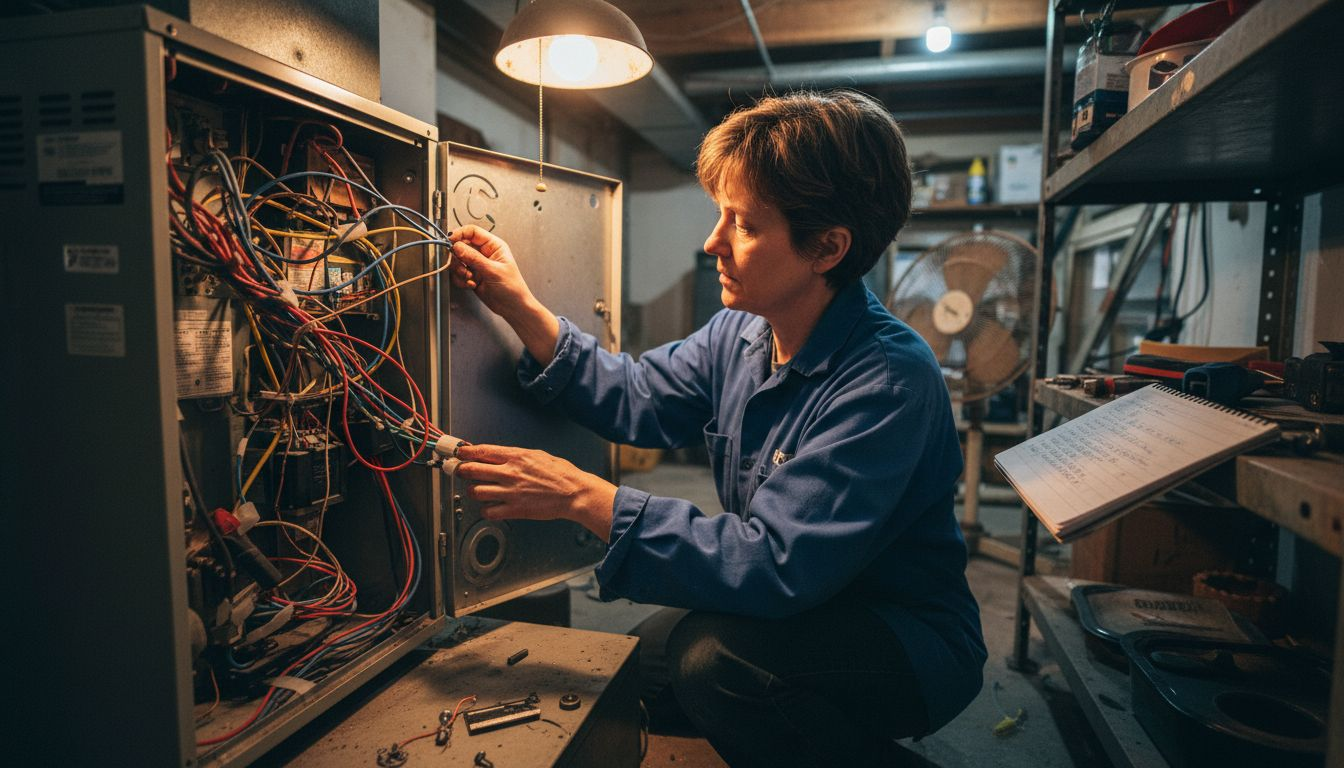
Electrical complications frequently challenge heat pump functionality. Problems with capacitors, control boards, and wiring connections can interrupt system performance, causing intermittent operation or complete system shutdown. Homeowners should never attempt complex electrical repairs without professional expertise, as these components require precise diagnostic skills and specialized tools.
Pro tip: Schedule annual professional maintenance to catch potential heat pump issues before they escalate into costly major repairs.
How Repairs Improve Energy Efficiency
Repairs play a critical role in maintaining and improving home appliance energy efficiency. Energy efficiency improvements directly impact both household energy consumption and environmental sustainability. When heat pumps and other home systems operate at peak performance, they consume less electricity and deliver more consistent comfort.
Key energy efficiency benefits of professional repairs include:
- Reduced electrical consumption
- Optimized system performance
- Lower greenhouse gas emissions
- Extended equipment lifespan
- Improved thermal regulation
- Minimized energy waste
Mechanical optimization represents the core of energy efficiency improvements. Small mechanical issues like worn bearings, misaligned components, or refrigerant imbalances can cause significant energy inefficiencies. Professional technicians use specialized diagnostic tools to identify and correct these subtle performance-reducing problems, often improving system efficiency by 10-25%.
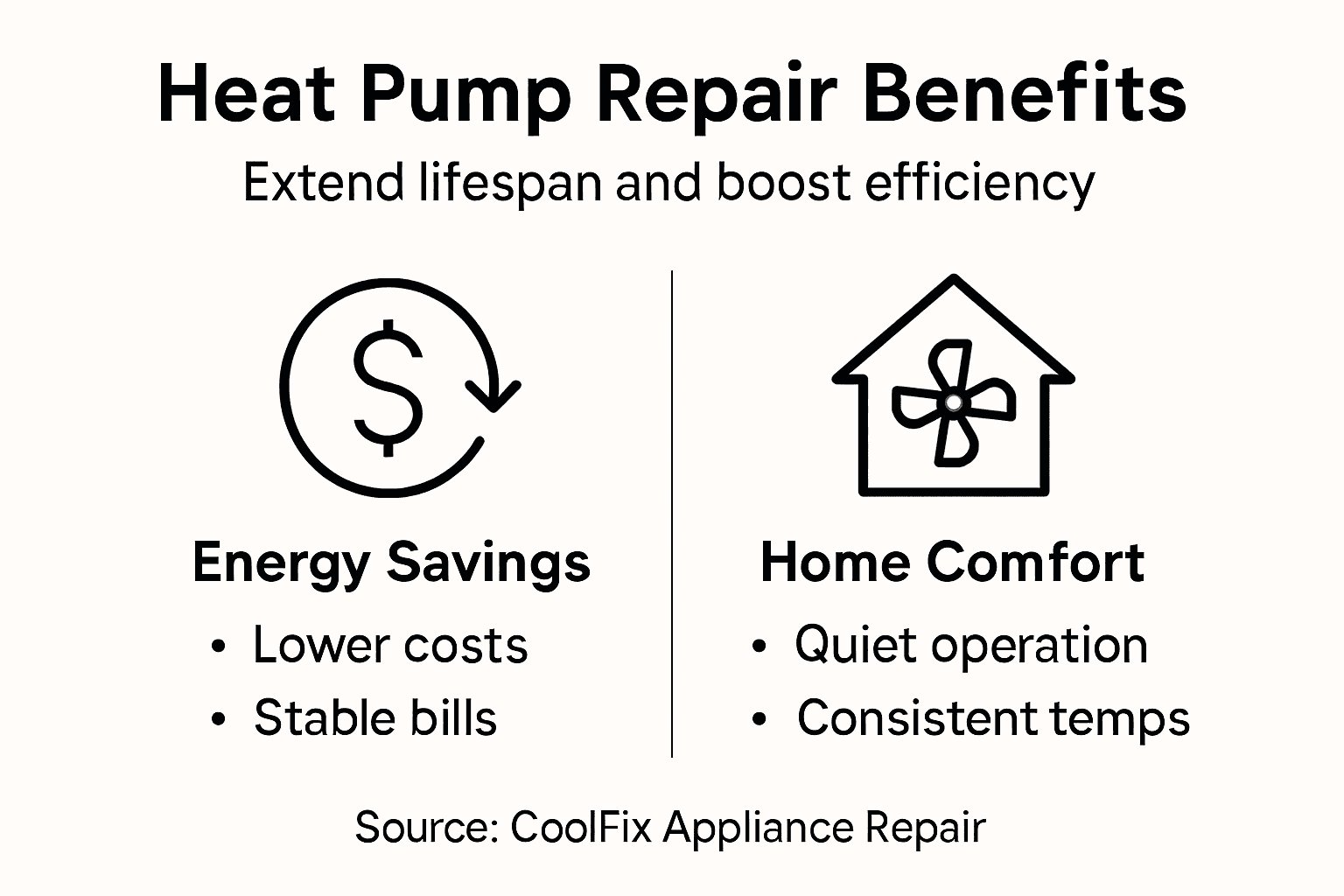
Regular maintenance and targeted repairs prevent energy losses that accumulate over time. Homeowners who invest in professional repair services can expect reduced energy bills, enhanced system reliability, and a meaningful contribution to Canada’s broader climate conservation goals. Proactive repair strategies transform appliances from potential energy drains into efficient, sustainable home infrastructure.
Pro tip: Track your energy bills before and after professional repairs to quantify the actual efficiency improvements in your home systems.
Cost Comparison: Repairing Versus Replacing
Navigating the decision between repairing and replacing heat pumps requires careful financial analysis. Cost-effectiveness research indicates that strategic repair choices can significantly impact long-term household expenses. Canadian homeowners must weigh multiple factors beyond the immediate repair cost.
Key considerations in the repair versus replacement decision include:
- Current appliance age
- Extent of mechanical damage
- Repair cost relative to replacement price
- Remaining expected equipment lifespan
- Potential energy efficiency improvements
- Warranty status
- Future maintenance requirements
Financial thresholds play a crucial role in making this decision. Typically, if repair costs are less than one-third of a new unit’s price, repair remains the most economical choice. Professional technicians can provide precise assessments that help homeowners make informed decisions about whether to invest in repairs or opt for complete replacement.
Beyond immediate expenses, long-term energy savings significantly influence the repair-versus-replace calculation. Newer heat pump models often deliver enhanced energy efficiency, potentially reducing annual electricity consumption. However, a well-maintained existing system can continue providing excellent performance at a fraction of replacement costs. The goal is maximizing value while minimizing unnecessary expenditure.
To help Canadian homeowners make informed decisions, here’s a comparison of the typical outcomes of repairing versus replacing a heat pump:
| Decision Factor | Repairing | Replacing |
|---|---|---|
| Upfront Cost | Lower initial expense | Higher purchase price |
| Energy Efficiency | Improved with tune-ups | Highest with new models |
| Environmental Impact | Reduces landfill waste | Increases manufacturing |
| System Reliability | Depends on age/condition | Maximum with new unit |
| Long-Term Cost Savings | Moderate with maintenance | Potentially greater if upgraded |
Pro tip: Request a detailed diagnostic report from your technician that breaks down potential repair costs, estimated remaining lifespan, and projected energy efficiency to make a more informed decision.
Long-Term Impact on Home Comfort and Bills
Home comfort and energy expenses are deeply interconnected with the performance of heating systems. HVAC repairs can significantly lower energy bills, demonstrating the critical relationship between system maintenance and household economics. Regular attention to heat pump performance ensures consistent thermal comfort while preventing costly long-term inefficiencies.
Key long-term benefits of proactive heat pump maintenance include:
- Stable indoor temperature regulation
- Reduced monthly energy expenditures
- Minimized unexpected breakdown risks
- Consistent heating and cooling performance
- Extended equipment operational lifespan
- Improved overall system efficiency
- Prevention of progressive mechanical deterioration
Thermal consistency represents more than just temperature control. Well-maintained heat pumps distribute warmth and cool air evenly, eliminating uncomfortable hot and cold zones within living spaces. This precision prevents excessive system strain and reduces energy consumption by maintaining optimal operating conditions.
Financial implications extend beyond immediate repair costs. A properly maintained heat pump can deliver substantial savings, typically reducing energy bills by 10-25% compared to neglected systems. By investing in periodic professional servicing, Canadian homeowners transform their heating infrastructure from a potential expense drain into a reliable, efficient home comfort solution.
Here’s a summary of long-term benefits proactive maintenance provides for Canadian heat pump owners:
| Benefit Area | Impact on Homeowner | Effect on Home Comfort |
|---|---|---|
| Temperature Stability | Predictable indoor climate | Eliminates uneven heating |
| System Lifespan | Fewer premature breakdowns | Maintains reliable comfort |
| Maintenance Costs | Lower overtime repair bills | Prevents costly repairs |
| Energy Expenditure | Reduced monthly bills | Efficient performance year-round |
Pro tip: Schedule professional diagnostic assessments twice annually to catch potential performance issues before they escalate into expensive repairs.
Extend Your Heat Pump Lifespan with Expert Repairs
The decision to repair your heat pump instead of replacing it can save you significant money and reduce environmental impact. If you want to avoid unexpected breakdowns and enjoy stable indoor temperatures, professional repair and maintenance are essential. Issues like refrigerant leaks, electrical complications, or worn components require skilled technicians to restore your system’s efficiency. By addressing these problems, you can improve energy efficiency, lower monthly bills, and extend your heat pump’s lifespan in line with the principles of sustainable appliance repair discussed in the article.

Discover how our dedicated team at CoolFix can help you maintain and repair your heat pump with reliable, cost-effective solutions. Don’t wait for costly breakdowns to disrupt your home comfort. Visit heat pump installation in appliance repair to schedule a professional assessment today and take the first step toward efficient heating and cooling. Learn more about the importance of repair by exploring our main landing page and empower yourself with expert care now.
Frequently Asked Questions
How can repairing my heat pump extend its lifespan?
Repairing your heat pump can identify and fix minor issues before they escalate, thus prolonging its lifespan. Regular maintenance ensures that the system runs efficiently, conserving energy and reducing wear on components.
What are the most common issues that require heat pump repairs?
Common heat pump issues include refrigerant leaks, electrical component malfunctions, compressor failures, thermostat miscalibration, airflow restrictions, and motor or fan problems. Identifying these issues early can help maintain optimal performance.
How can repairs improve my home’s energy efficiency?
Professional repairs address mechanical inefficiencies such as worn bearings or refrigerant imbalances, which can cause significant energy losses. Operating at peak performance through repairs can reduce electrical consumption and lower greenhouse gas emissions.
What factors should I consider when deciding to repair versus replace my heat pump?
Consider the current age of the appliance, the extent of damage, repair costs relative to replacement costs, and potential energy efficiency improvements. Generally, if repair costs are less than one-third of a new unit’s price, repairing is typically the more economical option.
Recommended
- How to Repair Heat Pump Leaks for Reliable Results – CoolFix Appliance & HVAC Service
- Appliance Repair Heat Pump Guide for Efficient Maintenance – CoolFix Appliance & HVAC Service
- Why Heat Pump Needs Servicing for Canadian Homes – CoolFix Appliance & HVAC Service
- 7 Essential Steps for Your Heat Pump Maintenance Checklist – CoolFix Appliance & HVAC Service
0 Comments