
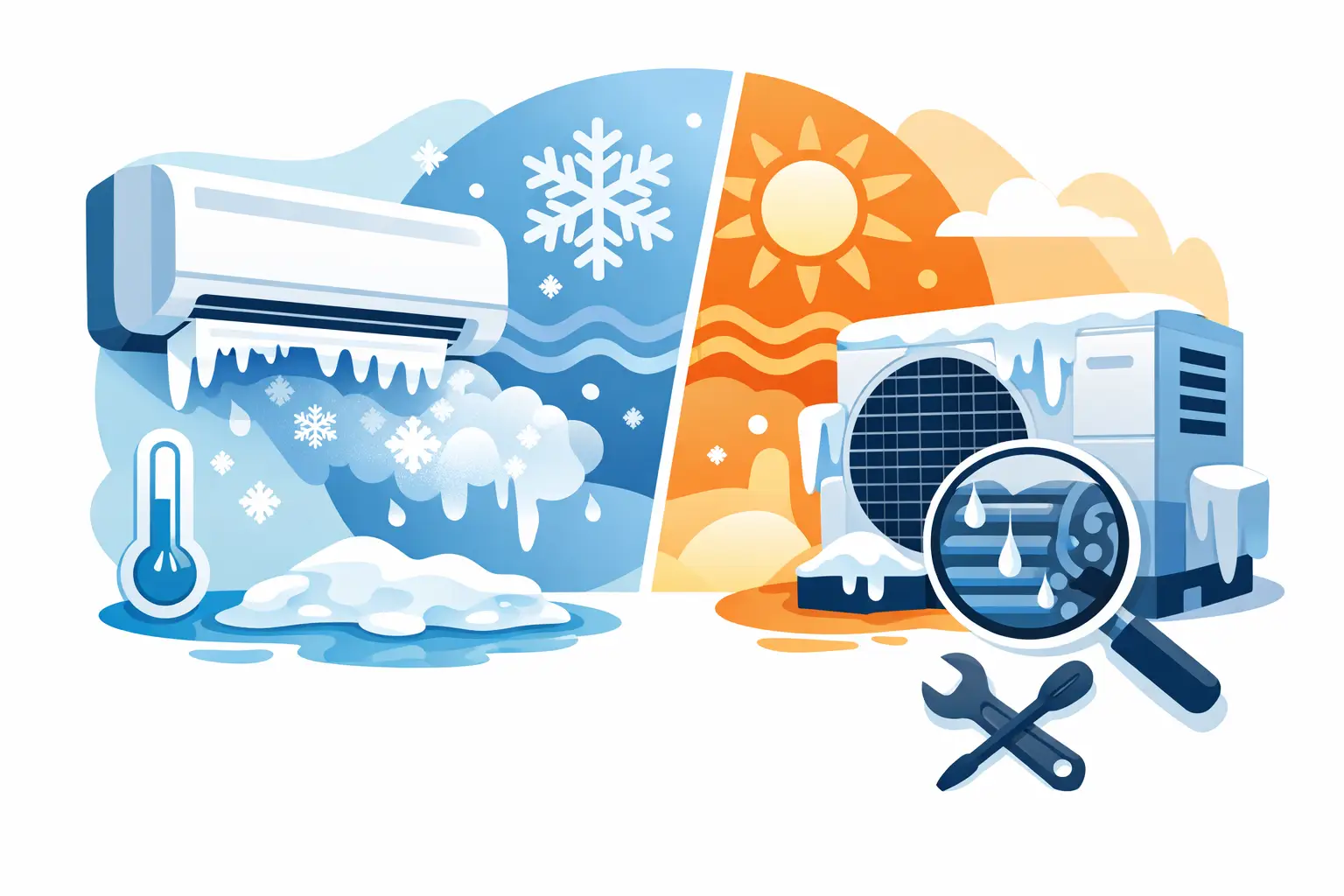
You set the thermostat to cool, the house still feels warm, and then you notice ice on the indoor unit or refrigerant line. If you’re asking why is AC freezing, the short answer is this: your system is not getting the airflow or heat transfer it needs to run properly. When that happens, the evaporator coil gets too cold, moisture freezes on it, and the problem usually gets worse the longer it runs.
A frozen AC is not a sign that the system is “working extra hard.” It is a warning sign. In many homes, the cause is something simple like a clogged filter. In others, it points to a blower problem, a refrigerant issue, or a maintenance problem that has been building for a while. The good news is that catching it early can often prevent a much more expensive repair.
Why is AC freezing in the first place?
Your air conditioner depends on a balance between airflow, refrigerant pressure, and indoor heat. Warm air from the house passes over the evaporator coil, and that heat helps keep the coil within its normal operating range. If not enough warm air reaches the coil, or if refrigerant conditions are off, the coil temperature can drop below freezing.
Once that happens, humidity in the air turns to frost and then to ice. The ice blocks airflow even more, which makes the coil colder still. That is why an AC can go from “not cooling well” to completely iced up in a fairly short time.
The most common reason an AC freezes: poor airflow
Poor airflow is the number one issue behind a freezing air conditioner. Your system needs a steady stream of indoor air moving across the coil. Anything that restricts that movement can set off the freeze-up cycle.
Dirty air filter
This is the first thing to check because it is common, inexpensive, and easy to miss. A heavily loaded filter chokes off airflow and can make the evaporator coil too cold. If the filter looks gray, dusty, or packed with debris, replace it and let the system thaw completely before turning cooling back on.
A filter that is too restrictive can also create problems. Some high-MERV filters are great in the right system, but not every residential unit is designed for them. If freeze-ups started after changing filter type, that detail matters.
Closed or blocked vents
Homeowners sometimes close supply vents in unused rooms to save money, but that can backfire. Your duct system is sized to move a certain amount of air. Shut too many vents, and static pressure rises while airflow across the coil drops.
Furniture pushed over return grilles can do the same thing. So can curtains, rugs, or storage boxes in a utility area. It sounds minor, but airflow problems often come from everyday household changes rather than major equipment failure.
Dirty evaporator coil
If the indoor coil is coated with dust or buildup, it cannot absorb heat the way it should. That can lower coil temperature enough to create ice. This is not usually a do-it-yourself cleaning job unless access is simple and the buildup is light. In many systems, the coil is tucked into a cabinet and easy to damage if handled the wrong way.
Blower motor or fan issues
Even with a clean filter, the AC can freeze if the blower is not moving enough air. A failing blower motor, weak capacitor, dirty squirrel cage, or incorrect fan speed can all reduce airflow. In that case, replacing the filter will not solve the real problem.
One clue is weak airflow from multiple vents even after the filter has been changed. Another is an indoor unit that sounds different than usual – humming, struggling, or starting and stopping irregularly.
Low refrigerant can also make the AC freeze
If airflow checks out, refrigerant becomes a strong suspect. Low refrigerant can drop system pressure and make the evaporator coil run colder than it should. That cold coil then freezes moisture from the air.
Why low refrigerant happens
Refrigerant does not get “used up” like fuel. If your AC is low, there is usually a leak somewhere in the system. That leak may be in the coil, a line set connection, or another sealed component.
This is where people sometimes lose money by choosing a quick recharge without finding the cause. Adding refrigerant may temporarily restore cooling, but if the leak remains, the problem usually returns. A proper repair means locating the leak, fixing it if practical, and then charging the system to manufacturer specifications.
Signs that point to refrigerant trouble
Low cooling performance, ice on the refrigerant line, hissing sounds, and longer run times can all point in this direction. That said, these symptoms can overlap with airflow issues, so diagnosis matters. Refrigerant work is not a homeowner fix. It requires gauges, training, and the right handling procedures.
Other reasons your AC may be freezing
Not every frozen AC comes down to just filters or refrigerant. A few other conditions can trigger the same symptom.
Running the AC when outdoor temperatures are too low
Air conditioners are designed for certain operating conditions. If you run central AC during cool outdoor weather, especially at night or during shoulder seasons, the system can behave unpredictably and freeze. This is more likely if someone is trying to cool a stuffy room when it is already fairly cool outside.
Drainage and moisture issues
A clogged condensate drain does not usually cause freezing by itself, but water management problems can show up alongside coil issues. If you see ice, water around the unit, or repeated shutoffs, it is worth having both the freezing issue and the drain system checked together.
Thermostat or control problems
If the blower is not running when it should, or if the system cycles incorrectly, the coil may get too cold. This is less common than basic airflow restriction, but it does happen. Control board faults, thermostat issues, or wiring problems can all affect how long components run and whether they run in sync.
What you should do if your AC is frozen
Start by turning the cooling mode off. If your thermostat has a fan-only setting, switch the fan to ON. That can help thaw the coil faster. Do not keep running the AC in cooling mode while it is iced up. That usually adds more ice and more strain.
Next, check the filter and replace it if needed. Make sure supply vents are open and return grilles are clear. If accessible, look for obvious dirt around the indoor unit and signs of water once the ice starts melting.
Be patient with the thaw. Depending on how heavily frozen the system is, it may take several hours. Some systems can take most of a day to fully defrost. Put down towels if needed because melting ice can create a mess around the air handler.
Once thawed, you can test the system. If it cools normally and airflow is strong, the issue may have been a basic restriction. If it freezes again, struggles to cool, or still has weak airflow, it is time for service.
When to call a technician
If the filter is clean and the AC keeps freezing, you are past the easy checks. A technician should inspect the blower, evaporator coil, refrigerant levels, electrical components, and overall system condition.
This is especially important for landlords and property managers. A frozen AC in one unit can quickly turn into a tenant comfort issue, water cleanup issue, and bigger repair bill if it is left running. Fast diagnosis usually saves money compared with waiting for a full breakdown in the middle of hot weather.
A good service visit should not jump straight to replacement talk. Sometimes the fix is straightforward – airflow correction, coil cleaning, blower repair, or leak repair. Other times, especially with older equipment, the conversation becomes about whether the repair is still cost-effective. That depends on the age of the system, refrigerant type, repair history, and overall condition.
How to prevent an AC from freezing again
The best prevention is basic maintenance done consistently. Change filters on schedule, keep vents open, and do not ignore weak airflow or longer cooling cycles. If your system has not had professional maintenance in a while, a tune-up can catch coil dirt, blower wear, drainage issues, and refrigerant problems before they turn into an iced-over unit.
It also helps to pay attention to small changes. If one room starts feeling warmer than normal, if airflow drops, or if your utility bill jumps without a clear reason, those are early clues. Air conditioners rarely go from perfect to frozen overnight without leaving a few hints first.
A frozen AC is frustrating, but it is also your system asking for help before something bigger fails. Handle the simple checks first, shut it down if you see ice, and if the problem comes back, get it looked at properly. That is usually the fastest path back to a cool house and a repair bill you can live with.
0 Comments