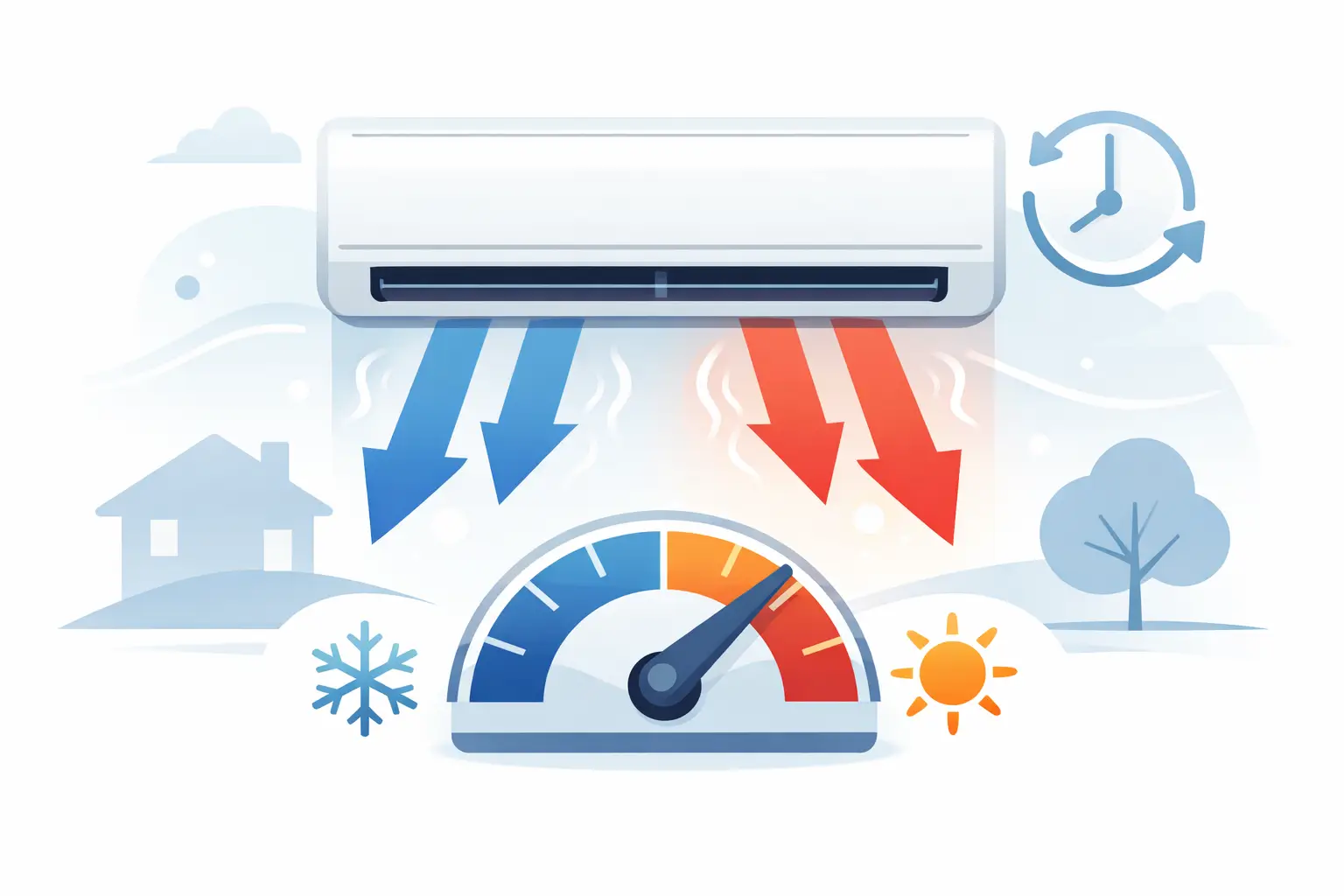
Your AC kicks on, runs for a minute or two, shuts off, then starts right back up. That pattern is not your system being efficient. Air conditioner short cycling usually means something is off, and the longer it keeps happening, the harder your system works for less comfort.
Short cycling is one of those problems homeowners notice fast because the house never quite feels right. Rooms stay sticky, the temperature swings around, and the outdoor unit seems like it never gets a proper break. For landlords and property managers, it often shows up as a tenant complaint that sounds vague at first – “the AC is running weird” or “it keeps turning on and off.” Those complaints are worth taking seriously, because short cycling can turn a repairable issue into a compressor failure if it gets ignored.
What air conditioner short cycling means
A normal cooling cycle lasts long enough for your system to remove heat and humidity from the house. When an AC short cycles, it shuts off before that job is finished. Then it starts again soon after, repeating the pattern over and over.
That matters for three reasons. First, your home stays less comfortable because the system is not running long enough to dehumidify properly. Second, energy use often goes up because startup is one of the hardest-working moments in any cycle. Third, the repeated starts and stops put extra strain on major components, especially the compressor.
Sometimes the problem is simple and cheap to fix. Sometimes it points to a sizing issue, a refrigerant problem, or an electrical fault that needs professional service. The trick is knowing which is which.
Why air conditioner short cycling happens
There is no single cause behind air conditioner short cycling. A few different problems can create the same symptom, which is why guessing can get expensive.
A clogged air filter is one of the most common reasons. When airflow drops, the system can overheat or struggle to move enough air across the evaporator coil. That can trigger shutdowns and lead to erratic operation. It is a basic issue, but it causes a lot of service calls every summer.
A thermostat problem is another common culprit. If the thermostat is poorly placed, it may read the temperature wrong. For example, if it sits near a supply vent, in direct sun, or close to a heat-producing appliance, it can tell the AC to shut off too early. Wiring issues or a failing thermostat can also cause rapid cycling.
Low refrigerant can create short cycles too. When refrigerant is low, usually because of a leak, pressures inside the system fall outside the normal range. The unit may shut down to protect itself, or ice may form on the coil and interrupt normal operation. Refrigerant problems are not a top-off-and-go situation. If refrigerant is low, there is a leak somewhere, and it needs to be found and repaired.
A dirty condenser coil outside can also be part of the problem. When the outdoor unit cannot release heat properly, the system runs under stress and may overheat. In some cases, safety controls shut the unit down before a full cooling cycle finishes.
Then there is system size. An oversized AC can cool the thermostat area too quickly and shut off before the rest of the home catches up. Some people assume bigger means better, but with air conditioning, oversizing often leads to uneven temperatures, poor humidity control, and frequent cycling. Fixing that is more complicated than changing a filter, which is why proper sizing matters so much during replacement.
Electrical issues can also be involved. A failing capacitor, loose wiring, damaged contactor, or control board problem may interrupt operation. These faults are harder to spot from the outside and are best handled by a technician, especially because they involve live electrical components.
What to check before calling for service
There are a few practical things you can look at safely before booking a repair. Start with the air filter. If it looks dirty, replace it. A neglected filter can cause all kinds of airflow trouble, and this is the easiest fix on the list.
Next, check the thermostat settings. Make sure it is set to cool and the fan is on auto, not on. A fan setting of on will keep air moving constantly, which can make it harder to tell when the cooling cycle is actually ending. If your thermostat uses batteries, replace them if needed.
Take a look at the outdoor unit too. If grass clippings, cottonwood, dirt, or leaves are packed around the coil, airflow may be restricted. Clear debris around the unit and make sure there is open space around it. You can gently rinse the exterior coil with a garden hose if it is dirty, but do not use high pressure.
Also pay attention to the pattern. Does the system short cycle only during the hottest part of the day, or all the time? Did it start after a thermostat change, a storm, or another repair? Those details can help narrow down the cause faster.
If you see ice on the indoor coil or refrigerant lines, turn the system off and call for service. Ice is a sign that something is wrong, and continuing to run the unit can make the damage worse.
Signs the problem is more than a simple fix
Short cycling crosses the line from annoying to urgent when it comes with other warning signs. If your electric bill jumps without a clear reason, that is one clue. If the air feels cool at first but the house stays humid, that is another. Strange clicking, buzzing, or humming sounds can point to electrical trouble, while weak airflow may suggest a blower or duct issue.
The age of the equipment matters too. On an older system, short cycling may be a symptom of several smaller problems stacking up at once. A worn capacitor, dirty coil, and restricted filter together can create a bigger performance issue than any one problem alone. In those cases, a proper diagnosis usually saves money compared with replacing parts one at a time and hoping for the best.
For rental properties, speed matters. A short cycling AC will often keep running just enough that tenants think it is working, even while comfort gets worse and wear increases. That makes it easy to delay service. Usually, that delay costs more than an early repair would have.
How technicians diagnose air conditioner short cycling
A good diagnosis goes beyond watching the unit turn on and off. A technician will usually check airflow, inspect the filter and coils, test thermostat operation, measure refrigerant pressures, and evaluate electrical components such as capacitors and contactors. They may also inspect duct conditions and verify whether the system size makes sense for the home.
This step matters because the fix needs to match the cause. Replacing a thermostat will not solve a refrigerant leak. Adding refrigerant without finding the leak will not solve the problem for long. Cleaning a condenser coil may help one system completely and do nothing for another. Short cycling is a symptom, not a full diagnosis.
That is one reason many homeowners appreciate repair-first service. The goal should be to restore proper operation and extend equipment life when that makes financial sense, not rush straight to replacement.
Can you keep running the AC if it is short cycling?
You can, but it is not a good idea for long. If the cause is minor, such as a dirty filter, continued operation still wastes energy and puts extra wear on the system. If the cause is electrical or refrigerant-related, running it can lead to much bigger damage.
The compressor is the biggest concern. It is one of the most expensive parts in the system, and repeated hard starts are rough on it. A problem that might have been handled as a service call can turn into a major repair if the compressor burns out.
If the home is still somewhat cool, people tend to put off the call. That is understandable, especially when budgets are tight. But short cycling is one of those issues where early action usually protects both comfort and cost.
How to reduce the chances of short cycling
Routine maintenance goes a long way here. Changing filters on schedule, keeping coils clean, and having the system checked before peak summer heat can catch the common causes early. If you are replacing a unit, correct sizing matters just as much as brand or efficiency rating.
It also helps to pay attention to small changes before they become big ones. If your AC starts sounding different, cooling unevenly, or running in shorter bursts than usual, that is the time to get it checked. Homeowners in places like Winkler, where hot weather can put real pressure on cooling systems, often save money by addressing those changes before the first real heat wave hits.
If your AC keeps starting and stopping, trust what you are seeing. Air conditioner short cycling is not normal wear, and it rarely fixes itself. A quick repair now can be the difference between a rescued system and a much bigger bill later.
0 Comments