
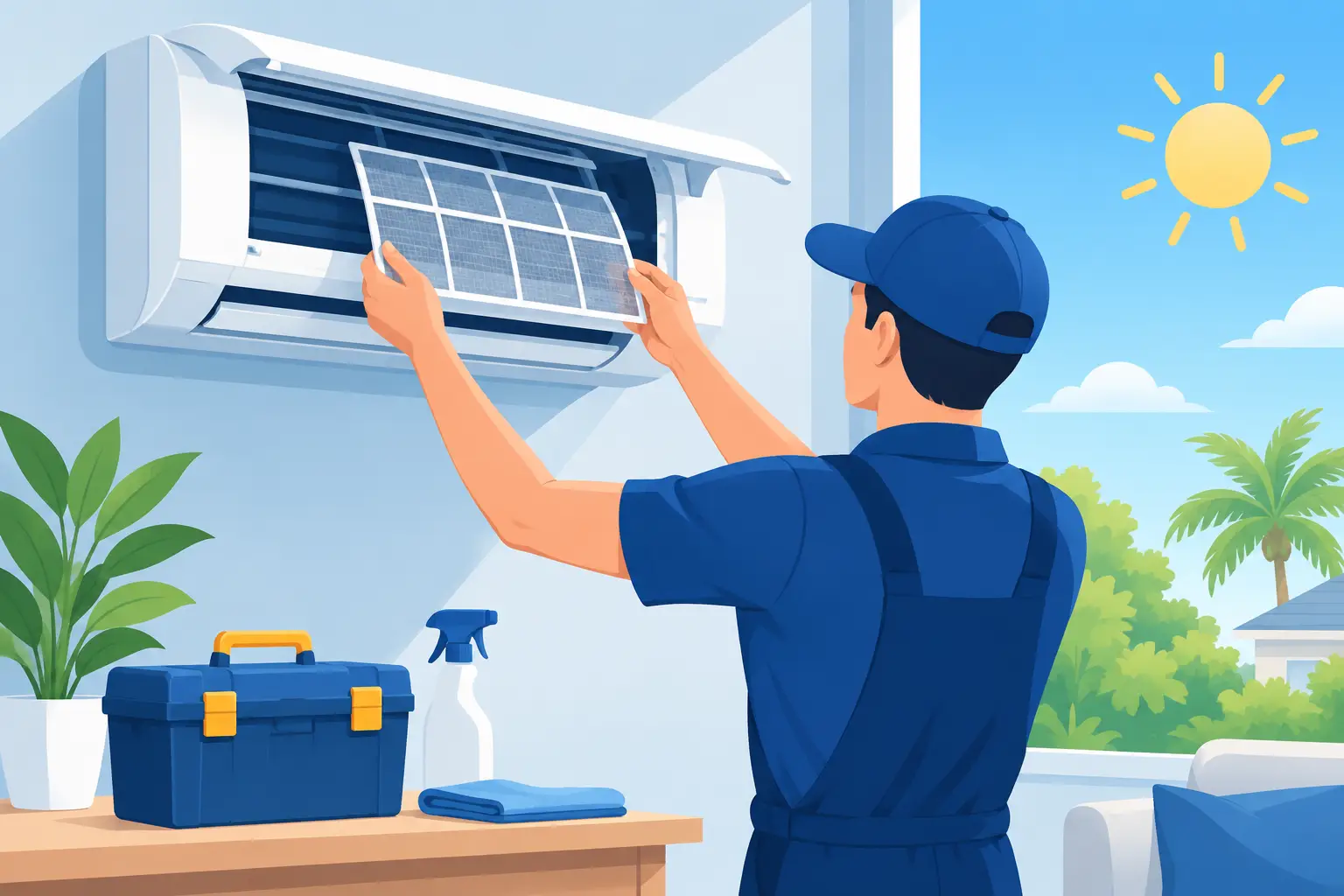
A hot afternoon is a poor time to find out your air conditioner has a weak capacitor, a plugged filter, or a frozen indoor coil. Knowing how to prepare an air conditioner before steady summer heat arrives gives you time to handle simple maintenance, spot warning signs, and arrange a repair without the pressure of an emergency call.
For homeowners, landlords, and property managers, a little preparation can protect comfort and help avoid premature replacement. The goal is not to take apart equipment you are not trained to service. It is to keep airflow clear, make safe basic checks, and know when a technician should take over.
How to Prepare Your Air Conditioner Before Warm Weather
Start on a mild day, before you need the system to run all afternoon. If your unit has been off through winter, give it a careful visual check before turning it on. Look for damaged wiring, a shifted outdoor unit, loose panels, rodent activity, or anything piled against the equipment.
For a central air conditioner, check both the outdoor condenser and the indoor portion of the system, usually located near the furnace or air handler. With a ductless unit, inspect the outdoor section and each indoor wall head. Window units need their own inspection for damaged cords, dirty filters, and a solid, secure installation.
Do not remove electrical panels or attempt to add refrigerant. Air conditioning systems use high-voltage components and sealed refrigerant circuits. A problem in either area needs proper diagnostic tools and trained service.
Replace or Clean the Air Filter
A clean filter is one of the least expensive ways to help an air conditioner do its job. A clogged filter restricts airflow, making the blower work harder and reducing the amount of cool air that reaches your rooms. In more serious cases, poor airflow can contribute to an iced-up evaporator coil.
Check the filter size printed on the existing filter or on the filter rack. Disposable filters should generally be replaced when visibly dirty, while washable filters should be cleaned, dried fully, and reinstalled according to the manufacturer’s directions. Households with pets, smokers, ongoing renovations, or high summer use may need more frequent filter checks.
Do not assume a more restrictive filter is always better. Very high-rated filters can limit airflow in some residential systems if the equipment was not designed for them. When in doubt, use the filter type recommended for your system or ask a technician for guidance.
Clear Space Around the Outdoor Unit
Your outdoor condenser releases heat collected from inside the house. It cannot do that efficiently if grass, leaves, cottonwood fluff, mulch, or stored items block the coil.
Turn off power at the outdoor disconnect before cleaning around the unit. Remove loose debris by hand and trim back grass, shrubs, and branches so air can move freely around it. A clear area of roughly two feet on all sides is a practical target, although the manufacturer’s clearance requirements always come first.
If the exterior coil looks dusty, a gentle rinse with a garden hose can help. Spray from the outside in with low pressure. Do not use a pressure washer, since it can flatten the thin aluminum fins and restrict airflow even more. Bent fins, heavy buildup, or a coil that has not been professionally cleaned in years are good reasons to book maintenance.
Check Vents, Registers, and the Thermostat
Walk through the home and make sure supply vents and return-air grilles are open and not covered by furniture, rugs, boxes, or curtains. Closing off multiple vents does not usually save money. It can raise pressure in the ductwork, reduce airflow, and create uneven temperatures.
Next, check the thermostat. Set it to cooling mode, choose a temperature a few degrees below the current room temperature, and listen for the system to begin its startup cycle. Some systems have a short built-in delay before the outdoor unit starts, so give it several minutes.
If the thermostat screen is blank, replace the batteries if it uses them. A programmable or smart thermostat can help manage cooling costs, but only if the schedule matches how the home is actually used. Avoid dramatic temperature setbacks on very hot days. The system may run for hours trying to catch up, especially in a larger home or a property with limited insulation.
Run a Short Test Before the First Heat Wave
Let the air conditioner run for 15 to 30 minutes during your first test. Check that cool air is coming from supply vents and that the outdoor unit is running steadily. The air should feel noticeably cooler than the room, though exact temperature measurements are best left to a service technician.
Take a quick look at the condensate drain near the indoor unit. Air conditioners remove moisture from indoor air, and that water needs a clear path out. If you see standing water around the furnace, air handler, or drain pan, turn the system off and arrange service. A blocked drain can cause water damage and may trigger a safety switch that shuts the cooling off.
While the system runs, pay attention to what you hear and smell. A brief dusty smell can happen when equipment is first started after a long break. Burning smells, electrical odors, loud buzzing, repeated clicking, grinding, or metal-on-metal sounds are not normal. Shut the unit off if you notice them.
Warning Signs That Call for Professional Service
Some issues look small at first but can become expensive if the equipment keeps running under strain. Call for air conditioner service if your system shows any of these signs:
- It runs but blows warm air, or cooling is weak throughout the house.
- Ice forms on the refrigerant line, indoor coil area, or outdoor unit.
- The breaker trips, the unit repeatedly shuts down, or the outdoor fan does not run.
- Water leaks around the indoor equipment or a drain line backs up.
- Cooling is uneven, energy bills jump unexpectedly, or the system runs nearly nonstop.
- You hear banging, grinding, loud buzzing, or repeated clicking during startup.
These symptoms can come from several causes, including airflow restrictions, electrical component failures, drain problems, duct leaks, thermostat issues, or refrigerant concerns. Guessing can lead to unnecessary parts purchases or further damage. A proper diagnosis identifies the actual cause before money is spent.
Do Not Forget Ductless and Window Air Conditioners
Ductless mini-splits need seasonal attention too. Clean the reusable filters in each indoor head, make sure the front louvers move freely, and keep the outdoor unit clear of debris. If a wall head drips water, has a musty odor, or delivers weak airflow after filter cleaning, it may need a deeper cleaning and drain inspection.
For window air conditioners, unplug the unit before removing the front filter or cleaning accessible areas. Confirm the unit is securely mounted and tilted slightly outward if the manufacturer requires it for drainage. Check weather seals around the frame so hot air and insects are not entering around the unit. A window unit that rattles excessively, trips an outlet, or freezes up should be inspected rather than pushed through another season.
Plan Maintenance Before Demand Peaks
Professional maintenance is not about selling a new system when your current one still has useful life left. It is about checking the parts homeowners cannot safely or accurately assess: electrical connections, capacitors, refrigerant performance, blower operation, coil condition, drainage, and overall airflow.
Older equipment may need repairs from time to time, and replacement is not always the first or most affordable answer. The right choice depends on the repair needed, the system’s age and condition, available parts, and how reliably it has been cooling the home. For rental properties, early service also helps prevent tenant complaints and last-minute scheduling problems during the busiest weeks of summer.
In Winkler, Morden, Carman, Altona, and nearby communities, booking a check before the first major heat stretch can make scheduling easier. Keep the area around your equipment clean, change the filter when needed, and treat unusual sounds or weak cooling as an early warning, not something to wait out. A small service call now can be the difference between a straightforward repair and a long, uncomfortable weekend without cooling.
0 Comments