
TL;DR:
- Modern heat pumps work efficiently in Canadian winters by moving heat from outdoor air.
- They are more cost-effective and energy-efficient than traditional furnaces or electric resistance heaters.
- Proper installation, sizing, and home insulation are crucial for optimal performance and savings.
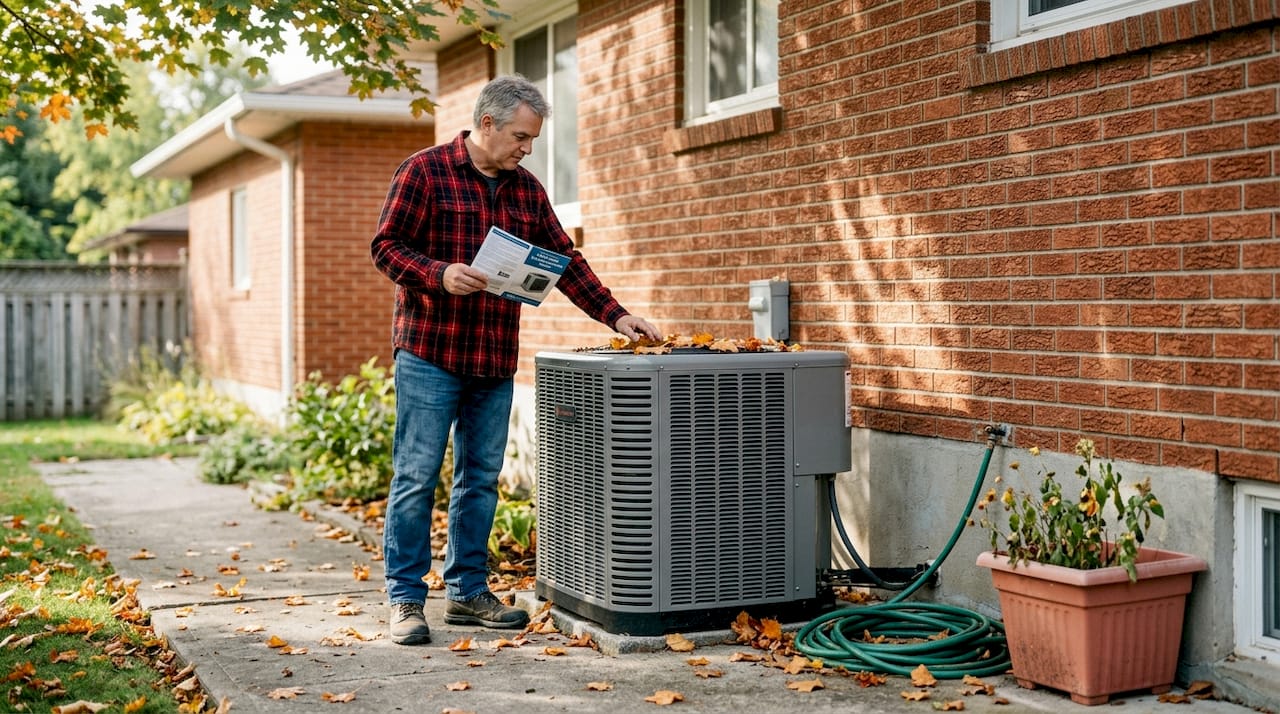
If you’ve heard that heat pumps don’t work in Canadian winters, you’ve heard wrong. That myth has kept many homeowners stuck with costly furnaces when a better option exists. Heat pumps don’t generate heat the way a furnace does. Instead, they move heat that already exists in outdoor air, even when it feels bitterly cold outside. Modern heat pumps can efficiently deliver warmth to your home even in freezing temperatures. The result is a system that heats and cools your home using a fraction of the energy, with real savings showing up on your monthly bill.
Table of Contents
- The basics: How heat pumps move heat
- Exploring types: Air-source vs. ground-source heat pumps
- Getting efficient heat: Understanding COP and savings
- What Canadian homeowners should look for: Sizing, features, and install tips
- Our perspective: What most guides miss about heat pump comfort
- Find expert help for your heat pump journey
- Frequently asked questions
Key Takeaways
| Point | Details |
|---|---|
| Heat pumps move—not make—heat | A heat pump transfers existing warmth, even from cold outdoor air, into your home for energy-efficient comfort. |
| Air vs. ground-source | Air-source heat pumps are most common but ground-source units offer higher efficiency if you can handle the upfront cost. |
| High efficiency, big savings | You can expect 31–47% lower energy use and potentially hundreds in annual bill savings with an optimized heat pump. |
| Smart selection is vital | Choosing the right size, insulation, and cold-climate model ensures year-round reliability and comfort in Canada. |
The basics: How heat pumps move heat
A heat pump is not a heater in the traditional sense. It’s a heat mover. Think of it like a refrigerator running in reverse. Your fridge pulls heat out of the food inside and dumps it into your kitchen. A heat pump pulls heat from outdoor air and pushes it into your home. The physics are the same; only the direction changes.
The system relies on a vapour-compression refrigeration cycle built around four core components:
- Evaporator: Absorbs heat from outdoor air into a cold refrigerant
- Compressor: Pressurises the refrigerant, raising its temperature significantly
- Condenser: Releases that heat into your home’s air or water system
- Expansion valve: Drops the refrigerant’s pressure so it can absorb heat again
Here’s how the heating process flows, step by step:
- Cold liquid refrigerant flows through the outdoor evaporator coil
- Even chilly outdoor air carries enough heat to warm the refrigerant into a gas
- The compressor squeezes that gas, making it very hot
- The hot gas moves to the indoor condenser coil and releases heat into your home
- The refrigerant cools, passes through the expansion valve, and the cycle repeats
For cooling mode, a reversing valve simply flips the refrigerant’s direction. Now the indoor coil becomes the evaporator, pulling heat out of your home and dumping it outside. One system handles both seasons.
| Component | Role in heating | Role in cooling |
|---|---|---|
| Evaporator | Absorbs outdoor heat | Absorbs indoor heat |
| Compressor | Raises refrigerant temperature | Raises refrigerant temperature |
| Condenser | Releases heat indoors | Releases heat outdoors |
| Expansion valve | Reduces pressure for heat absorption | Reduces pressure for heat absorption |
| Reversing valve | Directs flow for heating | Directs flow for cooling |
Understanding the heat pump refrigeration cycle helps you appreciate why these systems are so efficient. You’re not burning fuel to create heat. You’re using electricity to move heat that’s already there.
Exploring types: Air-source vs. ground-source heat pumps
Not all heat pumps work the same way. The two main types used in Canadian homes are air-source and ground-source, and they pull heat from very different places.
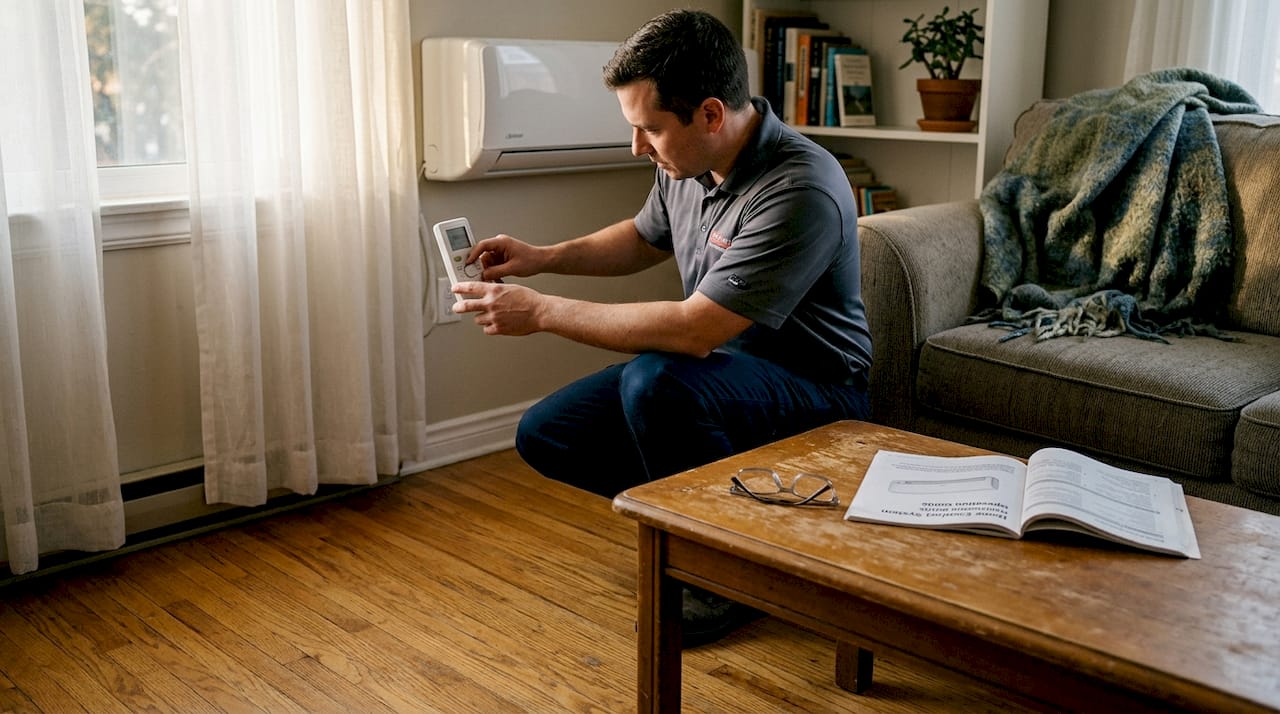
Air-source heat pumps extract heat directly from outdoor air. They’re the most common choice for residential installations because they’re relatively affordable and straightforward to install. Modern cold-climate air-source models perform well even at temperatures as low as minus 25°C, making them a realistic option across most of Canada.
Ground-source heat pumps (also called geothermal systems) tap into the stable temperature of the earth below the frost line, typically around 8 to 10°C year-round. Because the ground stays at a consistent temperature regardless of the season, these systems maintain high efficiency even during the coldest months. The tradeoff is a significantly higher upfront installation cost due to the ground loop excavation or drilling required.
Key differences at a glance:
- Air-source: Lower install cost, easier retrofit, slightly lower efficiency in extreme cold
- Ground-source: Higher efficiency year-round, higher upfront cost, requires land or drilling access
- Mini-split air-source: Ductless option, ideal for homes without existing ductwork
- Water-source: Uses a nearby body of water; rare in residential settings
Ground-source systems are more efficient but carry higher upfront costs, while air-source models remain the most practical choice for most homes.
| Factor | Air-source | Ground-source |
|---|---|---|
| Upfront cost | Lower | Higher |
| Seasonal efficiency | Good to very good | Excellent |
| Installation complexity | Moderate | High |
| Best for | Most Canadian homes | Homes with land access |
| Cold weather performance | Excellent (cold-climate models) | Consistent year-round |
For most homeowners, an air-source unit offers the best balance of cost and performance. If you’re weighing your options against a traditional furnace, the heat pump vs furnace guide breaks down the comparison in detail. Understanding heat pump winter performance is especially important before committing to a system in a colder region.
Getting efficient heat: Understanding COP and savings
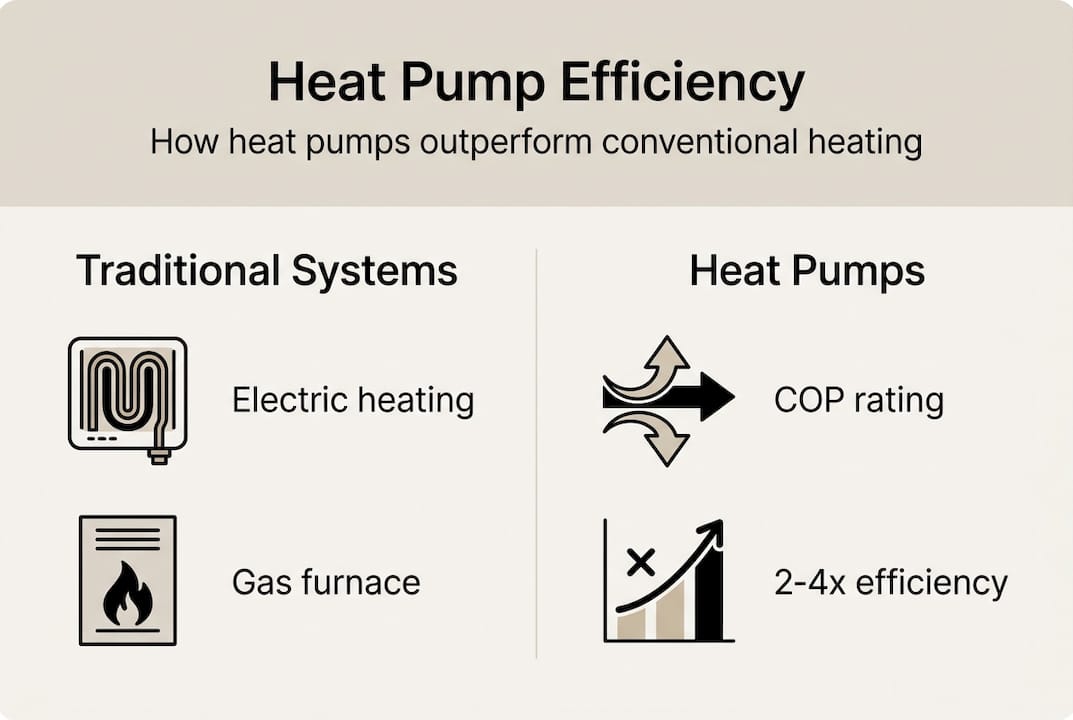
Here’s the number that separates heat pumps from every other heating system: the coefficient of performance, or COP. COP measures how much heat you get for every unit of electricity you put in. A COP of 3 means you get 3 units of heat for every 1 unit of electricity used. No furnace or electric baseboard heater can match that.
How COP works in practice:
- A standard electric resistance heater has a COP of 1.0. One unit of electricity equals one unit of heat.
- A gas furnace is typically 80 to 98% efficient, still capped at less than 1.0 in energy terms.
- A heat pump routinely achieves a COP between 2.0 and 4.5 depending on outdoor temperature.
- Ground-source systems can reach a COP of 3.5 to 5 or higher thanks to stable ground temperatures.
COP does drop as outdoor temperatures fall, which is why choosing a cold-climate certified model matters in Canada. Even at minus 15°C, a quality cold-climate unit maintains a COP well above 1.5, still outperforming electric resistance heating.
Statistic to know: Heat pumps cut energy use by 31 to 47% and save homeowners $300 to $650 per year compared to fossil fuel systems.
Heat pumps are 2 to 4 times more efficient than electric resistance heating and frequently outperform gas systems on a seasonal basis. That efficiency translates directly into lower monthly bills.
For Canadian homeowners, government rebate programmes through initiatives like the Canada Greener Homes Grant can further reduce the payback period. Check heat pump cost and savings for a breakdown of current incentives and realistic payback timelines.
Pro Tip: Ask your installer for the system’s HSPF2 (Heating Seasonal Performance Factor) rating. This tells you the real-world seasonal efficiency, not just the peak-condition COP. A higher HSPF2 means better performance across a full Canadian heating season.
What Canadian homeowners should look for: Sizing, features, and install tips
Choosing the right heat pump is about more than picking the most efficient model on the catalogue. Installation quality and home readiness matter just as much as the equipment itself.
Start by looking for ENERGY STAR certification or models listed by the Northeast Energy Efficiency Partnerships (NEEP) for cold climates. These units are independently tested to perform at low temperatures and are the right baseline for Canadian conditions. Cold-climate certified models paired with proper Manual J sizing and good home insulation significantly reduce your reliance on backup heat.
Manual J is the industry-standard calculation used to determine the correct system size for your home. Oversizing a heat pump is a common and costly mistake. A system that’s too large will short-cycle, meaning it turns on and off too frequently, reducing efficiency and wearing out components faster.
Key things to check before installation:
- Insulation levels: Upgrading attic and wall insulation reduces the heat pump’s workload
- Air sealing: Drafty homes waste the heat a pump works hard to deliver
- Ductwork condition: Leaky ducts can reduce efficiency by 20 to 30%
- Electrical panel capacity: Heat pumps may require a panel upgrade
- Dual-fuel option: Pairing with a gas furnace backup handles extreme cold efficiently
“The myths about heat pumps being ineffective below freezing have been thoroughly debunked by modern technology. The real risks now are poor installation and mismatched sizing.”
Review installation best practices before your project begins, and use a proper sizing calculation to avoid the oversizing trap. Understanding the benefits of heat pump installation for Canadian homes helps frame the full picture before you commit.
Pro Tip: Request a copy of the Manual J load calculation from your installer. If they can’t provide one, that’s a red flag. Proper sizing is the single most important factor in long-term comfort and efficiency.
Our perspective: What most guides miss about heat pump comfort
Most articles focus on specs: COP ratings, HSPF2 scores, and BTU outputs. Those numbers matter, but they don’t tell the whole story of whether a Canadian family will actually be comfortable.
In our experience, the homes that get the most out of a heat pump are the ones that treat the installation as a whole-home project, not just an equipment swap. A top-tier heat pump installed in a poorly insulated house with leaky ductwork will underperform a mid-range unit installed thoughtfully in a well-sealed home. Every time.
Homeowner habits also play a bigger role than most people expect. Keeping interior doors open for airflow, avoiding drastic thermostat swings, and scheduling annual maintenance all have measurable impacts on comfort and efficiency. The system you choose matters less than how you use and maintain it.
We also see hybrid and zoned installations consistently outperform single-system setups in Canadian climates. A dual-fuel system that leans on the heat pump until temperatures drop to minus 20°C, then switches to gas backup, often delivers better comfort and lower bills than either system alone. Check winter performance tips to see how real Canadian homeowners are getting the most from their systems year-round.
Find expert help for your heat pump journey
Understanding how heat pumps work is a strong first step. Putting that knowledge into action with the right professional support is what turns efficiency potential into real savings on your bill.

Whether you’re replacing an aging system or installing for the first time, having an experienced team guide the process protects your investment. The heat pump replacement tutorial walks you through what to expect at every stage. For technical confidence before installation day, the installation best practices guide covers the details that matter most. And if wiring concerns are on your mind, learn how to avoid wiring errors before they become expensive problems. Our team is here to help you make the right call for your home and climate.
Frequently asked questions
Can heat pumps really warm homes during Canadian winters?
Yes, modern heat pumps designed for cold climates can efficiently heat homes even when outdoor temperatures drop well below freezing. Cold-climate models have made the old myths about heat pump limitations obsolete.
How much can I expect to save by switching to a heat pump?
Most Canadian homeowners see energy use drop 31 to 47% and save $300 to $650 annually over fossil-fuel systems. NREL research confirms these savings apply to the majority of households making the switch.
What does COP mean, and why does it matter?
COP stands for coefficient of performance and shows how much heating or cooling you get for each unit of electricity used. A higher COP means lower energy costs, and ground-source systems regularly achieve a COP of 3.5 to 5 or more.
Do I need to upgrade my insulation when installing a heat pump?
It’s highly recommended for maximum efficiency. Proper insulation and Manual J sizing reduce the system’s workload and minimise the need for costly auxiliary heat during cold snaps.
Recommended
- Best practices for heat pump installation: A homeowner’s guide | CoolFix Appliance & HVAC Service
- What is heat pump installation: a homeowner’s 2026 guide – CoolFix Appliance & HVAC Service
- Heat pump vs furnace: efficient home heating guide | CoolFix Appliance & HVAC Service
- Heat pumps vs traditional HVAC: what Canadian homeowners need to know | CoolFix Appliance & HVAC Service
- Why invest in pool heating? Comfort, value, and more
0 Comments