

Choosing the right location for your heat pump can feel like a big decision, especially with Canada’s renowned winters putting every system to the test. Many Canadian homeowners worry that heat pumps are not up to the challenge, but modern models operate efficiently even at -25°C and below. Understanding the purpose of heat pumps and common placement misconceptions is key to reaping lower energy bills, consistent comfort, and long-lasting performance in your home.
Table of Contents
- Heat Pumps In Canada: Purpose And Misconceptions
- Types Of Heat Pumps And Placement Needs
- How Placement Impacts Performance And Longevity
- Canadian Code Requirements And Regional Challenges
- Common Placement Errors To Avoid
Key Takeaways
| Point | Details |
|---|---|
| Efficiency of Heat Pumps | Heat pumps provide 3-5 units of heat for each unit of electricity consumed, significantly reducing energy costs and greenhouse gas emissions. |
| Cold Climate Capability | Modern heat pumps, including Cold Climate Air Source Heat Pumps, operate effectively in temperatures as low as -30°C, dispelling myths about their performance in cold regions. |
| Importance of Placement | Strategic placement of heat pumps is essential for optimal performance, maximising efficiency and extending system lifespan by minimising environmental stressors. |
| Regulatory Compliance | Adhering to Canadian electrical codes and local regulations is crucial for successful heat pump installation, ensuring safety and energy efficiency while meeting regional challenges. |
Heat Pumps in Canada: Purpose and Misconceptions
Heat pumps represent a transformative heating and cooling technology uniquely positioned to address Canada’s complex energy challenges. Unlike traditional heating systems that generate heat through combustion, heat pumps move heat efficiently between indoor and outdoor environments, achieving remarkable performance even in extreme Canadian climates.
The core purpose of heat pumps in Canada extends far beyond simple temperature regulation. By efficiently transferring heat rather than generating it, these systems can produce up to 3-5 units of heat for every unit of electricity consumed. This extraordinary efficiency translates into significant benefits:
- Dramatically reduced greenhouse gas emissions
- Substantial energy cost savings
- Consistent indoor comfort in temperatures as low as -30°C
- Dual functionality for both heating and cooling
- Alignment with Canada’s national net-zero emissions targets
Despite their advanced capabilities, several persistent misconceptions continue to challenge heat pump adoption in Canada. Many homeowners incorrectly assume that heat pumps cannot perform effectively in cold climates, a myth comprehensively debunked by modern technological innovations. Advanced heat pump systems are now engineered to operate seamlessly at temperatures well below freezing, providing reliable heating when Canadians need it most.
Pro tip: Consult a local HVAC professional specializing in cold-climate heat pumps to determine the most suitable system for your specific Canadian regional conditions.
Types of Heat Pumps and Placement Needs
Heat pumps in Canada represent a sophisticated range of heating technologies, each with unique characteristics and specific placement requirements. Specialized heat pump systems are designed to address the diverse climatic challenges across Canadian regions, offering flexible solutions for residential and commercial heating needs.
The primary types of heat pumps available in Canada include:
- Air Source Heat Pumps (ASHPs): Extract heat from outdoor air
- Cold Climate Air Source Heat Pumps (ccASHPs): Engineered for extreme temperatures down to -30°C
- Ground Source Heat Pumps (GSHPs): Utilize stable underground temperatures
- Air-to-Water Heat Pumps: Transfer heat to hydronic heating circuits
Each heat pump type demands precise placement considerations to maximize efficiency. Air source systems require strategic positioning with clear airflow, minimal obstructions, and protection from snow accumulation. Ground source heat pumps necessitate careful underground loop installation, considering soil conditions, available land area, and geological characteristics.
Proper heat pump placement is not just about installation—it’s about optimizing long-term performance and energy efficiency in challenging Canadian climates.
The selection of an appropriate heat pump depends on multiple factors including local climate, property layout, insulation quality, and specific heating requirements. Homeowners must consider outdoor unit clearance, noise reduction, potential wind exposure, and accessibility for maintenance when determining optimal placement.
Below is a comparison of common heat pump types used in Canada and their ideal applications:
| Heat Pump Type | Best Suited For | Key Efficiency Consideration |
|---|---|---|
| Air Source (ASHP) | Mild to moderate climates | Needs clear airflow, no obstructions |
| Cold Climate Air Source (ccASHP) | Extreme cold regions | Performs efficiently below -25°C |
| Ground Source (GSHP) | Homes with outdoor space | Requires underground installation |
| Air-to-Water | Radiant heating retrofits | Needs compatible hydronic system |
Pro tip: Consult a certified HVAC professional who can conduct a comprehensive site assessment to determine the most suitable heat pump type and ideal placement for your specific property.
How Placement Impacts Performance and Longevity
Heat pump performance is intrinsically linked to strategic placement, with critical positioning factors dramatically influencing system efficiency and lifespan. The precise location of both indoor and outdoor units determines not just immediate operational capacity, but long-term reliability in Canada’s challenging climate conditions.
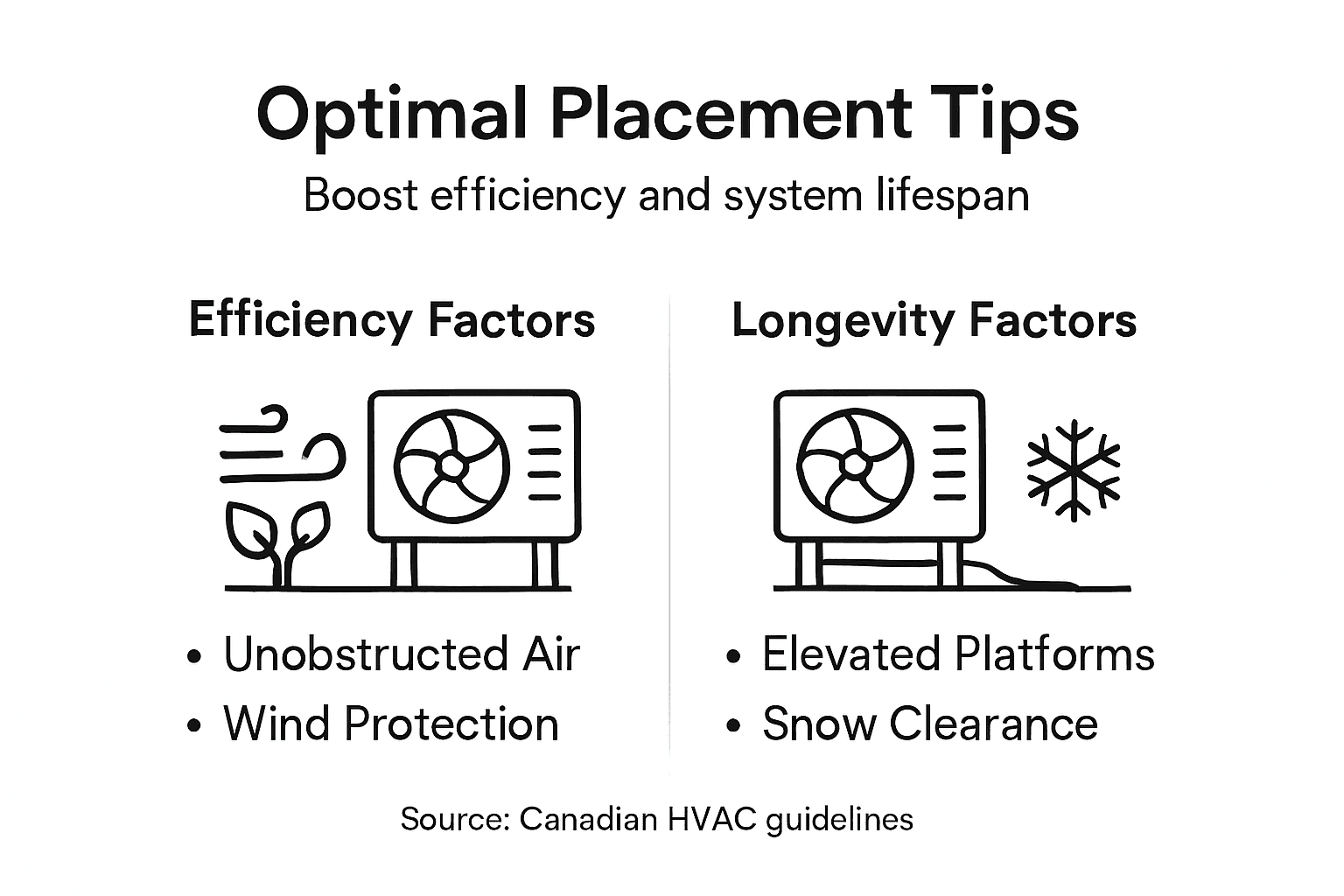
Key performance considerations for heat pump placement include:
- Unobstructed airflow around outdoor units
- Protection from snow and ice accumulation
- Minimal exposure to harsh wind conditions
- Adequate clearance from walls and vegetation
- Optimal indoor unit positioning for heat distribution
The consequences of poor placement extend far beyond initial installation challenges. Incorrectly positioned heat pumps can experience significant performance degradation, with potential issues including:
- Reduced energy efficiency
- Increased mechanical wear
- Higher operational costs
- Compromised heat transfer capabilities
- Shortened system lifespan
Proper heat pump placement is an investment in long-term performance, not just an installation detail.
Homeowners must recognize that placement directly impacts system durability. Elevated platforms, strategic wind blocking, and thoughtful positioning can mitigate potential environmental stressors, ensuring consistent performance through Canadian winters.
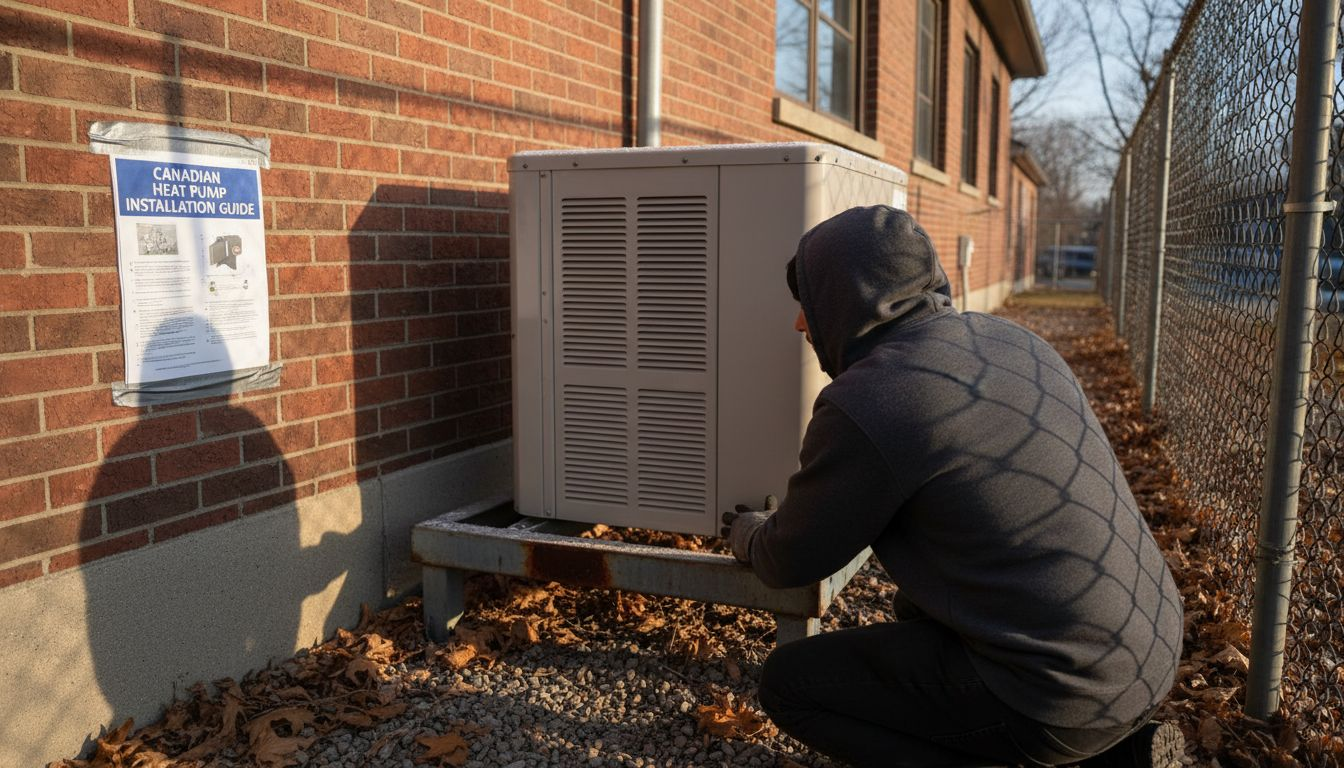
Here’s how heat pump placement can affect system performance and longevity:
| Placement Factor | Effect on Performance | Effect on System Lifespan |
|---|---|---|
| Unobstructed airflow | Maximizes heat exchange | Reduces wear on components |
| Wind and snow exposure | Can decrease efficiency | May cause premature failures |
| Access for maintenance | Ensures easy servicing | Prevents neglect and breakdowns |
| Indoor unit location | Promotes even heat delivery | Less cycling, greater durability |
Pro tip: Invest in a professional site assessment to determine the optimal heat pump placement, considering your specific property’s unique environmental characteristics.
Canadian Code Requirements and Regional Challenges
Heat pump installations in Canada demand rigorous compliance with complex national and provincial regulations. The intricate landscape of building codes, safety standards, and regional environmental constraints creates a multifaceted challenge for homeowners and HVAC professionals seeking optimal heat pump performance.
Key regulatory considerations include:
- Canadian Electrical Code compliance
- Provincial HVAC installation guidelines
- Refrigerant handling and environmental regulations
- Noise limitation requirements
- Setback and placement restrictions
- Snow accumulation and wind exposure standards
Regional challenges vary dramatically across Canada’s diverse geographical landscape. From the maritime provinces with high humidity to the Prairie regions experiencing extreme temperature fluctuations, heat pump systems must be meticulously designed to withstand local environmental conditions. Cold climate adaptations become particularly critical, with specialized heat pump models engineered to maintain efficiency in temperatures plummeting to -30°C.
Successful heat pump installation transcends technical specifications—it requires a nuanced understanding of local environmental and regulatory ecosystems.
Technical specifications are just one component of the complex heat pump installation puzzle. Provincial building codes mandate specific requirements that address safety, energy efficiency, and environmental sustainability. These regulations ensure that heat pump installations not only perform effectively but also contribute to Canada’s broader climate mitigation strategies.
Pro tip: Consult a local HVAC professional familiar with your specific provincial regulations to navigate the intricate landscape of heat pump installation requirements.
Common Placement Errors to Avoid
Heat pump installations demand precision, and critical placement mistakes can significantly compromise system performance and longevity. Understanding these common errors is essential for Canadian homeowners seeking optimal heating and cooling efficiency.
The most frequent placement errors include:
- Blocking airflow around outdoor units
- Positioning near snow accumulation zones
- Installing units under dripping eaves
- Restricting maintenance access
- Choosing locations with excessive ambient noise
- Neglecting wind exposure considerations
- Placing indoor units that create uneven heat distribution
Outdoor unit placement requires particular attention. Homeowners often mistakenly install heat pumps in enclosed spaces or areas with limited air circulation, which drastically reduces system efficiency. Shaded locations or spots prone to snow drifts can create significant operational challenges, especially in Canadian winter conditions.
Heat pump performance is directly tied to strategic placement—every inch matters.
Indoor unit positioning presents its own set of challenges. Improper indoor unit placement can result in uneven heating, reduced comfort, and increased energy consumption. Strategic positioning involves considering room layout, furniture placement, and overall heat distribution patterns.
Pro tip: Before installation, create a detailed site map showing potential obstructions, airflow patterns, and environmental conditions to help your HVAC professional identify the optimal heat pump placement.
Maximize Your Heat Pump Efficiency with Expert Placement and Installation
Proper heat pump placement is essential for unmatched energy savings and durability in Canadian climates. Many homeowners face challenges like restricted airflow, snow exposure, and improper indoor unit positioning that undermine system performance and increase costs. Understanding these factors is vital but can be complex without the right guidance.

Take control of your heating and cooling efficiency today by partnering with professionals who specialize in heat pump installation and appliance repair. At CoolFix, we understand the nuances of Canadian building codes and environmental demands to ensure your heat pump is installed correctly for long-lasting comfort. Don’t let common placement errors compromise your investment. Visit CoolFix now and schedule a consultation to protect your home and save on energy bills with expert solutions designed specifically for Canadian conditions.
Frequently Asked Questions
What factors should I consider for heat pump placement?
Proper heat pump placement requires consideration of unobstructed airflow, protection from snow and ice, exposure to wind, and optimal indoor unit positioning for even heat distribution.
How does placement affect the performance of a heat pump?
The performance of a heat pump is significantly influenced by its placement. Poorly positioned units can experience reduced energy efficiency, increased mechanical wear, and higher operational costs, while proper placement maximizes heat exchange and system reliability.
Can heat pumps work effectively in extremely cold climates?
Yes, modern cold climate air source heat pumps (ccASHPs) are engineered to perform efficiently even in extreme temperatures as low as -30°C, providing reliable heating when needed most.
What are the common placement mistakes to avoid when installing a heat pump?
Common placement errors include blocking airflow around outdoor units, positioning near snow accumulation zones, installing units under dripping eaves, restricting maintenance access, and choosing locations with excessive ambient noise.
Recommended
- Heat Pump Location Factors – Maximizing Efficiency in Canada – CoolFix Appliance & HVAC Service
- Heat Pump Placement Explained: Energy Savings at Home – CoolFix Appliance & HVAC Service
- Heat Pump Installation Codes: Compliance in Canada – CoolFix Appliance & HVAC Service
- 7 Heat Pump Efficiency Tips for Canadian Homeowners – CoolFix Appliance & HVAC Service
0 Comments