TL;DR:
- The indoor air handler is crucial for delivering comfort, air quality, and temperature consistency.
- Properly matched and maintained air handlers significantly enhance heat pump efficiency and savings.
- Regular filter changes, maintenance, and upgrading to variable-speed models improve HVAC performance and energy use.
When it comes to home heating and cooling, most homeowners zero in on the heat pump sitting outside the house. That shiny outdoor unit gets all the attention when energy bills climb or comfort drops. But here’s what most people miss: the air handler inside your home is just as critical to how well your system performs. Without a properly matched and maintained air handler, even the most efficient heat pump will fall short. This guide explains what air handlers do, how they work alongside your heat pump, and what you can do to get the most out of your system.
Table of Contents
- What is an air handler and how does it work?
- How air handlers work with heat pumps
- Air handler features that boost efficiency and comfort
- Troubleshooting and maintenance: Keeping air handlers efficient
- Why most homeowners undersell the air handler’s impact
- Next steps: Improve your home’s HVAC efficiency
- Frequently asked questions
Key Takeaways
| Point | Details |
|---|---|
| Air handlers enable comfort | They circulate heated or cooled air, making heat pumps effective throughout your home. |
| Efficiency depends on matching | Pairing the right air handler with your heat pump maximises efficiency and savings. |
| Maintenance prevents issues | Changing filters and routine checks prevent 80% of common system failures. |
| Variable-speed pays off | Investing in a variable-speed air handler can lower bills and keep temperatures steady all year. |
What is an air handler and how does it work?
Think of an air handler as the lungs of your HVAC system. It doesn’t generate heat or cold on its own. Instead, it moves conditioned air through your home so every room reaches the right temperature. Air handlers are indoor HVAC units that circulate conditioned air through a home’s ductwork, containing a blower fan, evaporator coil, filters, and sometimes auxiliary heat strips.
Here’s a quick breakdown of the main components inside a typical air handler:
- Blower fan: Pulls return air in and pushes conditioned air out through the ducts
- Evaporator coil: The surface where heat exchange happens with the refrigerant
- Air filters: Trap dust, pollen, and airborne particles before air circulates
- Auxiliary heat strips: Electric resistance elements that add warmth during extreme cold snaps
- Cabinet and housing: Holds everything together and connects to your ductwork
The process is simple in practice. Return air from your living spaces gets pulled into the air handler, passes through the filter, flows over the evaporator coil, picks up or releases heat, and then the blower fan pushes it back out through your supply ducts.
What surprises many homeowners is the sheer volume of air involved. Air handlers circulate over 80% of a home’s indoor air continuously when the system runs. That means the air handler directly influences your indoor air quality, humidity levels, and temperature consistency far more than most people realise.
For anyone weighing their heating options, understanding this distinction matters. Our heat pump vs furnace guide breaks down how air distribution differs between systems and why it affects your comfort and energy costs.
Key takeaway: An air handler doesn’t create comfort. It delivers it. The quality of that delivery depends entirely on how well it’s designed, matched, and maintained.
How air handlers work with heat pumps
Now that you know the basics, let’s see how air handlers and heat pumps work together in your home. The relationship is close. One cannot perform well without the other.
Here’s how the process unfolds step by step:
- Return air enters the air handler through return vents from your living spaces
- Air passes through the filter removing dust and particles
- The refrigerant cycle kicks in as the heat pump sends refrigerant to the evaporator coil inside the air handler
- Heat exchange happens at the coil, where the refrigerant either absorbs heat from the air (cooling mode) or releases heat into the air (heating mode)
- The blower fan pushes conditioned air through the supply ducts to every room
- The cycle repeats, maintaining your set temperature
In heat pump systems, the air handler blows air over the evaporator coil where refrigerant absorbs or releases heat. The two components must work in sync, which is why sizing and matching matter enormously.
Variable-speed air handlers enable higher SEER2 ratings and energy savings compared to single-stage units. Here’s what that looks like in real numbers:
| Air handler type | Typical SEER2 rating | Estimated annual savings |
|---|---|---|
| Single-stage | 14-16 | Baseline |
| Variable-speed | 18-22+ | $200-$400/year |
Pro Tip: When choosing your heat pump, always confirm the air handler capacity matches the heat pump output. A mismatched pair reduces efficiency, shortens equipment life, and creates uncomfortable temperature swings.
For a deeper look at how efficiency ratings translate to real savings, our heat pump efficiency basics page gives clear guidance built for Canadian homes.
Air handler features that boost efficiency and comfort
Understanding the partnership between your heat pump and air handler sets the stage to explore the features that really move the needle on efficiency.
The single biggest upgrade available in modern air handlers is the variable-speed blower motor. Unlike a single-speed blower that runs at full blast or not at all, a variable-speed motor adjusts its output to match exactly what your home needs at any given moment. The result is quieter operation, more consistent temperatures, and lower energy use.
Variable-speed air handlers save 25-40% on energy compared to single-speed models. That’s not a marginal improvement. Over a Canadian winter, that difference shows up clearly on your utility bill.
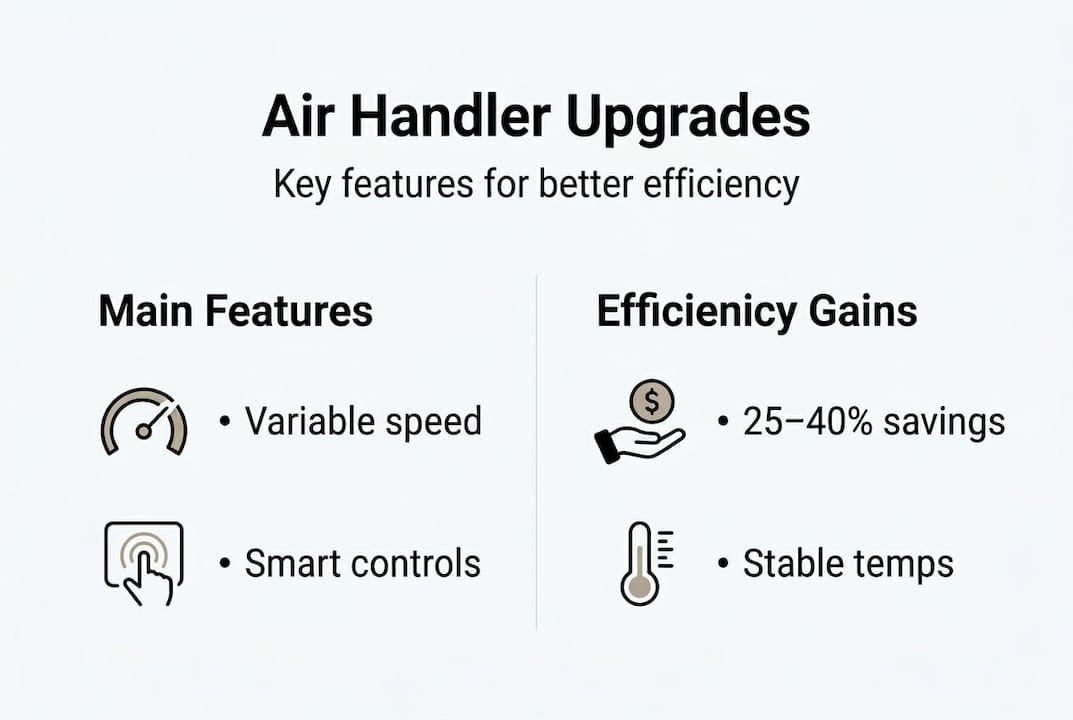
Temperature stability is another major win. Variable-speed units keep temperatures more stable than single-stage units, with swings of roughly 0.5°C compared to 2-3°C with older single-stage systems.
| Feature | Single-speed | Variable-speed |
|---|---|---|
| Energy savings | Baseline | 25-40% less |
| Temperature swings | 2-3°C | Less than 0.5°C |
| Noise level | Noticeable | Near silent |
| Humidity control | Basic | Enhanced |
| Comfort level | Adequate | Superior |
Beyond speed control, modern air handlers also offer:
- Enhanced filtration: HEPA-compatible or high-MERV filters that trap finer particles, ideal for allergy sufferers
- Humidity management: Essential for Canadian climates where winter air gets extremely dry
- Smart controls: Integration with programmable and Wi-Fi thermostats for precise scheduling
- Energy monitoring: Some units track runtime and flag inefficiencies early
Pro Tip: Investing in a variable-speed air handler often pays for itself within 8-10 years through energy savings alone, and that’s before accounting for improved comfort and fewer repair calls. Pair it with the heat pump efficiency tips on our site to squeeze even more value from your system. More advanced guidance is available in our energy saving tips for heat pump owners.
Troubleshooting and maintenance: Keeping air handlers efficient
Having explored advanced features, it’s crucial to know how to keep your air handler working its best, day in and day out.
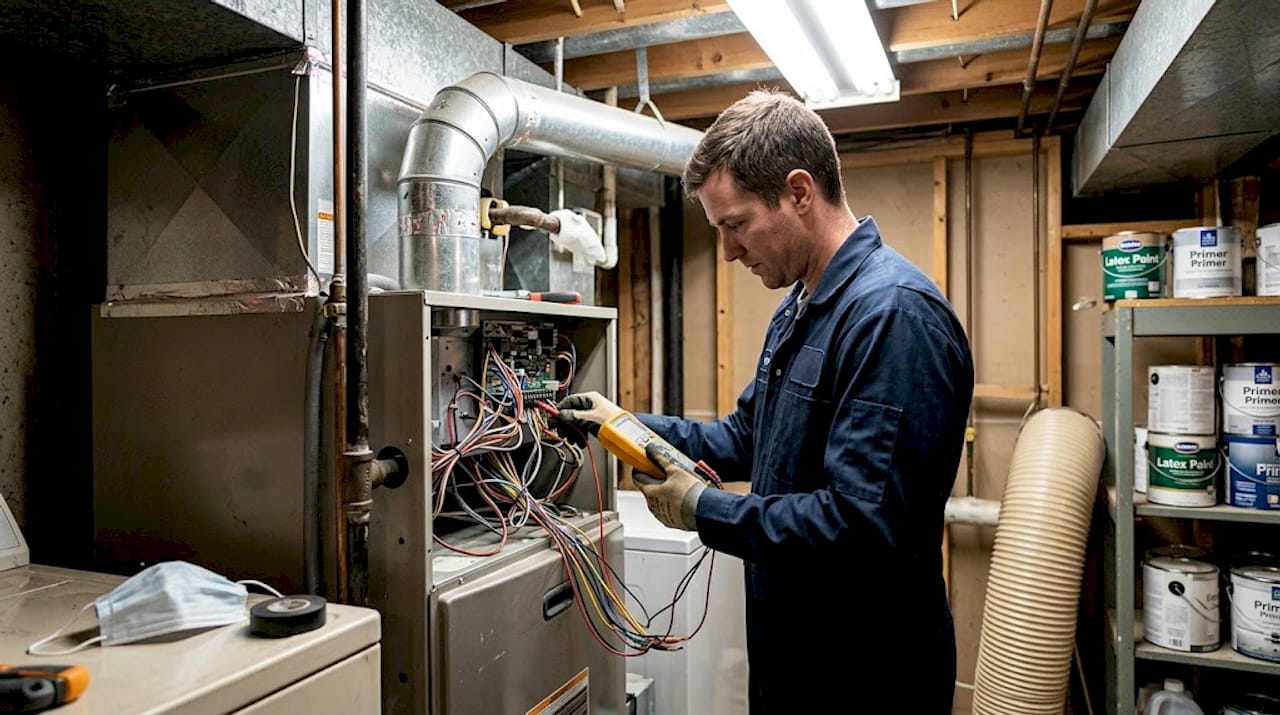
Dirty filters are the number one cause of reduced airflow, leading to coil freeze-up and inefficiency. This is the most preventable problem homeowners face, yet it’s also the most common.
Here are four simple maintenance steps every homeowner should follow:
- Change or clean filters every 1-3 months, depending on how dusty your home is and whether you have pets
- Inspect the evaporator coil annually for dust buildup or signs of ice formation
- Clear the area around your air handler so air can return freely without obstruction
- Check supply and return vents throughout the house to ensure none are blocked by furniture
Watch for these red flags that signal your air handler needs attention:
- Weak or uneven airflow across rooms
- Unusual noises such as rattling, squealing, or banging
- Temperature swings that your thermostat can’t seem to correct
- Ice visible on the coil or refrigerant lines
- Higher than usual energy bills without a clear cause
“Professional matching, installation, and bi-annual maintenance are essential for getting a real return on your HVAC investment.”
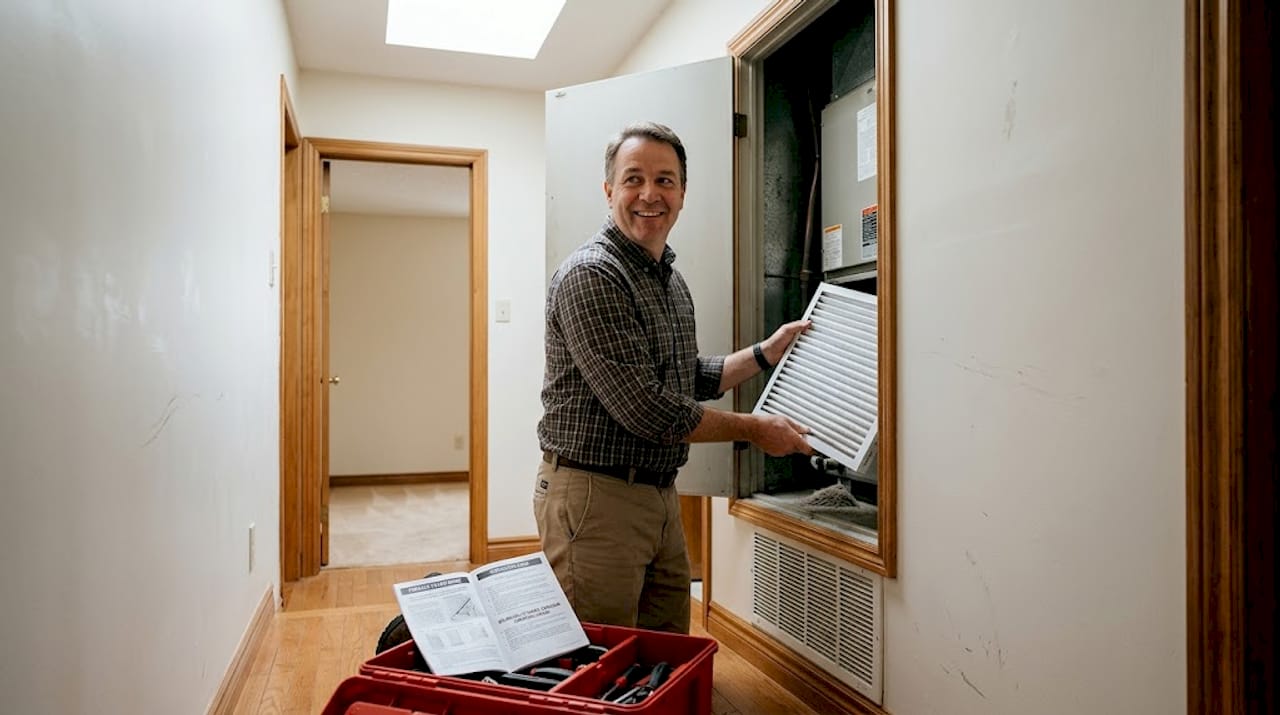
For serious issues including electrical faults, a frozen coil that doesn’t clear after a filter change, or a blower motor that stops running, call a qualified technician. These problems go beyond what a homeowner should handle. Our heat pump maintenance checklist covers the full routine with step-by-step detail.
Why most homeowners undersell the air handler’s impact
Despite everything covered above, there’s still a key mindset that separates high-performing homes from average ones.
In our experience with service calls across Canadian homes, the overwhelming majority of comfort complaints trace back to airflow problems, clogged filters, or control issues. Not heat pump failures. Not refrigerant leaks. Simple, preventable air handler issues that built up over time because nobody was paying attention to the inside unit.
Canadian homeowners tend to fixate on the outdoor unit and the energy labels attached to it. SEER2 ratings and heat pump brands dominate the conversation. But the air handler sitting in your utility room or attic is quietly doing more to shape your daily comfort than anything outside. It filters every breath of air in your home. It controls how evenly heat reaches your rooms. It determines how quietly your system runs.
Before spending thousands on a heat pump upgrade, the smarter first move is often understanding your current air handler’s condition and maintenance history. A well-maintained air handler paired with a moderately efficient heat pump will outperform a neglected setup with a premium outdoor unit every time.
If you’re weighing whether to replace your heat pump units, start by auditing what’s happening inside first.
Pro Tip: Before upgrading your heat pump, upgrade your maintenance habits and your understanding of the air handler. The returns come faster and cost far less.
Next steps: Improve your home’s HVAC efficiency
Now that you understand how central the air handler is to your comfort and energy costs, it’s time to act on that knowledge. If your system is struggling with uneven temperatures, weak airflow, or rising bills, the air handler is often the first place to investigate.

At CoolFix, we help Canadian homeowners get the most from their heat pump systems through expert installation, maintenance, and replacement services. Whether you need guidance on a new setup or help troubleshooting what you already have, our team is ready. Explore our heat pump replacement guide for a clear walkthrough of what to expect, review our installation best practices for new systems, or connect directly with our HVAC service experts for personalised support.
Frequently asked questions
What does an air handler actually do in a heat pump system?
Air handlers circulate conditioned air throughout your home by blowing it over the evaporator coil, without generating heat or cold themselves. The heat pump provides the energy exchange while the air handler handles all the distribution.
How often should I replace or clean air handler filters for best efficiency?
Change or clean filters every 1-3 months to maintain optimal airflow and prevent the most common HVAC problems. Homes with pets or high dust levels should lean toward the shorter end of that range.
What are the main signs my air handler needs service?
Reduced airflow, odd noises, temperature swings, or ice forming on coils are all signs your air handler may need maintenance or professional repair. Catching these early prevents costlier breakdowns.
Do variable-speed air handlers really make a difference in energy bills?
Yes. Variable-speed models save 25-40% on energy compared to single-speed units and maintain steadier temperatures throughout the day. For most Canadian homes, that’s a meaningful annual saving.
Can I upgrade just the air handler without replacing my heat pump?
It’s possible, but air handlers must be matched to your heat pump’s capacity for the best efficiency. Always consult a qualified technician before upgrading one component without assessing the other.
Recommended
- Heat pump efficiency explained: save up to 25% on energy | CoolFix Appliance & HVAC Service
- Heat pump insulation explained: maximise savings & efficiency | CoolFix Appliance & HVAC Service
- 7 Heat Pump Efficiency Tips for Canadian Homeowners – CoolFix Appliance & HVAC Service
- Heat Pump Location Factors – Maximizing Efficiency in Canada – CoolFix Appliance & HVAC Service
0 Comments