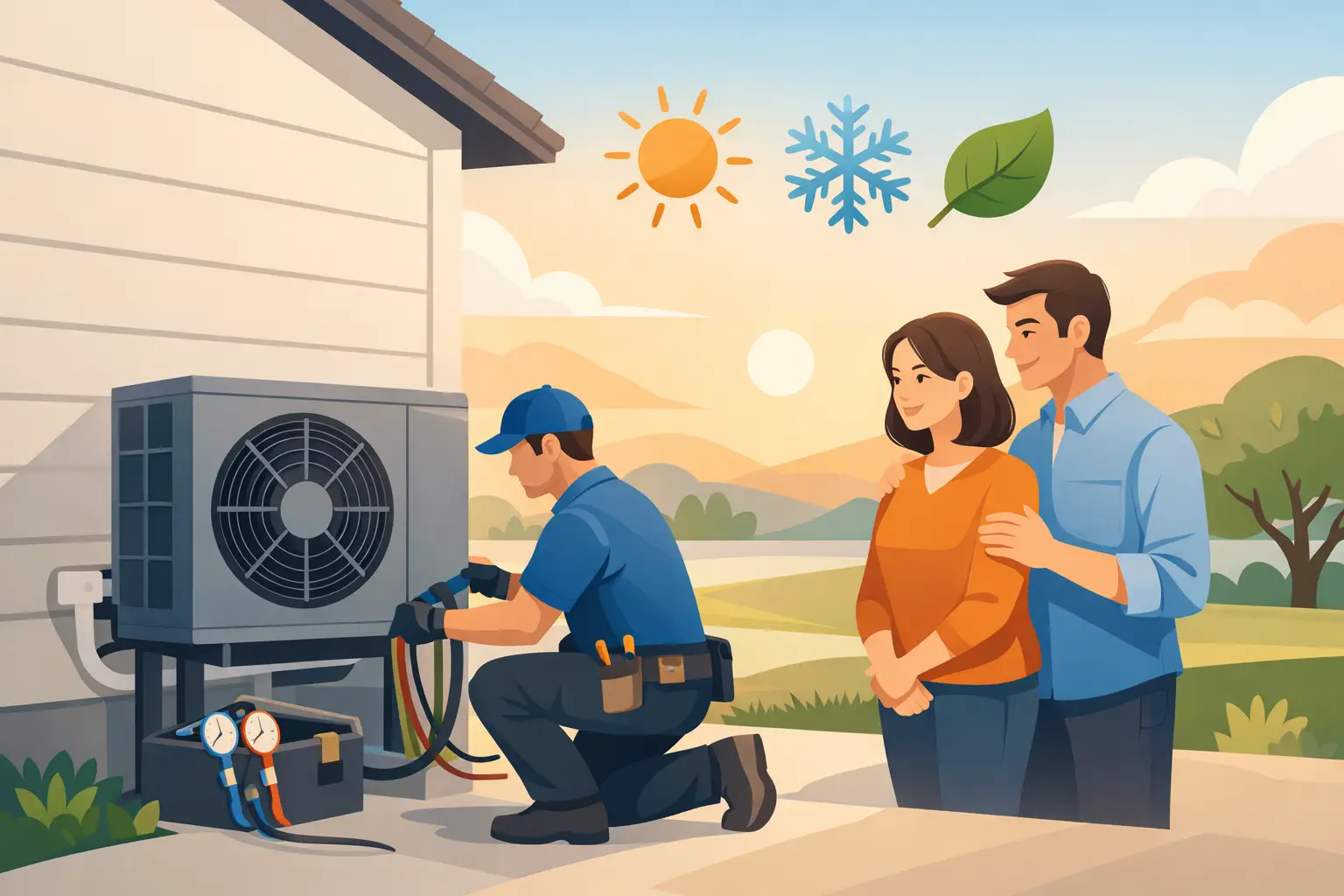
A heat pump can be a smart way to cool your home in summer and reduce reliance on other heating equipment in milder weather. But heat pump installation Winkler homeowners feel good about is not just about mounting an outdoor unit and turning it on. In our winters, the details matter: the equipment choice, home layout, electrical capacity, backup heat, drainage, and proper setup all affect comfort and operating costs.
For homeowners, landlords, and property managers, the best starting point is an honest assessment of the house and the equipment already in place. A heat pump may be an excellent upgrade, but it needs to fit the property rather than be pushed as a one-size-fits-all replacement.
What Heat Pump Installation in Winkler Really Involves
A heat pump moves heat instead of creating it through combustion or electric resistance alone. In cooling mode, it works much like an air conditioner by moving heat out of the home. In heating mode, it gathers available heat from the outdoor air and transfers it indoors.
That process can be very efficient, especially during spring and fall. In colder weather, performance depends heavily on the model selected and how the system is installed. Cold-climate heat pumps are designed to keep operating at lower outdoor temperatures, but every system has limits. Many homes still need a dependable backup heat source for the coldest stretches of a Manitoba winter.
Installation begins well before equipment arrives. A technician should look at the home’s square footage, insulation, window condition, layout, existing heating system, ductwork, electrical panel, and current comfort concerns. A room that has always been too cold, a second floor that overheats in summer, or a system that runs constantly can all point to issues that need attention before a new unit is selected.
Choose the System That Fits the Home
The right heat pump setup depends on what is already in your house and what you want it to do. There is no single best choice for every property.
A ducted central heat pump is often a practical option for homes with usable forced-air ductwork. It can work with an existing indoor air handler or electric furnace when the equipment is compatible. This approach can provide whole-home cooling and heating distribution through the vents you already use.
A ductless mini-split is often a good fit for homes without ducts, additions, converted garages, upstairs areas, or rooms that never seem to match the rest of the house. It uses an outdoor unit and one or more indoor heads to condition specific zones. That can improve comfort without opening walls to add new ductwork, although the appearance and placement of the indoor units should be considered beforehand.
Some homeowners choose a heat pump as part of a hybrid setup. The heat pump handles efficient heating through much of the season, while an electric furnace or another backup source takes over when outdoor temperatures drop beyond the heat pump’s practical range. This can be a sensible approach when replacing a working heating system is not necessary.
The key is to be clear about your goal. Are you replacing an aging air conditioner? Improving one difficult room? Reducing seasonal heating costs? Planning for a rental property with predictable maintenance needs? The answer changes the recommended system.
Proper Sizing Protects Comfort and Costs
Bigger is not automatically better. An oversized heat pump can cycle on and off too often, which may leave temperatures uneven and reduce humidity control during cooling season. An undersized unit may run for long periods without keeping up during demanding weather.
Good sizing is based on the home’s actual heat loss and heat gain, not just a quick guess based on square footage. Ceiling height, insulation levels, sun exposure, window quality, and how air moves through the home all make a difference. A well-insulated newer home may need less capacity than an older home of the same size.
For landlords and property managers, this matters across every unit in a portfolio. Installing oversized equipment because it sounds safer can create more service calls and unhappy tenants. Right-sized equipment, matched to the space and maintained properly, is usually the more cost-conscious choice over time.
Electrical Capacity and Outdoor Unit Placement
Heat pump installation may require electrical work, depending on the equipment and the available panel capacity. The outdoor unit needs a dedicated circuit and an exterior disconnect. Before installation, the electrical system should be reviewed so there are no surprises after the equipment has been chosen.
Placement of the outdoor unit deserves the same attention. It needs adequate clearance for airflow and service access, along with a stable base or properly designed wall mount. In Winkler’s winter conditions, snow buildup and defrost water need to be managed. A unit placed too low, too close to a fence, or where roof snow slides onto it can cause avoidable problems.
The outdoor unit should also be located with sound in mind. Modern equipment is generally much quieter than older systems, but a location right beside a bedroom window or close to a neighbor’s living area may not be ideal.
Ductwork, Airflow, and the Indoor Side
A new outdoor heat pump cannot overcome poor airflow inside the home. If your ducts are undersized, leaking, blocked, or poorly balanced, comfort may still be uneven. The indoor coil, blower, filter setup, return-air path, and thermostat all need to work together.
This is especially important when a heat pump is being added to an older forced-air system. Sometimes a duct adjustment, return-air improvement, or thermostat upgrade is needed to help the new equipment perform as intended. These details may add to the initial scope, but ignoring them can cost more in comfort and efficiency later.
What a Clear Installation Quote Should Explain
A useful quote should give you more than a single total. You should understand what equipment is being proposed, how it will be installed, and what work is included at the property.
Ask whether the price includes removal of old equipment, electrical changes, a pad or mounting hardware, refrigerant line installation, thermostat setup, start-up testing, and required permits or inspections. If backup heat is part of the plan, ask when it is expected to run and how the system will switch between heat sources.
It is also reasonable to ask about expected maintenance, available parts, warranty coverage, and whether the installer can service the equipment after installation. The cheapest quote is not always the lowest-cost option if it leaves out necessary electrical work, drainage planning, or proper commissioning.
Repair First or Install New?
Not every cooling or heating concern calls for a new heat pump. If your current air conditioner, ductless unit, or electric furnace has a repairable issue, a repair may be the better financial decision. Replacing equipment that still has useful life left can create unnecessary expense and waste.
On the other hand, repeated breakdowns, unavailable parts, poor comfort, rising energy use, or an aging system with a major repair ahead may make an installation worth considering. The right conversation should be practical: what will the repair cost, how much life is reasonably left, and what would a replacement change for your home?
CoolFix Appliance & HVAC Service takes a repair-first approach because homeowners deserve options, not a sales pitch. When installation is the sensible next step, the plan should be explained in plain language so you can make the call with confidence.
How to Prepare for Installation Day
Most residential installations are completed with minimal disruption, but the timeline depends on the system type, electrical work, access, and any duct changes needed. Clear a path to the electrical panel, indoor equipment, and planned outdoor location. Move vehicles, patio furniture, or stored items that could block access, and make arrangements for pets during the work.
Expect the technician to shut down equipment temporarily, install and connect the new components, pressure-test and commission the system, and confirm that heating and cooling modes are operating correctly. Before the job is finished, you should know how to use the thermostat, clean or replace filters, recognize normal defrost operation, and understand what to do if the system shows an error code.
Do not be afraid to ask simple questions. You should know where the disconnect is, which breaker serves the unit, how backup heat works, and what maintenance is expected from you versus a service technician.
Keep the New System Working Its Best
A heat pump needs routine care just like an air conditioner or furnace. Keep filters clean, make sure supply and return vents are open, and keep leaves, snow, grass clippings, and stored items away from the outdoor unit. Do not chip ice from the coil or try to force the unit through a defrost issue. That is a service call, not a DIY repair.
Regular maintenance helps catch loose electrical connections, airflow problems, drain concerns, and refrigerant issues before they become larger repairs. It also gives you a chance to ask whether the system is still operating as expected for the season.
A well-planned heat pump is not about chasing the newest equipment. It is about building a heating and cooling setup that suits your home, your budget, and the way you actually live in it. Start with the condition of your current system, ask direct questions, and choose a plan that will still make sense after the first cold snap arrives.
0 Comments