
TL;DR:
- Zoning divides homes into controlled areas, improving comfort and HVAC efficiency.
- Proper design reduces static pressure issues and extends heat pump lifespan.
- Expert guidance and correct ductwork are essential for effective zoning implementation.
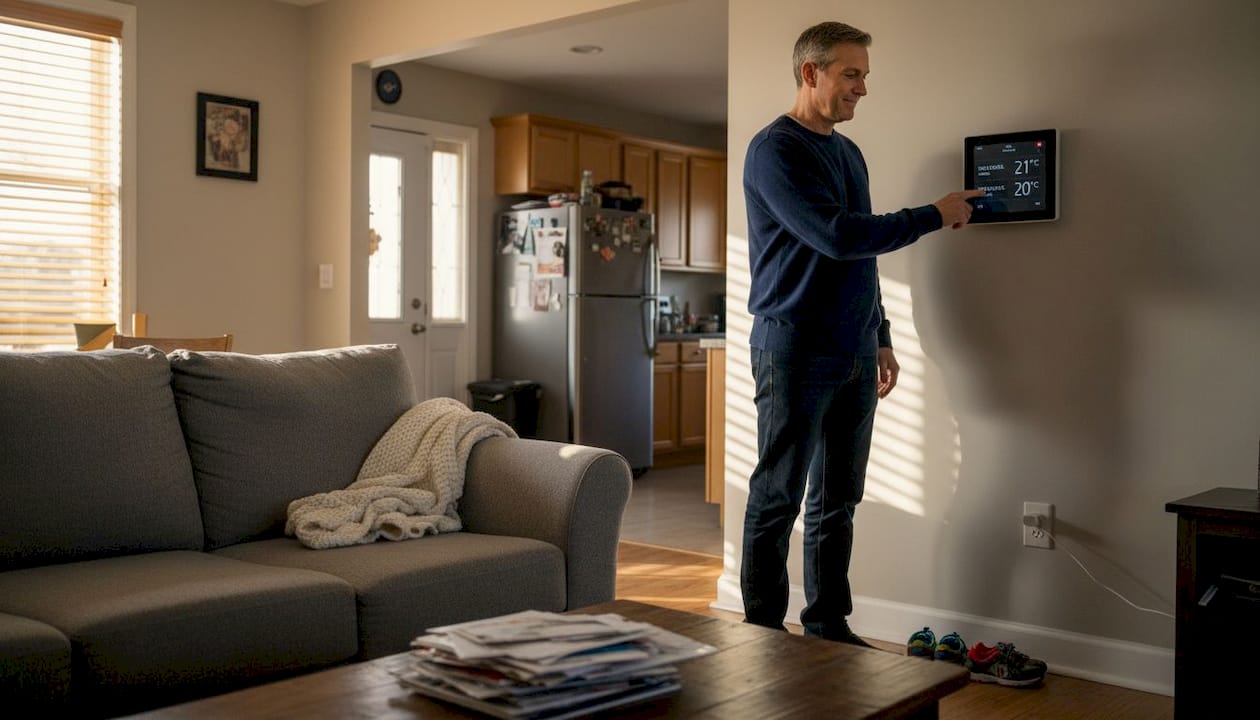
Most homeowners assume that one thermostat doing its best is enough to keep the whole house comfortable. It rarely is. Upstairs bedrooms bake in summer while the basement stays cold. One side of the house gets too much sun, the other too little. Your heat pump runs longer than it should, your energy bills creep up, and nobody can agree on the temperature. Zoning is the HVAC concept that addresses all of this directly, yet it is one of the most misunderstood parts of planning a heat pump installation. This guide breaks down what zoning actually is, how it affects your heat pump’s performance, and how to decide what setup makes sense for your home.
Table of Contents
- What is zoning in HVAC systems?
- How zoning affects HVAC and heat pump efficiency
- Zoning vs. multiple heat pumps: What’s best for Canadian homes?
- Key pitfalls and expert tips for zoning with heat pumps
- Our perspective: Why flexible solutions and not just more zones matter most
- Ready for the next step? Expert HVAC zoning and heat pump guidance
- Frequently asked questions
Key Takeaways
| Point | Details |
|---|---|
| Zoning improves comfort | Well-designed zoning helps manage room-to-room temperature differences especially in larger or multi-level homes. |
| Efficiency depends on proper design | Poorly planned zoning can reduce heat pump efficiency and lead to higher bills or noisy, strained equipment. |
| Not always best for big homes | Large or open-concept homes may benefit more from multiple systems than complex zoning for heat pumps. |
| Consult experienced contractors | Work with professionals who understand the nuances of zoning and heat pump compatibility for best results. |
What is zoning in HVAC systems?
Zoning in HVAC means dividing your home into separate areas, each controlled by its own thermostat and managed by motorised dampers inside the ductwork. Instead of one signal telling your system to heat or cool the entire house, each zone sends its own call for conditioning. A zone control panel coordinates the signals and opens or closes dampers to direct airflow exactly where it is needed.
This is not simply about adding more thermostats. The thermostats are just the interface. The real work happens in the ductwork and the control panel, which balance airflow across zones so that no single area gets starved or flooded with conditioned air. Understanding heat pump system terminology helps clarify how these components connect to the broader system.
Homes that benefit most from zoning tend to share a few characteristics:
- Multi-storey layouts where heat naturally rises, making upper floors warmer
- Rooms with large windows or south-facing walls that gain heat unevenly throughout the day
- Finished basements or home offices used on different schedules than the main living areas
- Open-plan great rooms combined with enclosed bedrooms that have very different load requirements
- Additions or wings built at different times with separate duct runs
In a traditional single-zone setup, your system heats or cools the whole house to satisfy one thermostat, usually placed in a hallway or main living area. Every other room is at the mercy of that one sensor. If the thermostat is satisfied but the master bedroom is still warm, the system simply shuts off. Zoning solves this by letting each area speak for itself.
A common misconception is that zoning is only useful in large homes. In reality, even a modest two-storey home with a finished basement can see real comfort improvements from a two or three zone setup. The key is that the zones reflect genuine differences in how spaces are used and how they gain or lose heat.
Pro Tip: Before agreeing to any zoning proposal, ask your contractor to show you the load calculation for each zone. If they cannot produce one, that is a red flag. Proper zone design starts with knowing exactly how much heating and cooling each area actually needs.
How zoning affects HVAC and heat pump efficiency
Now that you understand what zoning is, let’s look at how it changes how your HVAC and especially your heat pump performs inside your home.
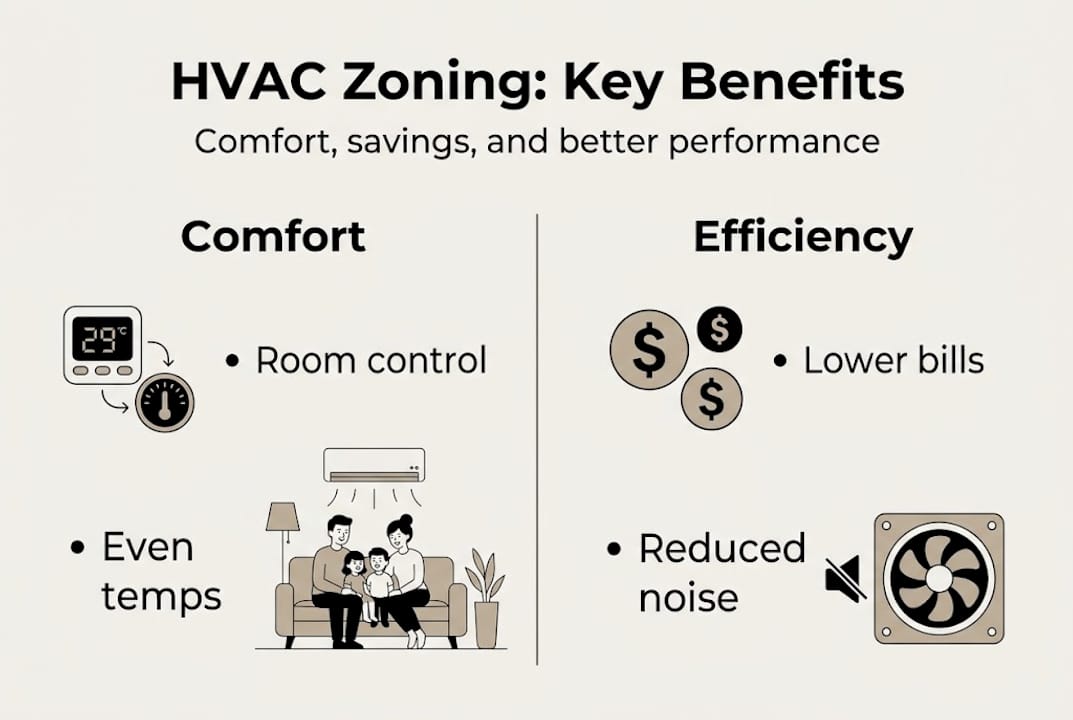
Zoning allows your heat pump to condition only the areas that need it at any given moment. In a two-storey home, you might only need to cool the upper floor in the afternoon while the ground floor stays comfortable on its own. Without zoning, the system runs at full tilt for the whole house. With zoning, it targets the upper floor and shuts down sooner. That kind of precision reduces runtime, which lowers energy use and extends equipment life.
Heat pumps are particularly sensitive to airflow. Unlike a gas furnace that can push through some resistance, a heat pump’s efficiency drops noticeably when airflow is restricted or unbalanced. This is where poorly designed zoning causes real problems. When multiple zones close their dampers simultaneously, the remaining open ductwork has to carry all the airflow. This raises static pressure inside the system, which forces the blower to work harder.
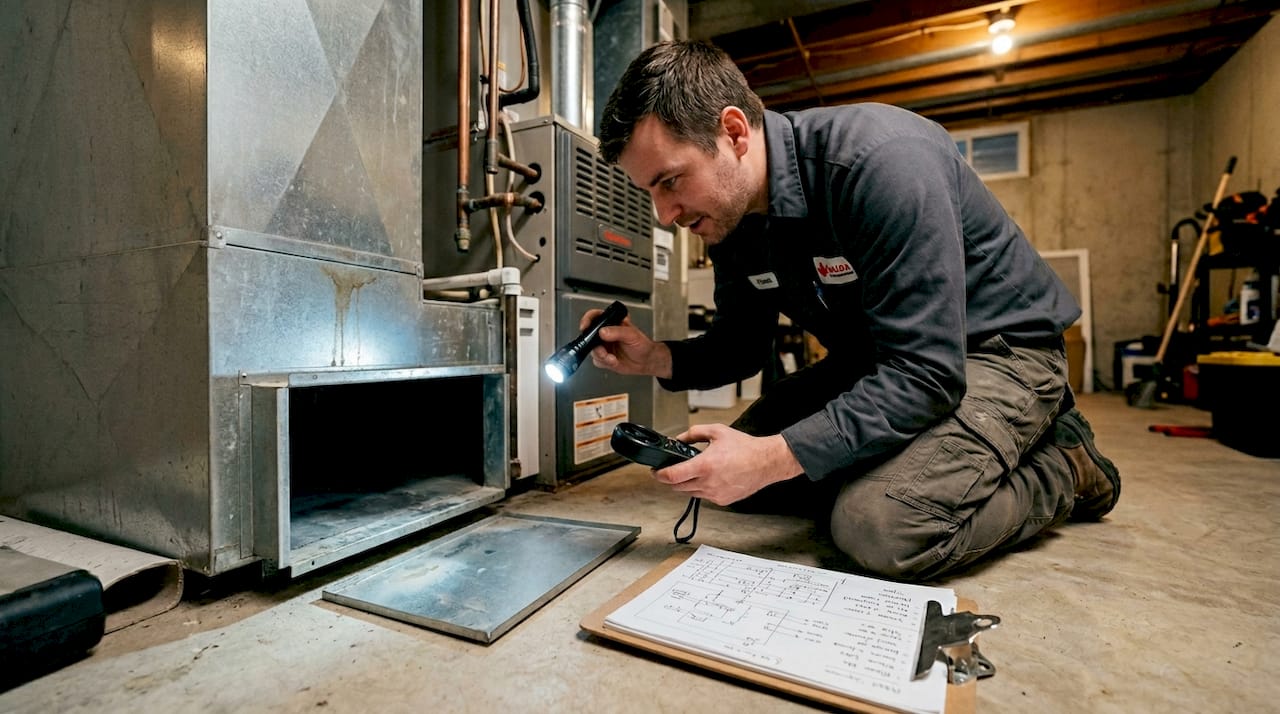
Improper zoning can increase static pressure, causing reduced efficiency and more noise in systems without variable-speed fans. Variable-speed heat pumps handle this better because they can modulate output to match reduced airflow demand. Single-speed units have no such flexibility and wear out faster under these conditions.
Here is a quick comparison of how zoning affects performance in different scenarios:
| Scenario | With proper zoning | Without zoning |
|---|---|---|
| Two-storey home, afternoon cooling | Upper zone only runs | Whole house cools unnecessarily |
| Home office used 9 to 5 | Office zone activates on schedule | Entire house conditioned all day |
| Zones fighting each other | Avoided with good design | Common with poor control setup |
| Variable-speed heat pump | Handles zone changes smoothly | N/A |
| Single-speed heat pump | Risk of high static pressure | Runs at fixed output regardless |
For a deeper look at how heat pump zoning interacts with system design, and how it compares to traditional HVAC setups, those resources walk through the specifics in detail.
A realistic energy saving from well-designed zoning in a two-storey Canadian home can reach 20 to 30 percent on heating and cooling costs compared to a single-zone setup. But if zones are fighting each other because of poor design or mismatched equipment, costs can actually rise.
Zoning vs. multiple heat pumps: What’s best for Canadian homes?
Understanding efficiency is one thing, but the real question for many homeowners is whether zoning beats installing extra heat pumps. Let’s weigh the options.
Zoning works well when the differences between areas of your home are moderate and the existing duct system is in good shape. A three-bedroom bungalow with a finished basement is a reasonable candidate. The load differences between floors are real but manageable, and a single heat pump with two or three zones can handle the variation without strain.
For larger homes, the calculus changes. Experts recommend dedicated systems over zoning for large homes with complex demands, noting that zoning can strain equipment. A 3,000 square foot home with a walkout basement, a main floor with high ceilings, and a finished upper level may simply have too much variation for one unit to handle gracefully.
| Factor | Zoning one system | Multiple heat pumps |
|---|---|---|
| Upfront cost | Lower | Higher |
| Installation complexity | Moderate | Higher |
| Flexibility for simultaneous heating and cooling | Limited | Excellent |
| Maintenance | One system to service | Two or more systems |
| Risk of equipment strain | Moderate to high | Low |
| Best for | Smaller to mid-size homes | Large or complex layouts |
Signs your home may be better served by multiple systems:
- You need to heat one wing while cooling another at the same time
- Your home has an addition with its own duct system
- Your square footage exceeds 2,500 square feet with multiple distinct levels
- Your current ductwork is undersized or poorly laid out
- You have a detached garage suite or secondary dwelling unit
Contractors are sometimes reluctant to install third-party zoning kits because of the added complexity and potential warranty complications. That reluctance is worth taking seriously. Heat pump placement also plays a role in whether a single zoned system or multiple units will serve your layout better.
“The best system is not always the most complex one. Sometimes two simple, well-placed heat pumps outperform one elaborate zoned setup.”
Key pitfalls and expert tips for zoning with heat pumps
Let’s move from theory to practice. Here is what you absolutely need to know before committing to zoning for your heat pump.
The most common pitfall is mismatching the zoning design to the equipment. A single-speed heat pump with three zones and aggressive damper control is a recipe for premature failure. The system cycles on and off more frequently, static pressure spikes when zones close, and the compressor takes the hit over time.
Another frequent mistake is neglecting duct design. Zoning does not fix a poorly designed duct system. If your ducts are undersized or poorly routed, adding zone dampers just moves the problem around. A proper Manual D duct calculation should be part of any zoning proposal.
Contractors often avoid third-party zones due to complexity and equipment strain, and that caution is legitimate. When a contractor pushes back on zoning, ask them to explain why. Their reasoning will tell you a lot about their expertise.
Here is a numbered list of do’s and don’ts to guide your project:
- Do request a full load calculation (Manual J) before any zoning design begins
- Do ask whether your heat pump has a variable-speed blower, which handles zoning far better
- Do confirm that duct sizing will be reviewed as part of the zoning install
- Don’t assume more zones always means more comfort or savings
- Don’t let a contractor skip a bypass damper or pressure relief if your system needs one
- Don’t accept a zoning proposal that does not include commissioning and airflow testing after installation
Pro Tip: Ask your contractor specifically: “How will you manage static pressure when multiple zones are closed?” A confident, detailed answer means they know what they are doing. A vague response is a warning sign.
Working with a knowledgeable installer makes all the difference. Choosing the right HVAC contractor covers the questions worth asking before you sign anything.
Our perspective: Why flexible solutions and not just more zones matter most
After years of helping Canadian homeowners design systems that actually work for their families, one pattern stands out clearly. The homeowners who end up happiest are not the ones who installed the most zones. They are the ones who asked the most questions before installation.
There is a tendency in the industry to treat zoning as an upgrade that always adds value. It can. But it can also add complexity, cost, and maintenance burden without meaningfully improving comfort. In open-plan homes or large properties with diverse needs, two well-placed heat pumps will often outperform one heavily zoned system, and they will do it more reliably.
The smartest approach blends thoughtful equipment placement, moderate zoning where it genuinely helps, and honest expert guidance. Fancy thermostats and zone control panels are tools, not solutions. The solution is a system designed around how your household actually lives. As we cover in our heat pumps vs traditional HVAC resource, the technology is only as good as the design behind it. Demand explanations, not just equipment lists.
Ready for the next step? Expert HVAC zoning and heat pump guidance
If this article has helped you see your home’s comfort challenges more clearly, the next step is getting advice tailored to your specific layout and needs.

At CoolFix, we specialise in heat pump installation and zoning design for Canadian homeowners. Whether you are starting from scratch or reconsidering an existing setup, our guides on heat pump replacement, installation timelines, and installation best practices give you the detailed, practical information you need. We help you move from confusion to confidence, with real guidance built for Canadian homes and Canadian climates.
Frequently asked questions
Is zoning worth it for a typical Canadian home with a heat pump?
Zoning can improve comfort and efficiency in homes with variable room usage, but open-plan houses often see limited benefit and may be better served by a different approach.
Can I zone my existing HVAC system, or do I need all new equipment?
Many systems can be retrofitted, but adding third-party zoning to existing equipment is something many contractors avoid due to compatibility and strain risks.
Does zoning actually save money on energy bills?
Well-designed zoning can reduce operating costs noticeably, but improper zoning can actually increase energy use and lead to higher maintenance expenses.
What’s the main downside of HVAC zoning with heat pumps?
The biggest risk is equipment strain from zoning when controls and ductwork are not carefully matched to the system’s capacity and the home’s actual layout.
Recommended
- Heat Pump Zoning – Maximizing Comfort and Savings – CoolFix Appliance & HVAC Service
- Heat pumps vs traditional HVAC: what Canadian homeowners need to know | CoolFix Appliance & HVAC Service
- Heat Pump Placement Explained: Energy Savings at Home – CoolFix Appliance & HVAC Service
- Heat pump insulation explained: maximise savings & efficiency | CoolFix Appliance & HVAC Service
0 Comments