That first really hot day of summer or the first cold snap of winter is when many homeowners find out their HVAC system has been struggling for months. If you have ever turned the thermostat, heard the unit kick on, and still felt no real comfort inside, you already know why HVAC maintenance is important. It is not just about avoiding inconvenience. It is about controlling costs, protecting your equipment, and keeping your home livable when you need heating or cooling the most.
For most households, the HVAC system is easy to ignore until something goes wrong. It sits in the background doing its job, so it rarely gets attention the way a leaking sink or broken refrigerator does. The problem is that heating and cooling equipment does not usually fail all at once. More often, it wears down in small ways first – dirty coils, clogged filters, loose electrical connections, low airflow, or parts running hotter and harder than they should. Those smaller problems add up.
Why HVAC maintenance is important for everyday homeowners
The biggest reason maintenance matters is simple: it helps you catch small issues before they become expensive ones. A system that is cleaned, inspected, and adjusted on a regular basis has a better chance of running the way it was designed to run. That means fewer surprise service calls, fewer emergency breakdowns, and less stress when the weather turns extreme.
There is also the cost side. Many people put off maintenance because they want to save money, but neglected equipment often costs more in the long run. A system that has to push air through a clogged filter or dirty blower assembly uses more energy to do the same job. If a part is wearing out and no one spots it early, it can damage other components around it. A lower-cost maintenance visit can prevent a much larger repair later.
For landlords and property managers, the value is even clearer. One missed warning sign in a rental property can turn into tenant complaints, urgent after-hours calls, and a more expensive fix under pressure. Preventive maintenance helps reduce those situations and gives you more control over your budget.
Lower energy bills start with proper system care
When an HVAC system is dirty or out of adjustment, it works harder than it should. That extra strain shows up on your utility bill. Airflow restrictions, dust buildup, weak capacitors, and neglected coils can all reduce efficiency. The equipment still runs, but it may run longer cycles or struggle to reach the set temperature.
That does not mean maintenance turns every older unit into a high-efficiency model. It depends on the age of the system, the condition of the ductwork, and how well the home is insulated. Still, proper maintenance gives your equipment the best chance to perform efficiently within its limits. If your system is basically sound, regular service can help keep waste from creeping up month after month.
A clean filter alone makes a difference, but maintenance goes further than that. It looks at the condition of the parts that move air, transfer heat, and keep the system operating safely. That broader view is where real savings often happen.
Fewer breakdowns during peak season
The worst time for an HVAC problem is when every other home in town needs service too. During a heat wave or a deep winter freeze, systems are under their heaviest load. That is also when weak components are most likely to fail.
Maintenance reduces that risk by identifying common trouble spots ahead of time. A technician may notice a worn belt, a failing contactor, weak airflow, or a drain issue before it becomes a complete shutdown. Not every breakdown can be prevented, of course. Some parts fail suddenly. But many service calls start with warning signs that were there all along.
This matters for comfort, but it also matters for safety and property protection. In cold climates, a heating failure can quickly become more than an inconvenience. Frozen pipes, moisture issues, and unsafe indoor temperatures can follow if the problem is not handled fast.
Better air quality inside the home
Homeowners often think of HVAC maintenance as a comfort issue, but indoor air quality is part of the picture too. Your system moves air through the house every day. If key components are dirty, that circulation can carry dust and other buildup through the living space.
Maintenance helps keep the system cleaner and supports better airflow. That can be especially helpful in homes with pets, allergy concerns, or higher dust levels. It is not a cure-all for every air quality problem. Some homes may need better filtration, duct cleaning, or humidity control depending on the situation. But regular HVAC service is a solid first step because it keeps the core system from becoming part of the problem.
If the system is not moving enough air, some rooms may also feel stuffy while others stay too warm or too cold. That uneven comfort is sometimes blamed on the equipment itself when the real issue is poor airflow, blocked returns, or lack of maintenance.
Why HVAC maintenance is important for equipment life
Replacement costs are not small. That is one reason homeowners ask how long an air conditioner, furnace, or ductless system should last. The honest answer is that lifespan depends on usage, installation quality, and maintenance.
A neglected system may still run for years, but that does not mean it is running well or aging gracefully. Dirt buildup increases strain. Loose electrical connections create heat. Poor airflow can shorten the life of motors and compressors. Over time, that wear reduces the odds that the system will make it to the far end of its expected service life.
Maintenance does not guarantee that every unit will last forever. Older equipment eventually reaches a point where repairs stop making financial sense. But if your goal is to get the most value from what you already own, regular care is one of the smartest ways to do it. That lines up with a practical, repair-first mindset: preserve useful equipment instead of replacing it early because basic service was ignored.
Safety is part of the job too
Heating and cooling systems involve electricity, moving parts, and in some homes fuel-burning equipment. That means maintenance is not only about efficiency and comfort. It is also about safe operation.
A proper inspection may catch damaged wiring, overheating components, blocked drains, or issues that can affect system performance and safety. For heating equipment, safe operation becomes even more important during the colder months when the system runs longer and more often.
This is another area where waiting can backfire. Small electrical or mechanical issues do not usually improve on their own. They tend to get worse under load.
What maintenance usually includes
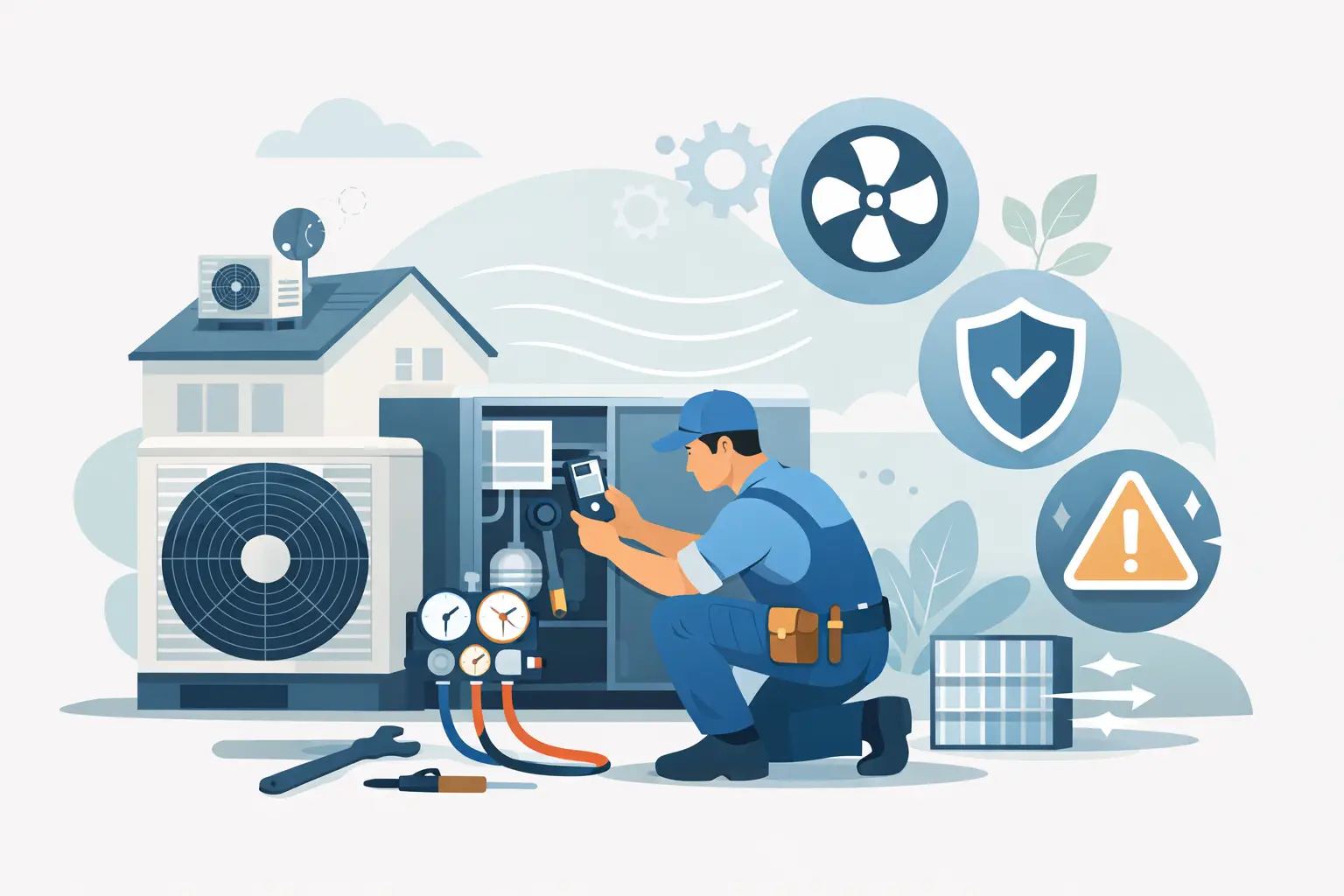
Most homeowners know they should change the filter, but that is only one piece of the puzzle. A maintenance visit generally includes inspection, cleaning, testing, and adjustment of key components. The exact checklist depends on whether the system is central air, ductless, an electric furnace, or another setup.
In practical terms, the technician is looking for signs of wear, restricted airflow, dirt buildup, drainage problems, electrical issues, and performance problems that may not be obvious yet. They are also checking whether the system is operating the way it should, rather than waiting for a full failure to reveal a problem.
For homeowners who like to stay ahead of repairs, this kind of visit gives useful information. You get a clearer picture of the system’s condition and whether a repair should be planned now instead of forced later.
Maintenance is cheaper than emergency decisions
One of the less obvious reasons maintenance matters is that it gives you time to make smarter choices. When a system fails in the middle of extreme weather, people often have to decide fast. That can mean approving a costly repair or replacement without much time to compare options.
Routine service makes those decisions less rushed. If a technician sees that a component is weakening or that an older unit is nearing the end of its practical life, you can plan instead of panic. That usually leads to better budgeting and fewer choices made under pressure.
For local homeowners around Winkler and nearby communities, that practical approach matters. People want honest advice, fair pricing, and equipment that lasts as long as it reasonably can. That is why companies like CoolFix focus on maintenance and repair first instead of pushing replacement at every opportunity.
The best time to pay attention to your HVAC system is before it gives you a reason to. A little routine care can save money, stretch equipment life, and help keep your home comfortable when the weather is doing its worst.
0 Comments