
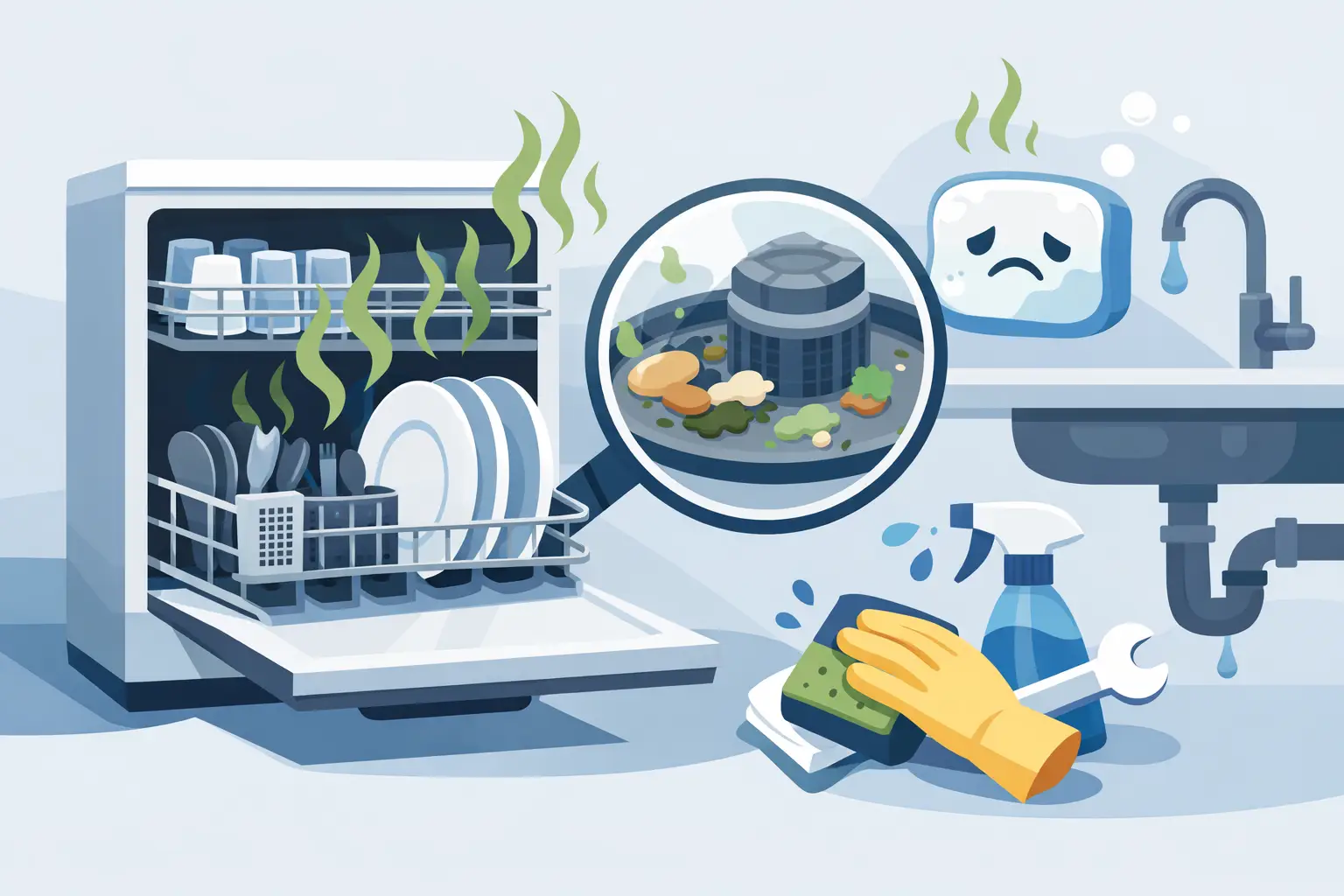
A dishwasher should smell neutral or faintly like detergent, not like rotten food, sewage, wet towels, or a musty basement. If you are asking, “why does my dishwasher smell,” the answer is usually trapped food residue, standing water, or bacteria growing somewhere moisture does not fully drain or dry. The good news is that many odor problems can be handled with a careful cleaning. Persistent odors, however, can point to a drain or installation issue worth repairing before it turns into a bigger mess.
Why Does My Dishwasher Smell in the First Place?
Dishwashers handle food particles, grease, soap residue, and plenty of water in a closed space. That makes them efficient cleaning machines, but it also means a small amount of leftover debris can become a source of odor quickly. Warm, damp conditions allow bacteria and mildew to grow, especially if the dishwasher sits closed for long periods between cycles.
The smell itself offers a useful clue. A sour or rotten-food smell commonly comes from buildup in the filter, spray arms, door seal, or drain area. A musty smell may mean mildew around the gasket or interior surfaces. A sewage-like odor deserves more attention because it can indicate dirty water is backing up from the sink drain or garbage disposal connection.
Do not assume a stronger detergent will solve the issue. Detergent can mask an odor for a cycle or two, but it will not remove the material causing it. Start by finding where the smell is coming from.
Start With the Filter and Bottom of the Tub
Most dishwasher odor calls begin with a filter that has not been cleaned recently. The filter sits at the bottom of the dishwasher and catches food particles before they reach the pump and drain system. It does useful work, but it cannot hold old food forever.
With the dishwasher empty and turned off, pull out the bottom rack. Remove the filter according to the instructions for your model, usually by twisting and lifting it out. Rinse it under hot running water and use a soft brush to remove greasy film and trapped debris. Avoid sharp tools that can damage the screen.
While the filter is out, inspect the sump area below it. Wipe away visible food, broken glass, paper labels, twist ties, or anything else that does not belong there. Check for standing water. A small amount may be normal on some models, but a noticeable puddle after a completed cycle suggests a drainage problem.
Clean around the filter housing before reinstalling the filter securely. A loose or improperly seated filter can allow debris to move where it should not, leading to poor washing and recurring smells.
Clean the Door Seal, Spray Arms, and Interior
Food residue does not always stay at the bottom. It can collect in folds around the door gasket, along the bottom edge of the door, and in the corners of the tub. Use a damp cloth with warm, soapy water to wipe these areas. Pay close attention to the rubber seal, where greasy residue and mildew can hide.
The spray arms also deserve a look. Remove them if your model allows it easily, then rinse them and check the small holes for debris. Seeds, bits of packaging, and mineral scale can block water flow. When spray arms cannot do their job, dishes may come out less clean and food particles may remain inside the machine.
After wiping down the interior, run an empty hot cycle with a dishwasher cleaner made for the job. This can help remove grease and mineral buildup from areas you cannot reach by hand. White vinegar is often used as a household alternative, but it is not a cure-all. It may help with light odors and mineral film, yet it will not correct a clogged drain, failed pump, or dirty disposal connection. Never mix vinegar with bleach or other cleaners.
Give the Dishwasher a Chance to Dry
Once the cleaning cycle is done, leave the dishwasher door cracked open for a while. This simple habit lets moisture escape instead of sitting in a sealed tub. If your dishwasher has a fan-dry or automatic door-opening feature, make sure it is working as intended.
For households that run the dishwasher only once or twice a week, odor prevention may take a little more attention. Scrape dishes well, clean the filter more often, and avoid leaving heavily soiled dishes inside for days.
Check the Sink, Garbage Disposal, and Drain Hose
If the odor seems more like sewer gas than old food, the dishwasher may not be the true source. The dishwasher drain hose usually connects to the garbage disposal or sink drain plumbing. Grease and food buildup in that area can send odors back toward the dishwasher.
Run cold water and operate the garbage disposal, if you have one, to clear it out. Then clean the disposal following its manufacturer instructions. Never put your hand into a disposal, even if it is switched off. If your sink drains slowly, address that too. A partial sink clog can interfere with dishwasher drainage.
Under the sink, look at the dishwasher drain hose. It should be routed in a high loop beneath the countertop or connected through an approved air gap, depending on local plumbing requirements. This raised loop helps prevent dirty sink water from flowing backward into the dishwasher. A hose that droops too low, is kinked, or was installed incorrectly can contribute to odors and drainage trouble.
Landlords and property managers should take repeat odor complaints seriously, particularly in vacant units. A dishwasher that sits unused can dry out, collect residue, or reveal a shared plumbing issue. Cleaning may solve a one-time smell, but recurring sewer odors should be diagnosed rather than repeatedly covered up.
When a Dishwasher Smell Means You Need Repair
A dishwasher that smells bad after a thorough filter and interior cleaning may have a mechanical or drainage problem. Watch for dirty water left in the tub, water leaking under the machine, gurgling from the sink, poor wash results, or an odor that returns within a few cycles. These signs can point to a restricted drain hose, a blockage in the pump area, a worn drain pump, or a plumbing problem beyond the appliance.
There is a trade-off with do-it-yourself cleaning: it is affordable and often effective for routine buildup, but taking apart pumps, electrical connections, or internal drain components without the right experience can create leaks or damage. If water is not draining properly, it is usually more cost-effective to have the cause identified than to keep buying cleaners and hoping the smell disappears.
CoolFix Appliance & HVAC Service can help homeowners in Winkler and nearby communities determine whether the issue is a simple maintenance need or a repair that can keep the dishwasher working longer. Repairing a drain-related problem early may save the appliance from unnecessary wear and help avoid the cost and waste of premature replacement.
Keep Odors From Coming Back
A clean dishwasher does not need complicated upkeep. Scrape large food scraps from dishes, run the machine regularly, and clean the filter about once a month in an average household. Families who cook often, use the dishwasher daily, or wash dishes with lots of grease may need to clean it more frequently.
Use the correct amount of detergent for your water conditions and dishwasher model. Too much detergent can leave film behind, while too little may not clean dishes thoroughly. If hard-water mineral buildup is common in your home, a dishwasher cleaner on a regular schedule can help keep the interior fresher and water flowing better through the spray arms.
A bad dishwasher smell is usually the machine asking for attention, not necessarily replacement. Clear the buildup, make sure it drains properly, and do not ignore a sewage-like odor or standing water. A little maintenance now can keep one of the hardest-working appliances in your home doing its job without making the kitchen unpleasant.
0 Comments