
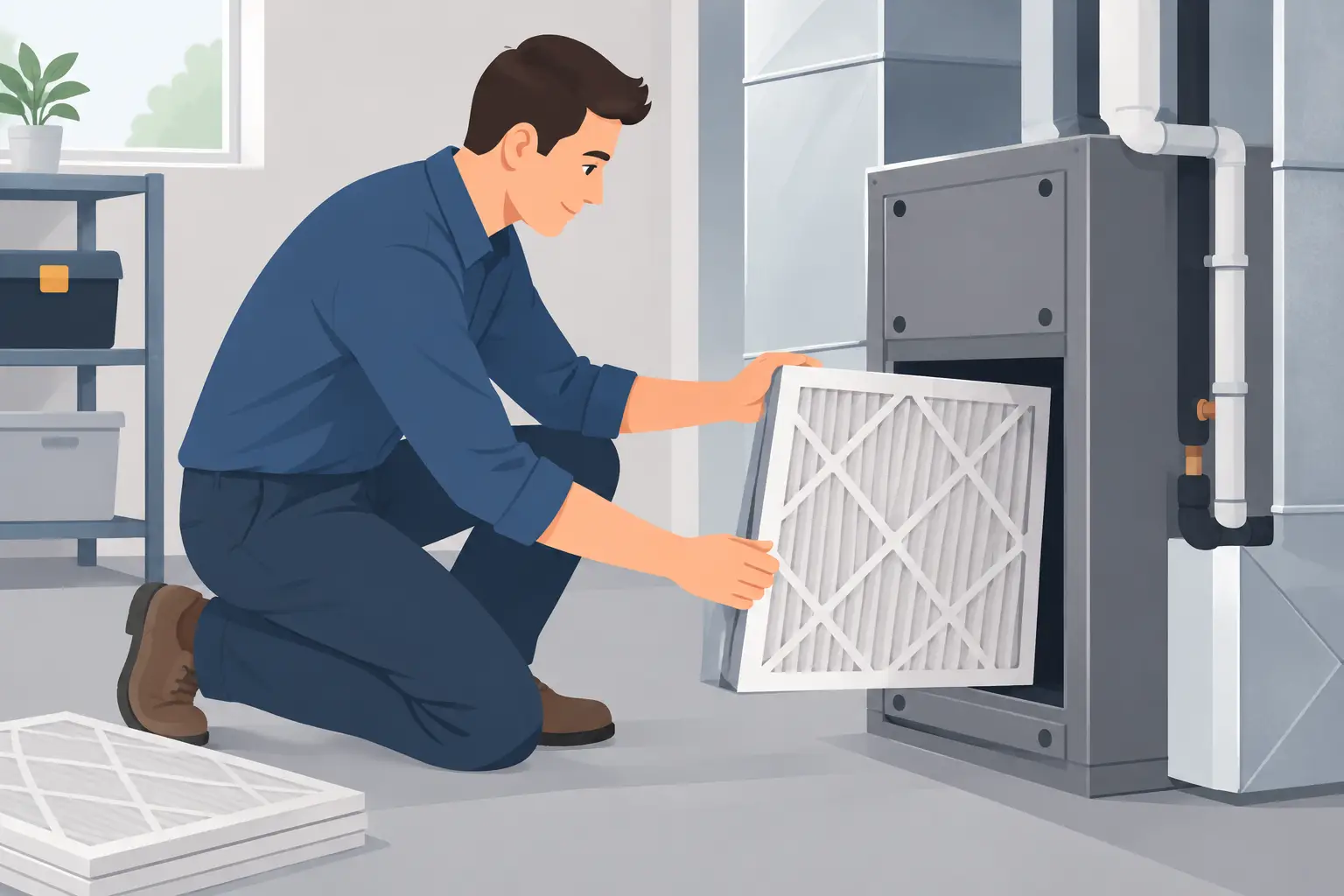
A furnace filter is a small, inexpensive part that has a big job. When it gets clogged, your heating system has to pull air through a layer of dust, pet hair, and debris. Learning how to change furnace filter is one of the simplest ways to protect airflow, keep rooms more comfortable, and avoid putting unnecessary strain on equipment.
For most homeowners, this is a quick maintenance task, not a repair call. The key is using the correct filter, installing it in the right direction, and replacing it before it becomes packed with dust. A filter that looks only slightly dirty can still restrict airflow, especially if you have pets, a large household, or renovation dust in the home.
Why a Clean Furnace Filter Matters
Your furnace needs steady airflow to heat your home properly. The filter catches airborne particles before they reach the blower motor, heat exchanger, and ductwork. Without a filter, or with one that is poorly fitted, dust can build up inside the system and lead to more cleaning, reduced efficiency, and avoidable service issues.
A clogged filter can cause uneven heating, weak airflow from vents, longer heating cycles, and more dust around the house. In some cases, restricted airflow can make an electric furnace or forced-air system overheat and shut down as a safety measure. Changing the filter will not solve every heating problem, but it is always one of the first things worth checking.
For landlords and property managers, filter changes are especially practical preventative maintenance. A simple schedule can help reduce tenant comfort complaints and protect equipment across multiple properties.
How to Change Furnace Filter Step by Step
Before you begin, make sure you have a replacement filter with the same dimensions as the existing one. The size is printed along the filter frame, such as 16 x 25 x 1 or 20 x 25 x 4. Do not rely only on measuring the old filter. Its actual size may be slightly smaller than the labeled size, and the printed information is the best guide.
- Turn the furnace off. Use the service switch near the furnace or turn off the system at the thermostat. This is a basic safety step and prevents the blower from pulling in loose dust while the filter is out.
- Find the filter compartment. In many homes, the filter slides into a slot beside or below the furnace. It may also be located in the return-air grille, often behind a large wall or ceiling vent. If you have central air conditioning, the furnace and AC system commonly share the same filter.
- Remove the old filter carefully. Slide it out slowly and keep it level if possible. A heavily used filter can release dust and pet hair when moved. Check the frame for the size and the airflow arrow before throwing it away.
- Check the airflow direction. Every disposable filter has an arrow printed on the cardboard frame. The arrow must point toward the furnace or air handler, in the same direction the air is traveling. In most furnace installations, that means the arrow points toward the blower compartment, not toward the return-air duct or living area.
- Slide in the new filter. It should fit snugly without being bent, crushed, or forced. If it is loose enough to leave gaps around the edges, it may be the wrong size. Air will take the easiest path, and a gap lets unfiltered air bypass the filter.
- Close the compartment and restart the system. Make sure any access panel is fully in place, then turn the furnace back on. Write the installation date on the filter frame or set a reminder on your phone.
That is the full process. If you cannot find the filter, the slot appears damaged, or the system will not start afterward, stop there rather than forcing panels or wiring. A service technician can identify the proper filter location and check for a separate issue.
How Often Should You Replace a Furnace Filter?
The replacement schedule depends on the filter type and your household. A basic 1-inch fiberglass filter may need changing every 30 days. Many pleated 1-inch filters last one to three months. Thicker 4-inch or 5-inch media filters can often last six months or longer, but only if they are checked regularly and the manufacturer’s guidance supports that interval.
Homes with shedding pets, smokers, allergy sufferers, young children, or frequent open windows usually need more frequent changes. Construction work, drywall sanding, and nearby farm dust can also load a filter quickly. During a Winkler-area winter, when windows stay closed and the furnace runs often, it is smart to inspect the filter monthly even if you do not replace it every month.
There is no benefit to changing a clean filter just because the calendar says so. On the other hand, waiting until it is visibly black and packed with debris is too long. Hold it up to a light. If very little light passes through, replacement is usually due.
Choosing the Right Furnace Filter
Filter shopping gets confusing because size, thickness, and MERV rating all matter. Start with the physical size required by your system. A filter that is too small allows bypass; one that is too large may buckle or simply will not fit.
Next, consider the MERV rating. MERV measures how effectively a filter captures particles. A higher number catches finer particles, but it can also create more airflow resistance. More filtration is not automatically better for every furnace.
For many homes, a pleated filter in the MERV 8 to MERV 11 range is a practical balance between household dust control and healthy airflow. A higher-rated filter may make sense for certain allergy concerns, but only if your equipment can handle it. Older systems, undersized return ducts, or systems with existing airflow problems may struggle with a very restrictive filter.
Avoid stacking two filters together to make the air cleaner. That restricts airflow and can create more trouble than it solves. Also avoid using a washable filter unless it is fully dry before reinstalling. A damp filter can encourage mold growth and restrict airflow.
Common Furnace Filter Mistakes
The most common mistake is installing the filter backward. The system may still run, but the filter will not perform as intended and can sag or become damaged. Always follow the arrow, even if the filter design makes the direction seem counterintuitive.
Another mistake is buying the cheapest filter without considering the home. A low-cost fiberglass filter may be fine for basic equipment protection, but it does little for smaller airborne particles. At the same time, jumping to the highest MERV rating without checking compatibility can strain the system. The right choice is usually a sensible middle ground, not the most expensive option on the shelf.
Homeowners also sometimes forget that a furnace filter is not a cure for every indoor-air issue. If rooms are still dusty after regular filter changes, the problem may involve leaky ducts, dirty return grilles, poor ventilation, or a duct system that needs attention. If airflow is weak even with a clean filter, there may be a blower, duct, thermostat, or heating-system issue that needs diagnosis.
Signs Your Filter May Be Overdue
A quick visual check is helpful, but your home often gives you clues first. Watch for these signs:
- Rooms taking longer than usual to warm up
- Less air coming from supply vents
- More dust settling on furniture
- A furnace that runs longer or cycles off unexpectedly
- A gray, matted, or visibly clogged filter
These symptoms do not automatically mean the filter is the only problem. But replacing a dirty filter is an affordable first step before assuming you need a major repair or replacement.
Keep the Habit Simple
The best filter routine is the one you will actually follow. Keep one or two spare filters at home, write the size down somewhere easy to find, and check the filter on the same day each month. Property owners can add filter checks to seasonal inspections or tenant maintenance reminders.
A clean filter will not make an aging furnace brand new, but it gives the equipment a fair chance to do its job. When basic maintenance becomes a regular habit, you spend less time dealing with preventable heating headaches and more time enjoying a home that simply stays comfortable.
0 Comments