
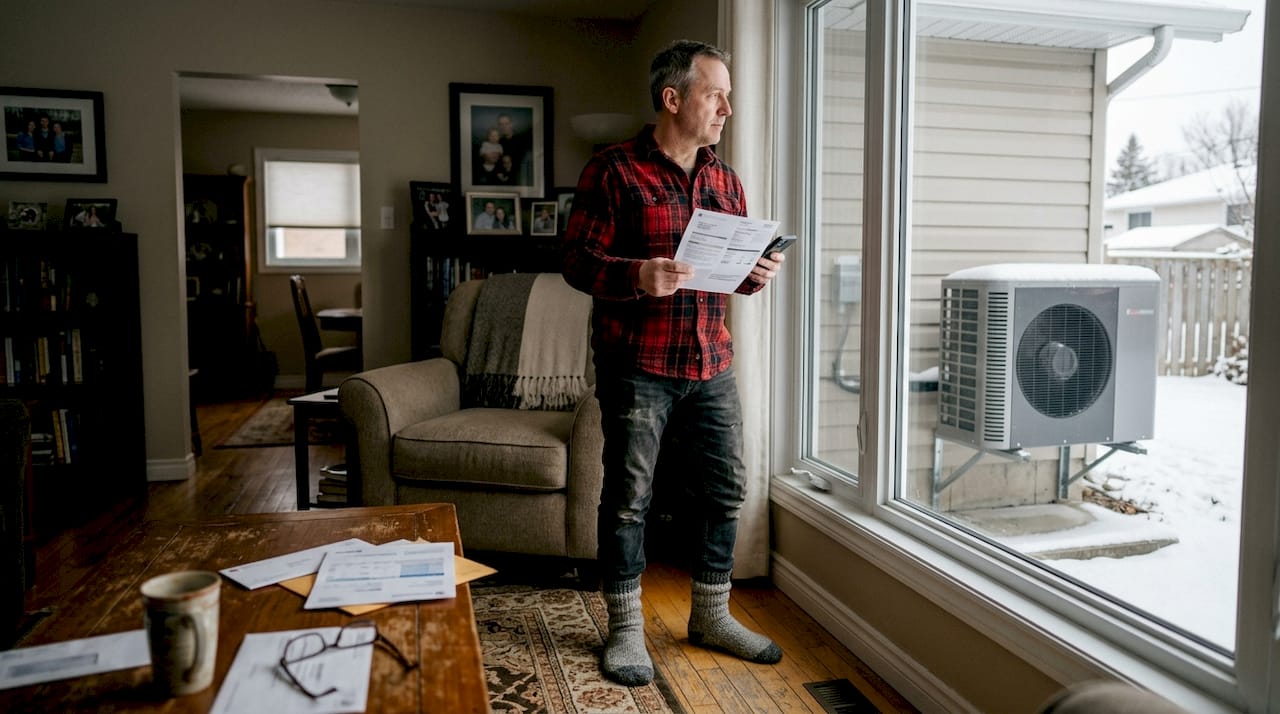
Most Canadian homeowners assume a furnace and central air conditioner are the only reliable way to heat and cool their home. That assumption is being challenged fast. Modern heat pump technology has improved so dramatically that it now performs well in most Canadian climates, including cities that regularly see temperatures drop below -20°C. This guide breaks down how both systems compare on comfort, efficiency, operating costs, and real-life application so you can make a confident decision for your home.
Table of Contents
- How heat pumps and traditional HVAC systems work
- Comfort and air quality: what changes with each system?
- Energy efficiency and operating costs in Canadian climates
- Upfront costs, rebates, and home resale value
- Who should choose which? Real-world application and expert tips
- Ready to find your best-fit system? Get expert help
- Frequently asked questions
Key Takeaways
| Point | Details |
|---|---|
| Heat pumps are highly efficient | Modern heat pumps deliver 2–4 times as much heat per energy unit compared to furnaces, making them extremely efficient for most Canadian homes. |
| Comfort and air quality advantages | Heat pumps provide steady temperatures and help maintain indoor humidity, while furnaces heat quickly but may dry out the air. |
| Lower emissions and energy bills | Switching to a heat pump can cut your household’s CO2 emissions by up to 50% and reduce annual energy costs by hundreds of dollars. |
| Upfront and installation costs differ | Heat pumps usually cost less upfront than installing a new furnace and AC pair, and many rebates are available to help offset expenses. |
| Correct installation is crucial | Proper sizing and certified installation are vital for long-term performance and comfort, especially in cold climates. |
How heat pumps and traditional HVAC systems work
To understand which system might suit your home best, let’s look at how each one actually works.
A heat pump does not generate heat the way a furnace does. Instead, it moves heat from one place to another using a refrigeration cycle, similar to how your fridge keeps food cold. In winter, it pulls heat from outdoor air and moves it inside. In summer, it reverses and acts as an air conditioner. One unit handles both jobs. Heat pumps deliver efficiencies of 200-400% (a COP of 2 to 4), meaning they produce two to four units of heat energy for every unit of electricity consumed. Traditional furnaces, by contrast, burn gas or oil to create heat, rated by AFUE (Annual Fuel Utilisation Efficiency), ranging from 80% to 98%. A separate AC unit handles cooling using its own vapour cycle, rated by SEER2.
Here is a quick breakdown of the key differences:
- Heat pump: One unit heats and cools, runs on electricity, COP 2 to 4
- Gas furnace: Burns fuel for heat only, AFUE 80 to 98%, needs separate AC
- Central AC: Cools only, SEER2 rating 13 to 22, paired with furnace
- Inverter-driven heat pump: Adjusts output continuously, more efficient in fluctuating temperatures
- Cold-climate heat pump: Engineered to perform at temperatures as low as -25°C
You can explore the full heat pump vs furnace guide on CoolFix for a deeper look at how these systems stack up in Canadian conditions.
Pro Tip: Ask your contractor specifically about inverter-driven models. They modulate their output rather than cycling on and off, which saves energy and keeps temperatures more consistent throughout your home.
Comfort and air quality: what changes with each system?
Understanding how HVAC systems affect your home’s comfort goes beyond numbers. It is about your day-to-day living experience.
Heat pumps run for longer, lower-intensity cycles. That means your home warms up gradually and stays at a steady temperature rather than swinging between hot and cold. Furnaces, on the other hand, blast high-temperature air in short bursts. You get fast warmth, but you also get hot spots near vents and cold corners far from them. Heat pumps deliver steadier temperatures and better humidity control due to this longer, lower-intensity operation, while furnaces can cause dry air and uneven heating.
Humidity is a bigger deal than most people realise. Furnaces dry out indoor air significantly during winter, which can irritate your skin, throat, and sinuses. Many furnace owners end up buying a whole-home humidifier to compensate. Heat pumps naturally maintain more balanced humidity levels because they do not combust fuel.
“The difference in comfort between a heat pump and a furnace is most noticeable on those grey January days when the temperature barely moves. A heat pump keeps the house feeling consistently warm rather than cycling between stuffy and chilly.”
Here is how the two systems compare on comfort factors:
- Temperature consistency: Heat pumps win, furnaces create more swing
- Humidity: Heat pumps maintain it better, furnaces dry out the air
- Noise: Heat pumps are generally quieter, especially inverter models
- Air movement: Furnaces push more air volume quickly, heat pumps circulate gently
- Allergens: Slower, continuous airflow in heat pumps can reduce dust circulation
For more on how efficiency connects to comfort, see heat pump efficiency explained and learn why upgrading heating systems is becoming a priority for Canadian homeowners in 2026.
Energy efficiency and operating costs in Canadian climates
Now that you know what to expect for comfort, let us focus on efficiency, cost, and environmental impact.
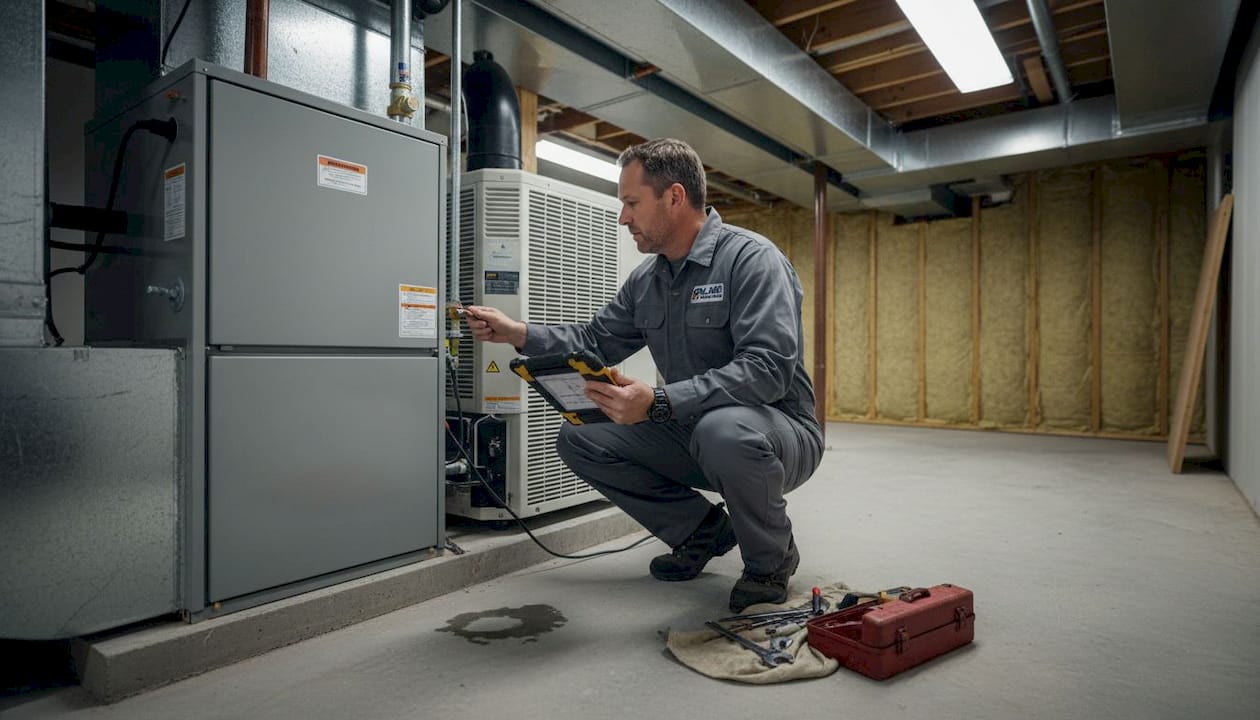
The numbers here are where heat pumps start to look very compelling. In mild to moderate climates, heat pumps cost around $721 per year in electricity versus over $1,000 for gas furnaces. Even in cold climates, modern cold-climate models maintain a COP of 1.9 at -15°C, making them competitive with high-efficiency 96% AFUE furnaces depending on local fuel prices.
| Factor | Heat pump | Gas furnace + AC |
|---|---|---|
| Annual energy cost (mild climate) | ~$721/year | $1,000+ per year |
| Efficiency rating | COP 2 to 4 (200 to 400%) | AFUE 80 to 98% |
| Cold climate performance | COP 1.9 at -15°C (cold-climate models) | Consistent regardless of outdoor temp |
| CO2 emissions | 30 to 50% lower vs. gas | Higher, combustion-based |
| Fuel type | Electricity | Natural gas or propane |
The emissions picture is also striking. A heat pump with a COP of 3 uses one-third the energy of electric resistance heating and produces significantly less CO2 than gas, even when accounting for average Canadian grid emissions. Field studies in the Pacific Northwest found heat pumps used 24% less energy and produced 58% less CO2 compared to gas systems.
Pro Tip: Check your province’s electricity rate before comparing costs. In provinces with lower electricity rates like Quebec and Manitoba, heat pump savings are even more pronounced. In provinces with higher rates, the calculation is closer.
Long-term savings from heat pump efficiency add up over years of operation. Understanding heat pump energy ratings before you buy helps you pick a model that will actually deliver those savings in your specific climate zone.
Upfront costs, rebates, and home resale value
It is not just energy use. You also need to understand the upfront investment and ongoing value.
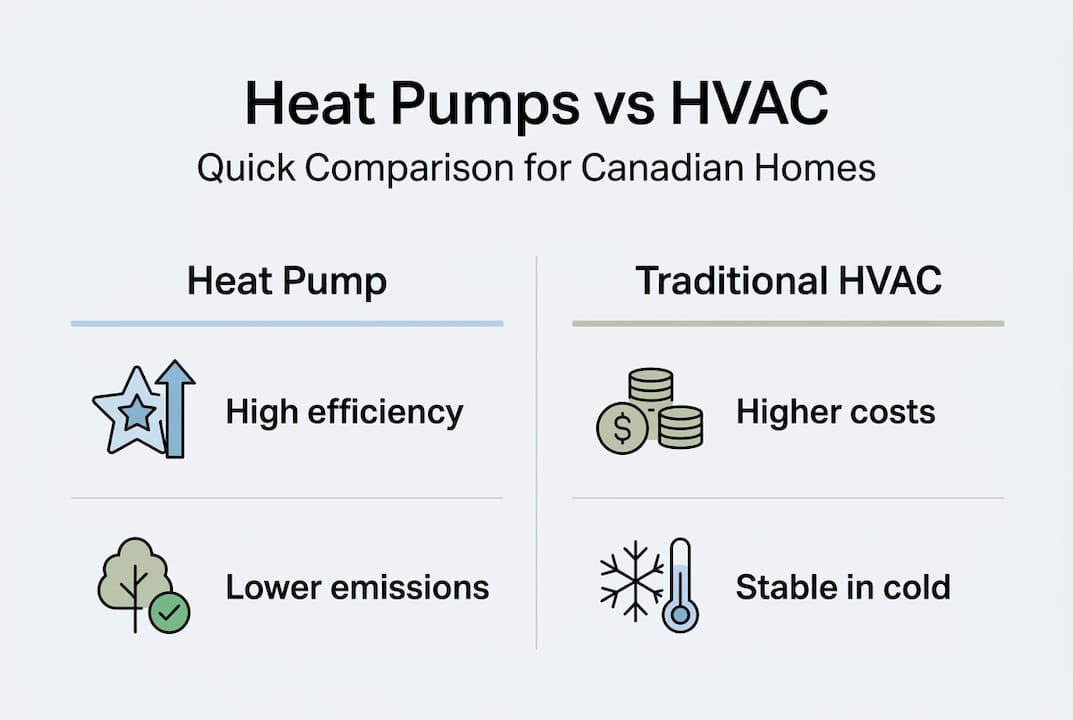
Here is where many homeowners are surprised. Heat pumps are actually less expensive to install than a full furnace and AC combination. Heat pumps run $5,500 to $9,000 installed for both heating and cooling, while a furnace and AC pair typically costs $9,500 to $12,000. That is a significant difference before you even factor in rebates.
| Cost factor | Heat pump | Furnace + AC |
|---|---|---|
| Installed cost | $5,500 to $9,000 | $9,500 to $12,000 |
| Expected lifespan | 10 to 15 years | 15 to 20 years (furnace) |
| Federal rebate (Canada Greener Homes) | Up to $5,000 | Not eligible |
| Maintenance frequency | Annual service | Annual service |
| Cold climate maintenance | May need more attention | Standard |
Key steps to maximise your investment:
- Apply for federal rebates first. The Canada Greener Homes Grant offers up to $5,000 for heat pump installations. Some provinces stack additional rebates on top.
- Get multiple quotes. Installation quality varies widely. A poorly sized unit will underperform regardless of brand.
- Check ENERGY STAR certification. Only certified models qualify for most rebate programmes.
- Factor in lifespan. A heat pump’s shorter lifespan (10 to 15 years vs. 15 to 20 for a furnace) means you may replace it sooner, so weigh that against lower upfront cost.
- Consider resale value. Homes with modern, energy-efficient heat pumps are increasingly attractive to buyers, especially as energy costs rise.
For a full breakdown of what to expect financially, the heat pump replacement cost guide walks through real Canadian scenarios in detail.
Who should choose which? Real-world application and expert tips
Finally, let us turn all this data into clear, usable steps for your decision.
For most urban Canadian homeowners with access to natural gas and moderate winters, a cold-climate heat pump is a strong choice. It lowers bills, reduces emissions, and provides excellent comfort. But there are edge cases where a furnace still makes sense.
Field data shows that 17% of air-source heat pumps underperform their rated specifications in real-world conditions. That is almost always due to improper installation or incorrect sizing, not a flaw in the technology itself. This is why choosing a certified installer matters enormously.
Here is how to match the right system to your situation:
- Mild to moderate climate (most urban centres): Cold-climate heat pump is the top choice
- Rural home with very cold winters (prolonged temps below -20°C): Consider a dual-fuel system, which pairs a heat pump with a gas furnace backup
- Home with existing gas infrastructure and cheap gas rates: A high-AFUE furnace may still be cost-competitive short-term
- New construction or major renovation: Heat pump is almost always the better long-term investment
- Older home with poor insulation: Improve the building envelope first, then install the heat pump
For cold climates, look specifically for models on the NEEP (Northeast Energy Efficiency Partnerships) cold-climate heat pump list. These are independently verified to perform at low temperatures. ENERGY STAR certification is the minimum bar, but NEEP listing is the gold standard.
Pro Tip: Always request a Manual J load calculation before any installation. This is the industry-standard method for correctly sizing your system. An oversized heat pump will short-cycle and wear out faster. An undersized one will struggle on cold days. A good contractor will insist on doing this calculation.
Avoiding common errors is critical. Review installation mistakes to avoid before you sign any contract, and understand the heat pump installation timeline so you know what to expect from start to finish.
Ready to find your best-fit system? Get expert help
No matter what system you choose, working with a specialist sets you up for long-term comfort and savings.

At CoolFix, we specialise in heat pump installation and replacement for Canadian homeowners. Whether you are replacing an ageing furnace, upgrading to a cold-climate model, or trying to figure out if a dual-fuel system makes sense for your property, we have the resources to help. Our heat pump replacement tutorial walks you through the full process, and our installation timeline for heat pumps helps you plan your project from the first quote to the final inspection. Reach out to our team to get matched with a qualified installer in your area and start saving on your energy bills this year.
Frequently asked questions
Can heat pumps really work in cold Canadian winters?
Yes. Modern cold-climate heat pumps are engineered to operate efficiently well below -15°C, though a backup heat source may be needed during the deepest cold snaps. Cold-climate models maintain a COP of 1.9 at -15°C, making them competitive with high-efficiency gas furnaces.
How much can switching to a heat pump lower my annual energy bills?
Most Canadian homeowners see savings of 20 to 30% annually, depending on their current system, insulation quality, and local energy rates. Heat pumps save $475 to $630 per year compared to gas furnaces in comparable climates.
What is a dual-fuel or hybrid HVAC system?
A dual-fuel system pairs a heat pump with a gas furnace backup, using the heat pump for most of the year and switching to the furnace only during extreme cold. Cold climates with prolonged temperatures below -15°C are the primary use case for this setup.
How long do heat pumps last compared to furnaces?
Heat pumps typically last 10 to 15 years, while furnaces can last 15 to 20 years with proper maintenance. Heat pump lifespan is 10 to 15 years versus 15 to 20 years for a furnace, so factor replacement timing into your long-term cost planning.
Recommended
- Heat Pump Water Heating Explained: Energy Savings for Canadians – CoolFix Appliance & HVAC Service
- Heat pump terminology explained for Canadian homeowners 2026 – CoolFix Appliance & HVAC Service
- Why choose heat pump installation in Canadian homes – CoolFix Appliance & HVAC Service
- Heat Pump Replacement Tutorial for Canadian Homeowners – CoolFix Appliance & HVAC Service
0 Comments