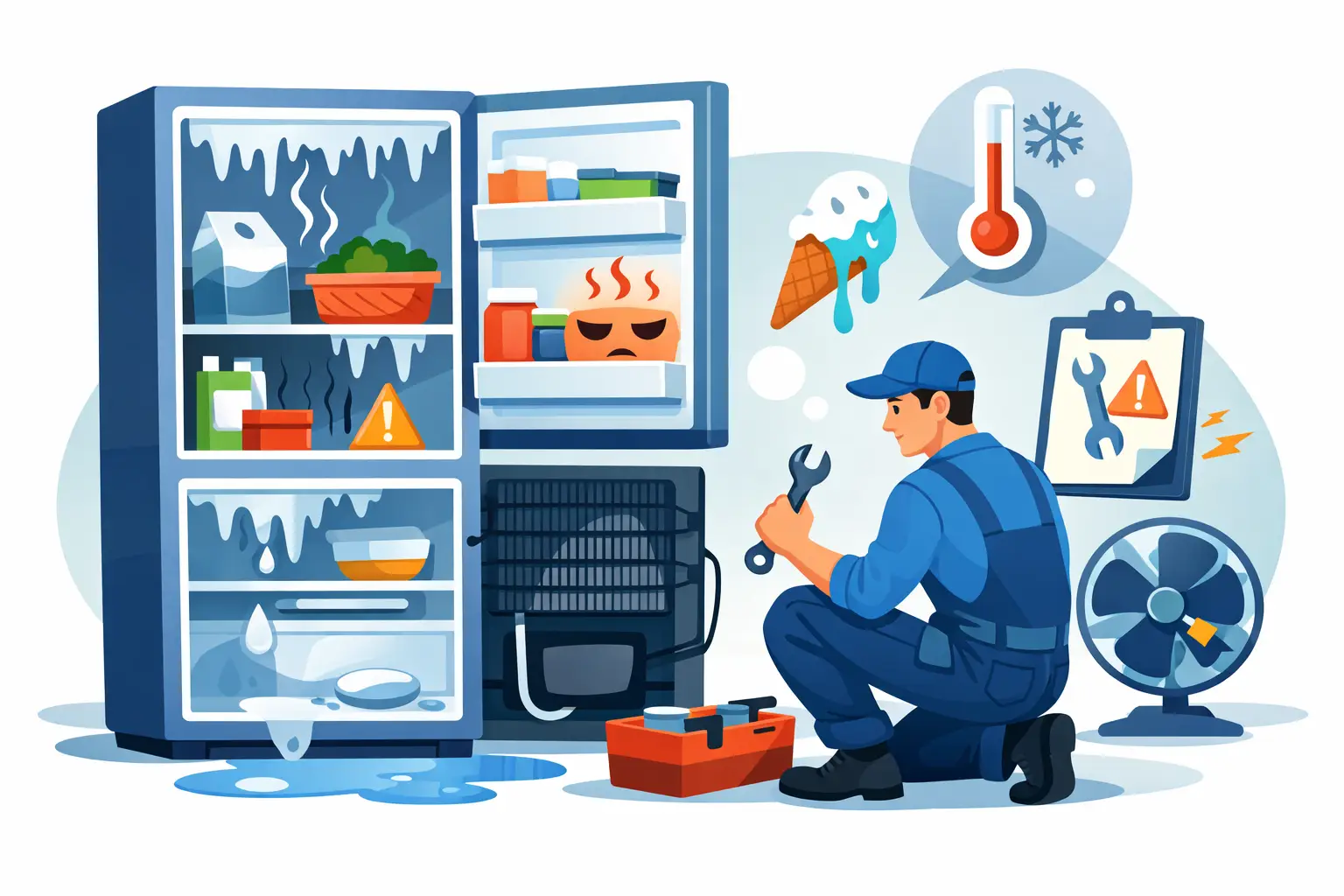
A refrigerator problem rarely starts with a complete breakdown. More often, the milk is not quite cold, ice cream turns soft, or the motor seems louder than usual. Knowing the best signs a refrigerator needs repair gives you a chance to protect your food, avoid a larger failure, and make a practical decision before the situation becomes urgent.
For homeowners, landlords, and property managers, a working refrigerator is not something that can wait for a convenient time. A quick diagnosis can often cost far less than replacing an appliance that still has years of useful life left.
The Best Signs a Refrigerator Needs Repair
1. Food is not staying cold enough
This is the warning sign to take most seriously. Your refrigerator compartment should generally stay at or below 40°F, while the freezer should hold around 0°F. If drinks feel only mildly cool, leftovers spoil sooner than expected, or meat and dairy are warming up, the appliance needs attention.
Start with the simple checks: make sure the temperature controls were not bumped, confirm the doors are closing fully, and look for food packages blocking interior vents. If the settings are correct but temperatures remain high, the cause could be a failing evaporator fan, a dirty condenser, a control issue, a bad door seal, or a sealed-system problem. Food safety is the trade-off here. It is not worth waiting several days to see if warm temperatures correct themselves.
2. The freezer works, but the refrigerator is warm
A cold freezer with a warm fresh-food compartment is a common repair call. Many refrigerators use a fan and air passage to move cold air from the freezer section into the refrigerator section. When that airflow is blocked by frost, a failed fan, or a stuck damper, the freezer may seem fine while the refrigerator gets too warm.
You may also notice ice or frost building up on the back wall inside the freezer. That often points to a defrost problem. Unplugging the unit for a full manual defrost may temporarily restore cooling, but repeated frost buildup means the underlying issue still needs repair.
3. Water is pooling inside or underneath the refrigerator
Water on the kitchen floor deserves a fast response. Besides damaging flooring, it can create a slip hazard and may indicate a problem that gets worse with time.
A small puddle inside the refrigerator, especially under the crisper drawers, can come from a clogged defrost drain. Water near the front or back of the appliance may be caused by a leaking water supply line, a loose connection, a cracked drain pan, or a problem with the ice maker. If your refrigerator has a water line, turn off the water supply if the leak is active and move food away from the affected area. Do not ignore a slow leak simply because it is small today.
4. The refrigerator runs almost constantly
Refrigerators do cycle more often during hot weather, after a large grocery trip, or when doors are opened repeatedly. But a unit that seems to run all day, never settles down, or starts and stops every few minutes may be struggling.
Before calling for service, check for obvious airflow issues. Leave a little space around the appliance, keep exterior vents clear, and clean dust and pet hair from accessible condenser areas if your model allows it. Also inspect the door gaskets for tears, gaps, or grime that prevents a tight seal.
If the refrigerator keeps running despite those checks, it may have a fan motor issue, faulty thermostat or sensor, compressor start problem, or loss of refrigerant. Constant operation raises electricity use and places extra strain on expensive components, so early service makes sense.
5. You hear unusual sounds
A normal refrigerator makes some sound: a low hum, occasional clicks, water movement, and the drop of ice into the bin. New or persistent noises are different.
A loud buzzing can come from a fan hitting ice or from a compressor that is working too hard. Repeated clicking may indicate a start-device or compressor issue. Rattling could be as simple as the refrigerator not sitting level, a loose panel, or an item vibrating against the back wall. Grinding, squealing, or a strong high-pitched noise is more likely to need a technician.
Try locating where the sound comes from without removing panels or touching electrical parts. A recording on your phone can be useful when explaining the issue to a repair professional.
6. Frost keeps coming back
A light coating of frost after leaving a freezer door open is one thing. Thick frost that returns quickly, covers food packages, or forms on the rear freezer panel is another.
The most basic cause is a door that is not sealing. Check for damaged gasket sections, food containers pushing against the door, or ice buildup preventing closure. If the door seals well, recurring frost may be related to the automatic defrost system. Left alone, that frost can block airflow and eventually leave the refrigerator compartment warm.
7. The door gasket is damaged or does not seal
The soft rubber seal around the refrigerator and freezer doors does more work than it gets credit for. When it is cracked, loose, warped, or dirty, warm room air enters the appliance. The refrigerator then runs longer, moisture increases, and frost can develop.
A quick test is to close the door on a piece of paper. If it slides out easily in several spots, the gasket may not be sealing properly. Cleaning the gasket and the surface it contacts can help, but torn or misshapen seals usually need replacement. This is often a smaller repair that can prevent bigger cooling problems.
8. The ice maker or water dispenser has changed
Slow ice production, hollow cubes, leaking around the dispenser, or a dispenser that stops working can point to several issues. Sometimes the fix is simple, such as replacing an overdue water filter or straightening a kinked water line. Other times, the trouble involves a frozen fill tube, a faulty inlet valve, a failed ice maker, or a problem in the dispenser controls.
Do not assume ice-maker trouble is only a convenience issue. A leak at the water connection can damage cabinets, floors, and the area behind the refrigerator. If you see moisture where it should not be, inspect it promptly.
9. Food freezes in the fresh-food compartment
Lettuce frozen against the back wall or drinks turning slushy may seem less urgent than a warm refrigerator, but it still signals a control problem. Cold air may be entering too aggressively, the temperature sensor may be inaccurate, or a damper may not be closing as it should.
First, avoid storing delicate foods directly in front of interior vents and verify the temperature setting is not too low. If food continues freezing at normal settings, a repair is usually needed. Replacing spoiled groceries repeatedly is a quiet expense that adds up.
10. There is a burning smell, electrical smell, or heat at the wrong spot
The sides of many refrigerators can feel warm during normal operation. That warmth helps the appliance manage condensation and does not automatically mean something is wrong. A hot plug, burning odor, scorch marks, repeated breaker trips, or a strong electrical smell is not normal.
Unplug the refrigerator if it is safe to do so, protect perishable food, and arrange professional service. Electrical symptoms should not be handled with trial and error. The same goes for a compressor area that is extremely hot along with clicking, poor cooling, or a tripped breaker.
What You Can Check Before Booking Repair
A few basic checks can save time and help identify an easy fix. Confirm the appliance has power, make sure the controls are set correctly, and check that doors close without obstruction. Clear food away from interior air vents, inspect visible gasket damage, and make sure the refrigerator is not packed so tightly that air cannot circulate.
If the refrigerator is running but not cooling, do not keep adjusting the temperature dial every few hours. That can make the situation harder to judge. Use a refrigerator thermometer if possible, note when the problem began, and watch for related symptoms such as frost, leaks, noises, or frequent cycling.
Avoid removing electrical covers, puncturing ice buildup, or trying to recharge refrigerant yourself. Those repairs require proper tools, parts, and diagnosis. A wrong guess can turn a repairable appliance into a replacement decision.
Repair or Replace? Make the Cost-Conscious Call
The right choice depends on the refrigerator’s age, condition, repair cost, and history. A newer appliance with one clear failure, such as a fan motor, gasket, ice maker component, or defrost part, is often worth repairing. A well-maintained midlife refrigerator may also be a good repair candidate when the issue is straightforward.
Replacement becomes more reasonable when the appliance has multiple major problems, has a costly sealed-system or compressor failure, or has needed repeated repairs in a short period. Even then, the best answer is not always buying new. Budget-friendly used or scratch-and-dent options can make sense when a repair no longer fits the situation.
For rental properties, speed matters alongside cost. A technician who can identify the cause clearly helps property managers decide whether to repair, source a part, or replace the unit without leaving tenants waiting.
When your refrigerator gives you one of these warning signs, act while the problem is still manageable. CoolFix Appliance & HVAC Service helps local households and property owners make clear, practical repair decisions so a small appliance issue does not become a kitchen emergency.
0 Comments