
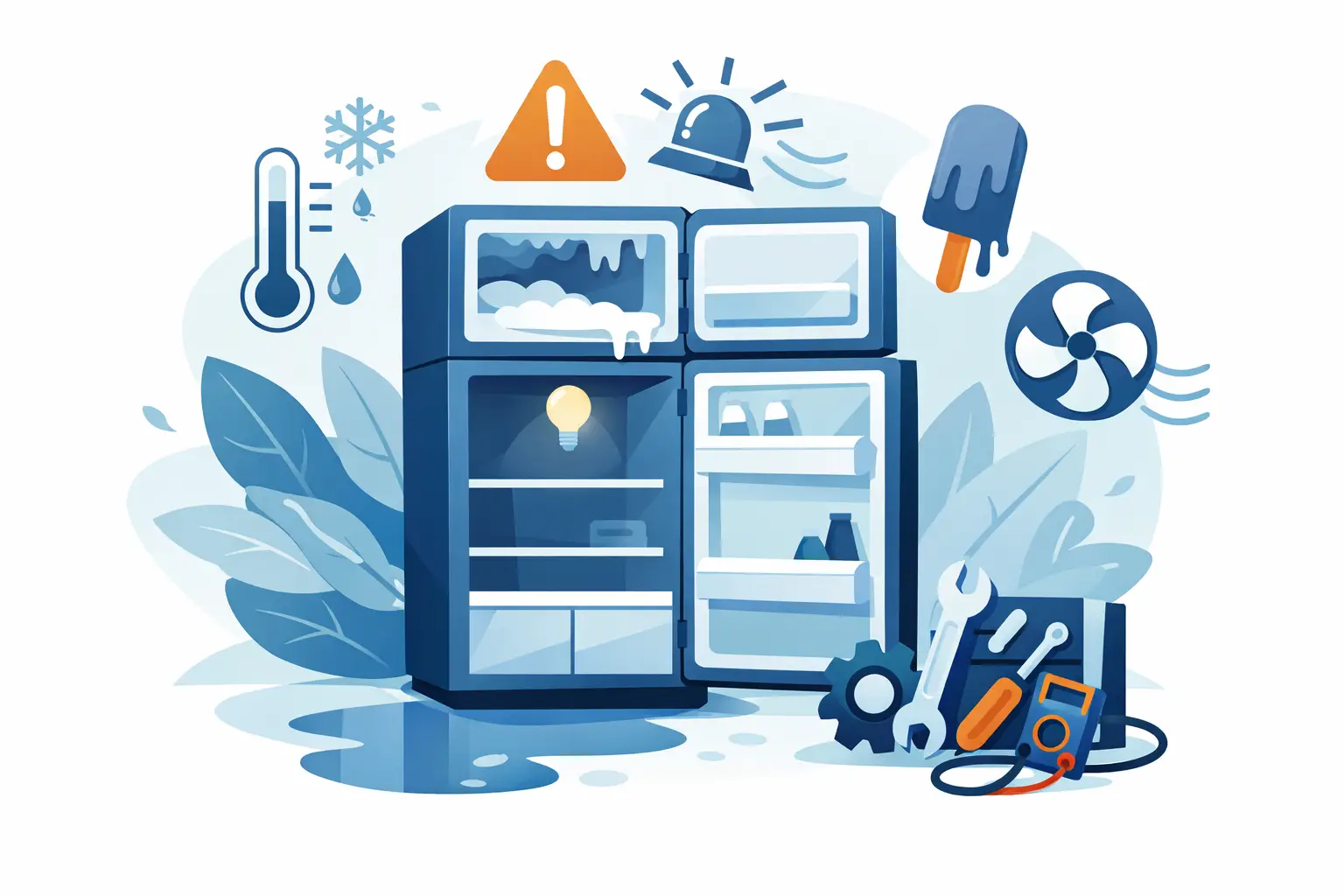
A refrigerator rarely quits without giving you a clue first. The best refrigerator repair warning signs are often small changes – milk that is not as cold as it should be, a new hum from behind the unit, or a little water on the floor. Catching them early can save a grocery run, prevent floor damage, and give you more repair options before a minor issue becomes a full breakdown.
For homeowners, landlords, and property managers, the goal is not to panic over every unusual sound. It is to know which changes need attention, what you can check safely, and when a service call is the sensible move.
Best Refrigerator Repair Warning Signs You Should Not Ignore
Food is warmer than normal
A fridge compartment should hold a steady, food-safe temperature, typically about 37 to 40 degrees Fahrenheit. If drinks are not cold, dairy spoils sooner than expected, or food near the back starts to freeze while other shelves feel warm, the refrigerator is not cooling evenly.
Start with the simple checks. Make sure the temperature control was not bumped, the doors are closing fully, and packed containers are not blocking interior air vents. Give the unit several hours to recover after changing a setting. If it still runs warm, the cause could be a failing fan, dirty condenser coils, a faulty sensor, a defrost issue, or a sealed-system problem. Continuing to load groceries into a refrigerator that cannot hold temperature risks both food waste and food safety.
The refrigerator runs almost all the time
Most refrigerators cycle on and off throughout the day. During a hot spell, after a large grocery load, or when the door has been opened repeatedly, longer run times are normal. What is not normal is a compressor that seems to run continuously for days without bringing the cabinet down to temperature.
This can happen when condenser coils are coated in dust, pet hair, or lint and cannot release heat. A damaged door gasket can also let warm room air leak in, forcing the system to work harder. Less visible problems, such as a failing evaporator fan or weak compressor, need a proper diagnosis. Constant operation raises power use and puts extra strain on expensive components, so it is worth addressing before the fridge stops cooling entirely.
Frost keeps building up in the freezer
A light coating of frost after the freezer door was left open is one thing. Thick frost on the back wall, around food packages, or inside air vents is another. Excess frost can restrict airflow from the freezer to the fresh-food compartment, leaving the refrigerator warm even while the freezer seems cold.
Often, the defrost system is not doing its job. The problem may involve a defrost heater, sensor, timer or control board. A torn or dirty door seal can contribute by allowing moist air inside. Do not chip ice away with a knife or sharp tool. It is easy to puncture a liner or refrigerant line, turning a repairable issue into a much larger expense.
You see water inside or underneath the unit
Water under a refrigerator deserves a quick look, especially on wood, laminate, or finished basement flooring. Sometimes the source is simple: an ice maker supply line has loosened, or the drip pan needs attention. Water pooling under crisper drawers can also point to a blocked defrost drain, which causes melted frost to back up inside the cabinet.
If your refrigerator has a water dispenser or ice maker, inspect the visible water line connection for active drips. Move food away from the puddle, dry the area, and avoid leaving the issue for another week. Slow leaks can damage flooring, encourage mold, and create a much bigger property repair bill than the appliance repair itself.
New noises are getting louder or more frequent
Refrigerators are not silent. A low compressor hum, occasional clicking, fan movement, and ice dropping into the bin are all familiar operating sounds. The warning sign is a noise that is new, harsh, repeated, or paired with poor cooling.
A rattling sound may be a loose drain pan or a unit that is not level. A scraping or squealing sound can come from a fan motor or fan blade hitting ice. Repeated clicking with no cooling may mean the compressor is struggling to start. Do not assume a loud refrigerator is simply old. A technician can separate a minor adjustment from a part that is wearing out before it causes a no-cool emergency.
The door seal is loose, cracked, or dirty
The flexible gasket around the door may not look like a major component, but it matters every hour the refrigerator operates. If it is torn, warped, covered with sticky residue, or does not grip the cabinet evenly, cold air escapes and moisture gets in. That can lead to high energy use, frost buildup, long run times, and uneven temperatures.
Clean the gasket gently with warm, soapy water and check for debris along the contact surface. You can also close the door on a sheet of paper in several spots. If the paper slides out with almost no resistance, the seal may not be doing its job. Some gaskets can be replaced without replacing the whole appliance, making this a practical repair when the refrigerator is otherwise in good shape.
Signs That Call for Faster Action
Some refrigerator problems can wait for a scheduled appointment. Others should move to the top of the list. If you smell something burning, see smoke, notice a damaged power cord, or hear electrical buzzing, unplug the refrigerator if you can do so safely and arrange service. Do not keep resetting a breaker or plugging the unit into a power strip to make it run.
A refrigerator that is completely warm also needs prompt attention. Transfer perishable food to a cooler with ice or another working refrigerator. As a general rule, refrigerated perishables should not sit above 40 degrees Fahrenheit for more than two hours. For rentals, quick reporting and documentation can help protect both the tenant’s food and the property from a leak or complete failure.
What You Can Check Before Booking Repair
A few basic checks can save time without taking unnecessary risks. Confirm that the refrigerator has power and that the outlet or breaker has not tripped. Check that the controls are set correctly, the doors close completely, and the unit has breathing room around it. If your model’s owner instructions allow it, carefully vacuum accessible dust from the condenser coil area after unplugging the appliance.
Avoid removing sealed-system components, handling wiring, or trying online fixes that involve bypassing controls. Refrigerators combine electrical parts, moving fans, water connections, and refrigerant components. A quick guess can create a safety issue or hide the original problem from the technician.
It also helps to write down what changed and when. Is the freezer cold but the refrigerator warm? Does the noise happen only when the door is shut? Did the leak begin after using the ice maker? Those details can speed up diagnosis and help a repair professional arrive prepared.
Repair or Replace? Make the Decision on the Facts
Replacement is not automatically the right answer when a refrigerator has a problem. A failed door gasket, fan motor, drain issue, thermostat, or ice maker component can often be repaired for far less than the cost of a new unit. Repair is especially worth considering when the cabinet is in good condition, the appliance has served reliably, and the needed part is available.
The decision changes when the refrigerator has repeated major failures, extensive rust or cabinet damage, or a costly compressor or sealed-system issue on an older model. Energy use matters too, but it should be weighed against the full purchase, delivery, and disposal cost of replacement. A clear diagnosis and an honest repair estimate give you the information needed to choose wisely instead of replacing an appliance too soon.
If your refrigerator is showing one of these warning signs, do not wait for a full breakdown to make a plan. A timely inspection can protect your food, your floor, and your budget – and often gives a dependable appliance many more useful years in the kitchen.
0 Comments