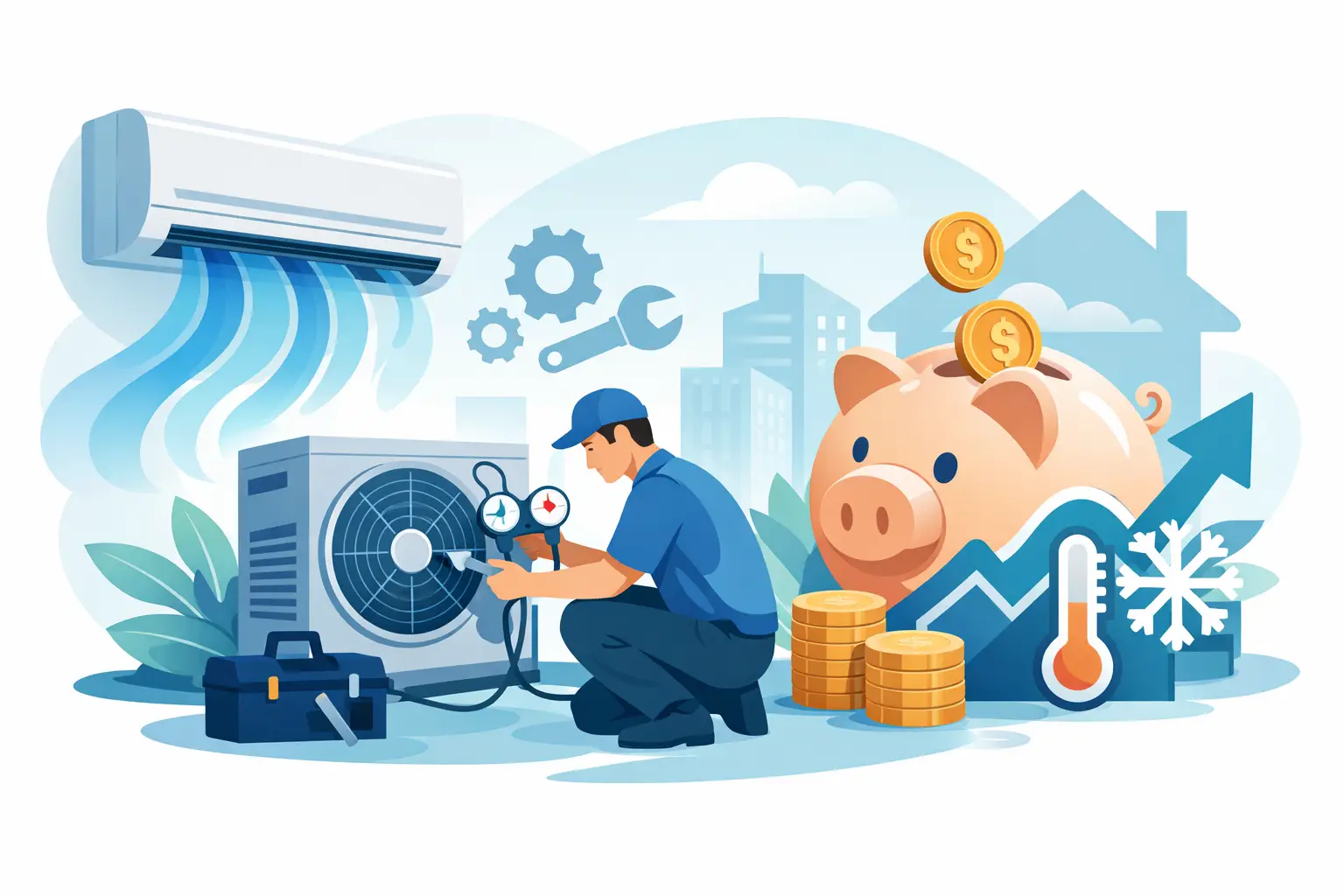
When your AC quits on the hottest week of summer, the problem usually did not start that day. It often started weeks or months earlier with a dirty coil, a clogged filter, a weak capacitor, or a drain issue that looked small until it shut the system down. That is why ac maintenance and repair work best together. Maintenance helps you avoid the urgent call. Repair fixes the parts that are already failing before they take the rest of the system with them.
For homeowners, landlords, and property managers, that difference matters. A neglected air conditioner tends to cost more in power, break down at the worst time, and wear out sooner than it should. A well-maintained system is not guaranteed to last forever, but it usually runs more efficiently, cools more evenly, and gives you more warning before a major failure.
Why AC maintenance and repair go hand in hand
A lot of people treat maintenance and repair as two separate jobs. In real homes, they overlap. A technician checking a system for routine wear may catch a cracked contactor, a blower issue, or low airflow before it becomes a no-cooling call. On the other side, a repair visit often reveals signs that the system has been struggling for a while, like matted condenser fins, dirt on the evaporator coil, or a filter that has not been changed in months.
That is why the cheapest option is not always the one with the lowest service call today. Skipping maintenance can turn a simple issue into a compressor problem, a frozen coil, or water damage around the air handler. Regular care does not eliminate repairs, but it can reduce the expensive ones.
There is also a comfort issue. Many AC complaints are not total breakdowns. They show up as weak airflow, hot rooms, longer run times, odd smells, or rising utility bills. Those are the kinds of problems that maintenance can uncover early and repair can correct before comfort drops off completely.
What routine AC maintenance actually includes
Good maintenance is more than a quick glance at the unit and a new filter. A proper visit should focus on airflow, electrical components, cleanliness, drainage, and operating performance. Each one affects how hard the system has to work.
The filter is the easy one, but it still gets ignored. A clogged filter restricts airflow, which can lead to frozen coils, poor cooling, and added strain on the blower motor. Replacing it on time is one of the simplest ways to protect the system.
Cleaning matters too. Dirt on the outdoor condenser coil makes it harder for the unit to release heat. Dirt on the indoor coil slows heat absorption and reduces cooling performance. Even if the unit still runs, efficiency drops and wear goes up.
Electrical checks are just as important. Loose connections, worn capacitors, and failing contactors can cause intermittent problems that are easy to miss until the system stops starting. Catching those parts early often means a smaller repair and less chance of a mid-season failure.
Drainage is another common trouble spot. AC systems remove humidity along with heat, and that water has to go somewhere. If the drain line clogs, you can end up with water leaks, shutoffs, or moldy smells. In humid weather, that is not a small detail.
A technician should also verify that the system is operating within normal ranges. If pressures, temperatures, or amp draws are off, it may point to a deeper issue. That does not always mean a big repair is coming, but it does mean the system needs attention.
Signs you need AC repair, not just maintenance
Some issues can wait for a scheduled tune-up. Others need repair sooner. If your AC is blowing warm air, turning on and off too quickly, making grinding or buzzing noises, or struggling to keep up with normal weather, it is time to get it checked.
Ice on the refrigerant line or indoor coil is another red flag. People sometimes assume ice means the system is cooling extra well. Usually it means the opposite. Low airflow, dirty coils, or refrigerant issues may be causing the coil to freeze, and continuing to run it can make the damage worse.
A sudden increase in your electric bill is worth paying attention to as well. If your usage habits have not changed but cooling costs have jumped, the system may be running longer than it should. That can point to airflow problems, failing components, or declining efficiency.
Then there are the quieter warning signs. A musty smell near the vents, water near the indoor unit, or rooms that never seem to cool evenly may not feel urgent, but they usually do not fix themselves. Waiting often turns a manageable repair into a more disruptive one.
The repairs that show up most often
Most AC repairs are not dramatic. They tend to involve parts that wear down with normal use. Capacitors are a common example. When they weaken, the system may struggle to start, hum without running, or fail completely.
Contactors are another frequent issue. They handle the electrical flow that starts the outdoor unit, and over time the contacts can pit or wear out. That can lead to inconsistent operation or total failure.
Fan motors also take a beating, especially during long cooling seasons. If a motor starts overheating or slowing down, airflow and heat transfer suffer. Left alone, it can create stress on other components.
Drain clogs, thermostat issues, and blower problems round out a lot of service calls. Refrigerant leaks are more serious. If a system is low on refrigerant, simply topping it off is not the real fix. The leak needs to be found and repaired, or the problem will return.
The big one everyone worries about is the compressor. Compressor replacement can be expensive enough that the right decision depends on the age of the system, the overall condition, and the cost of the repair compared with replacement. That is where honest advice matters. Sometimes repair makes sense. Sometimes it does not.
When repair is smarter than replacement
Not every older AC should be replaced at the first sign of trouble. If the unit has been maintained, the repair is straightforward, and the rest of the system is in decent shape, fixing it can be the practical move. That is especially true when the issue is a single failed component rather than widespread wear.
On the other hand, repeated repairs, poor efficiency, and hard-to-find parts can change the math. If your system is nearing the end of its expected life and one failure keeps leading to another, replacement may be the better long-term decision.
For budget-conscious households and rental property owners, that choice often comes down to timing. A smaller repair now may buy a few more seasons and give you time to plan. That can be far better than being forced into a rushed replacement during peak heat when every contractor is booked and comfort is already gone.
A service-first company like CoolFix Appliance & HVAC Service should be willing to explain both paths clearly, without pushing replacement when a solid repair is still on the table.
How homeowners can help between service visits
There are a few things you can do without getting too technical. Change the filter on schedule. Keep the outdoor unit clear of weeds, grass, and debris. Make sure supply and return vents are not blocked by furniture or rugs. Pay attention to new sounds, smells, or changes in cooling performance.
What you should not do is keep resetting breakers, forcing a frozen system to run, or guessing with electrical parts. Those shortcuts can turn a small repair into a bigger one. If the system is acting up, shutting it down and getting it checked is usually the safer move.
Timing matters more than people think
The best time for AC maintenance is before peak summer demand hits. That gives you a better chance of catching weak parts early and scheduling repairs before the hottest days put the most strain on the system. For landlords and property managers, that matters even more. Preventive service is usually easier and less disruptive than dealing with emergency calls from tenants during a heat wave.
If you live in an area where summer cooling is not constant but still important, seasonal checks still pay off. Even an AC that does not run year-round can collect dirt, develop drain issues, or show wear in electrical components. A system does not have to be old to need attention.
The real value of ac maintenance and repair is not just keeping cold air coming out of the vents. It is getting more useful life from equipment you already own, avoiding waste, and making smarter decisions before a breakdown forces your hand. A little attention at the right time can spare you a much bigger problem later.
0 Comments